 Bordeaux
 Burgundy
 Champagne
 Rhône
Rhône Napa Valley
 Tuscany
 Piedmont
 Mosel
Mosel Oregon
 Rioja
Rioja California sparkling
 Valais and Lavaux
 England
 Douro
Douro Etna
Etna Mendoza
 Marlborough
 Stellenbosch
 Barossa Valley
 Tasmania
 Beaujolais
 Jura
Jura Alsace
 Loire
Loire Provence
 Ribera del Duero
 Sonoma
 Wat land kost
 Goede en slechte jaren
 Appellations
 Beroemde wijngaarden
 Beroemde wijnen
 Wie ze maken
 Zoek een oogstjaar
 Wijnen vergelijken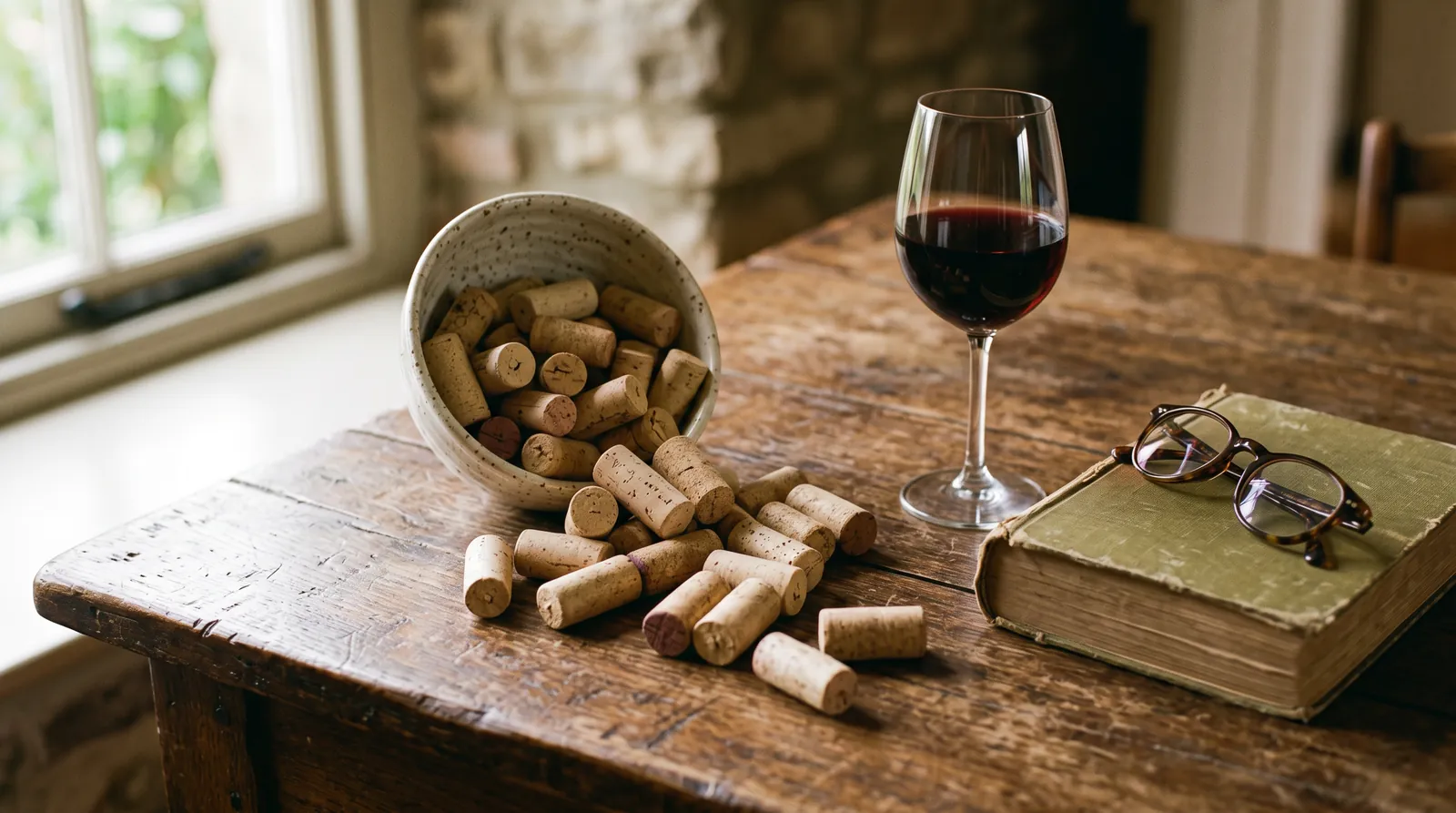
Vier woorden om eerst te leren
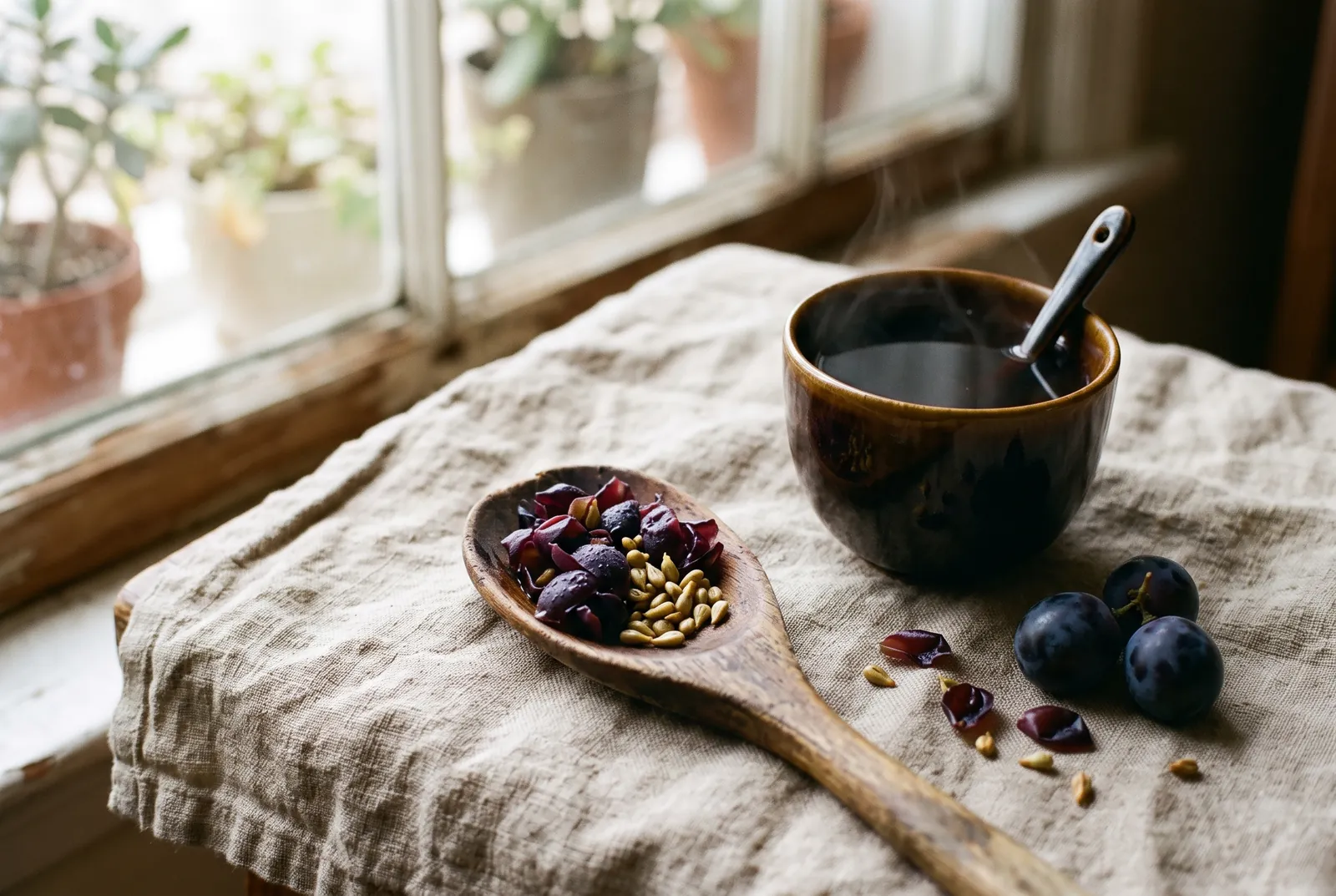
Tannine
Het droge, wringende gevoel in rode wijn, zoals sterke thee. Het komt van druivenschillen en pitten.
Neem een slok stevige rode wijn en laat je tong over je tandvlees glijden. Dat droge, ruwe gevoel is tannine.
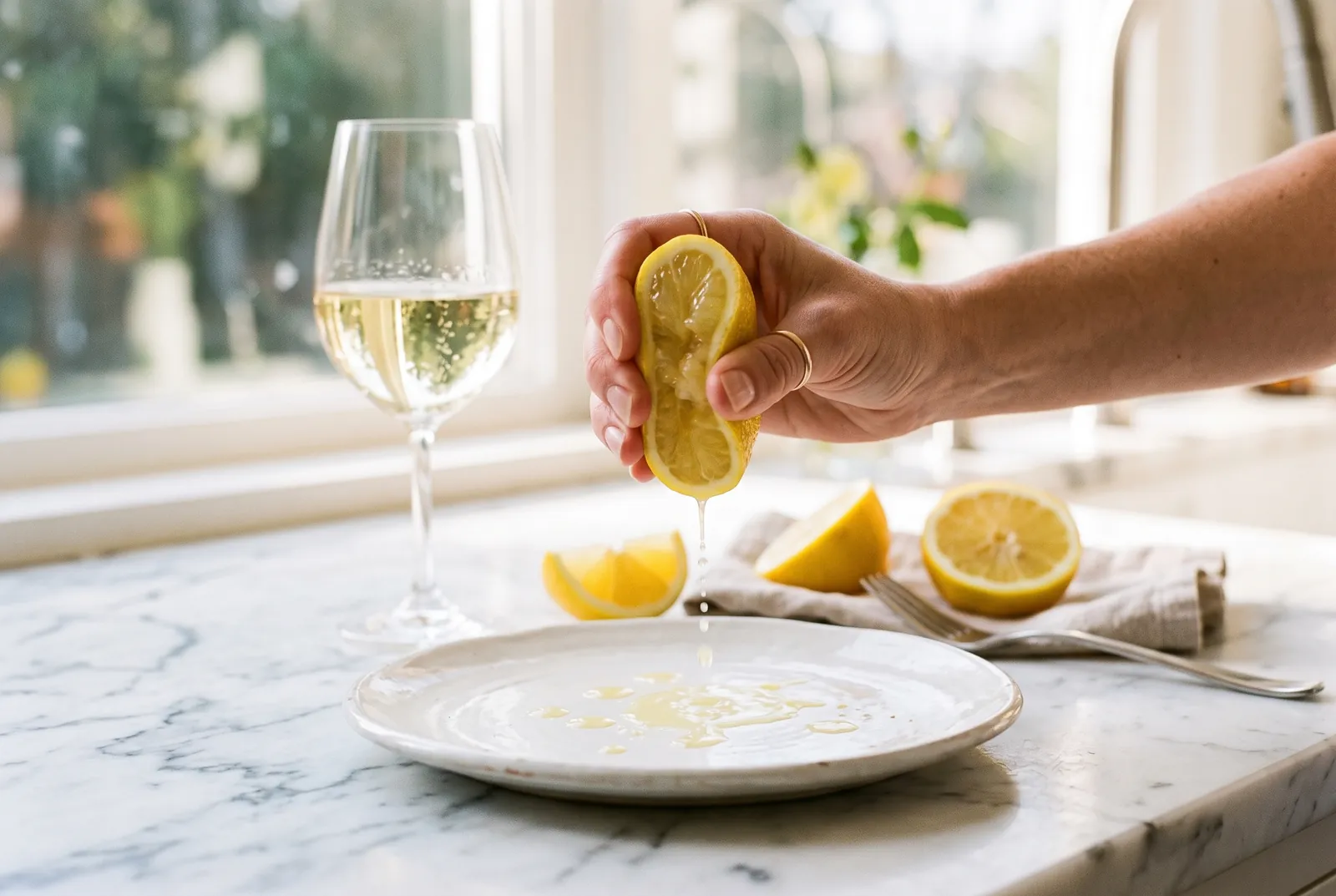
Zuurgraad
De mondwaterende frisheid in een wijn, zoals de pit in limonade. Het houdt de wijn levendig en helpt hem bij het eten.
Als je mond vol water loopt na een slok, heeft de wijn volop zuurheid.
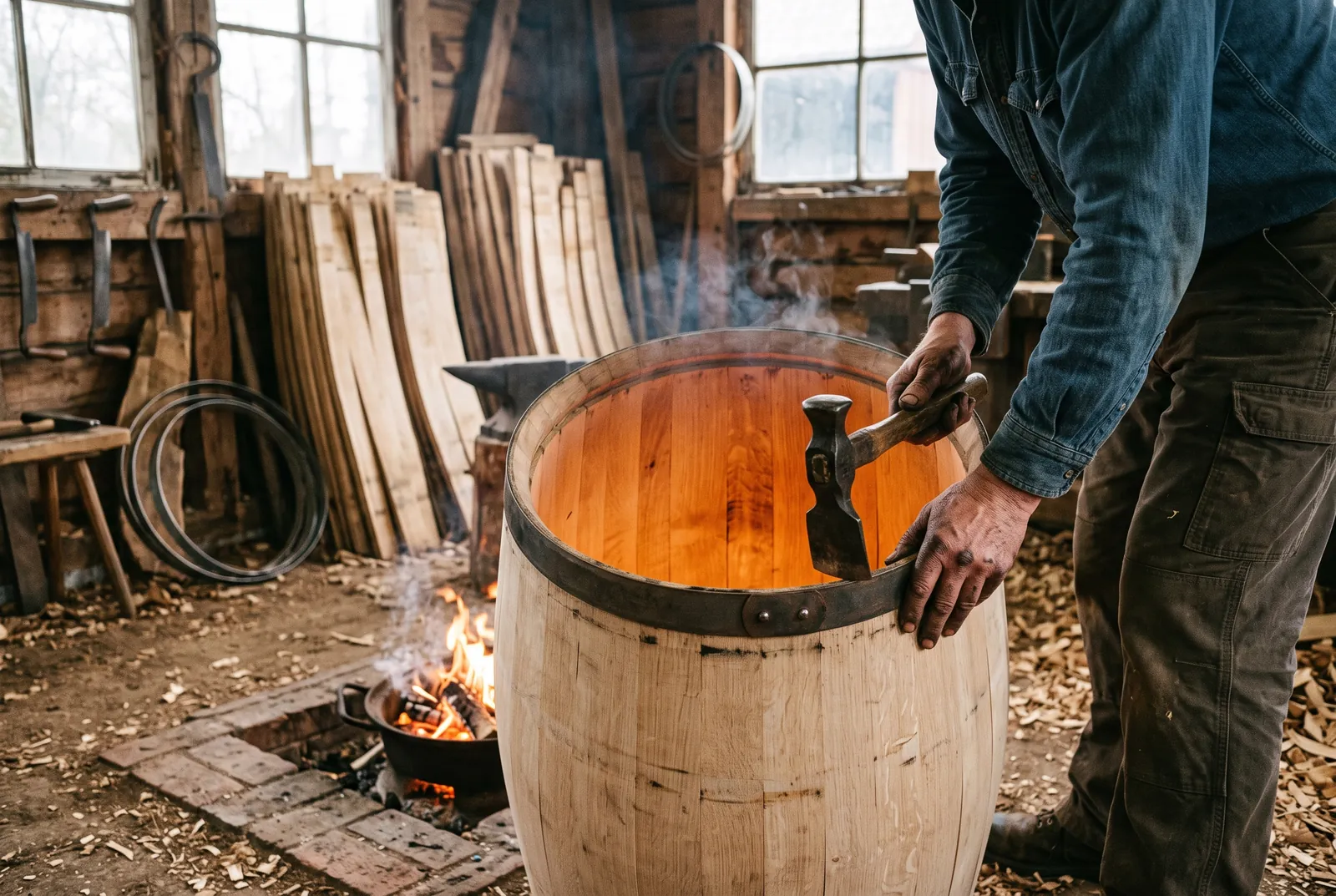
Eik
Veel wijnen rijpen in eikenhouten vaten, die smaken toevoegen zoals vanille, toast en specerijen.
Ruik je vanille, toast of kokos? Dat is meestal het vat dat spreekt.
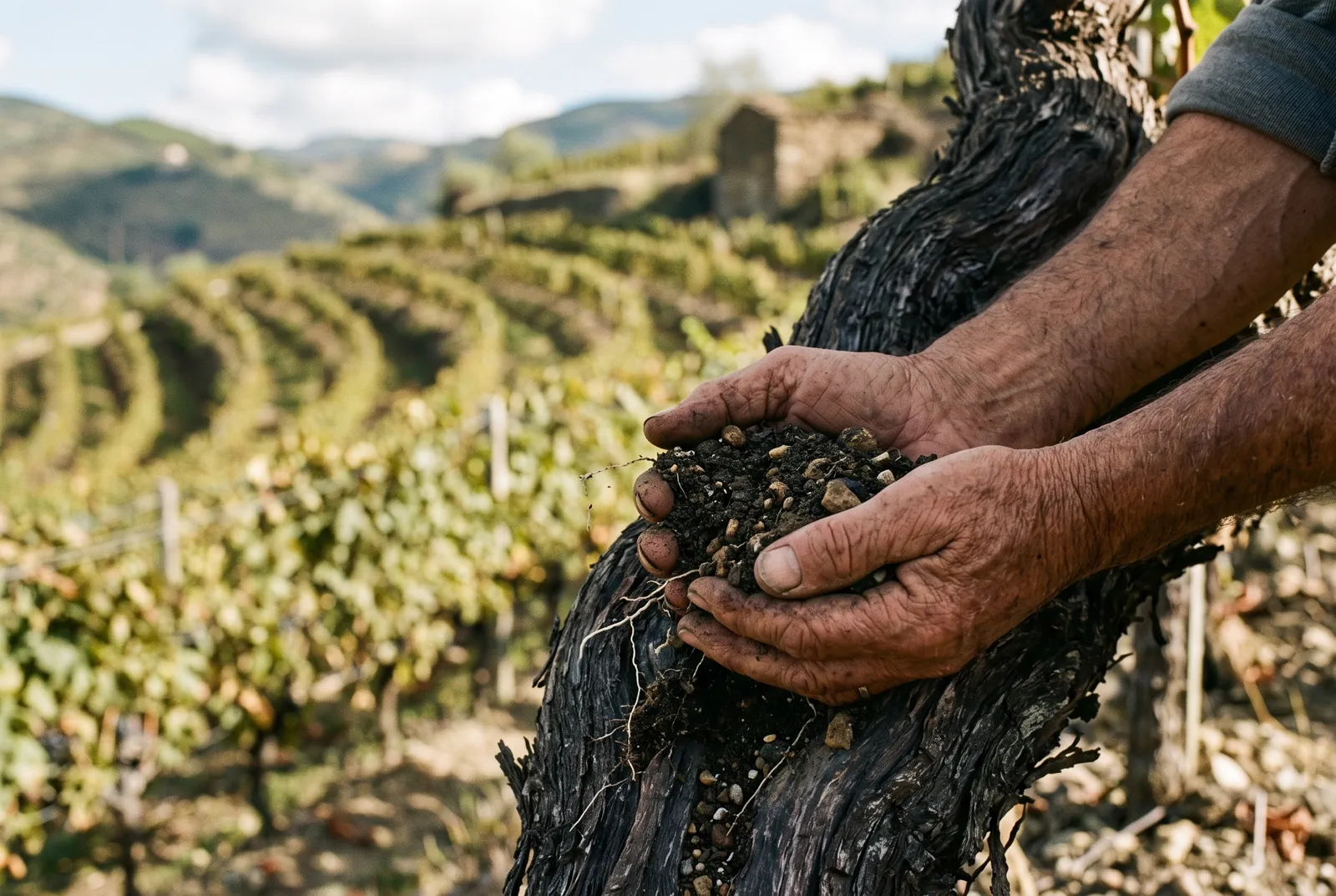
Terroir
Een Frans woord voor alles over de plek waar een wijn vandaan komt: bodem, helling en klimaat.
Proef dezelfde druif van twee verschillende plaatsen naast elkaar. Dat verschil is terroir.
Alledaagse wijntermen
Wijnbasiskennis →- Appellation
- Een officieel, wettelijk beschermde plaatsnaam voor wijn, zoals Chablis of Napa Valley.
- Blend
- Een wijn gemaakt van meer dan één druif. Rode Bordeaux en de meeste Champagne zijn blends.
- Body
- Hoe zwaar de wijn aanvoelt in je mond. Denk aan magere melk voor licht en room voor vol.
- Brut
- Op mousserend wijn: droog. Extra Brut is nog droger.
- Kurksmaak
- Een fout die wijn naar vochtig karton doet ruiken. Die komt van een aangetaste kurk, niet van kurkresten in het glas.
- Cru
- Frans voor een wijngaard of domein van erkende kwaliteit. Grand cru is de hoogste rang.
- Decanteren
- Wijn in een karaf overgieten voor het serveren, om hem lucht te geven of bezinksel achter te laten.
- Droog
- Niet zoet. De meeste wijn is droog.
- Afdronk
- De smaak die blijft nadat je doorgeslikt hebt. Een lange afdronk is een goed teken.
- Non-vintage
- Een blend van meerdere jaren, gebruikelijk in Champagne. Aangeduid als NV.
- Sommelier
- De persoon in een restaurant die de wijn beheert en je helpt bij het kiezen.
- Druivenras
- Een wijn gemaakt van voornamelijk één druif en daarnaar vernoemd, zoals een Merlot.
- Oogstjaar
- Het jaar waarin de druiven werden geplukt.
De zakelijke termen
Termen uit de handel rondom wijn: kopen, verkopen, transport en prijsvorming. Handig als je de prijspagina's op deze site leest.
A
Allocation
The fixed quantity of a scarce wine a producer offers to a given importer or merchant each vintage, usually at a price well below the secondary market. In Burgundy and cult Napa, the allocation itself is a valuable right.
Appellation
A legally defined wine-producing area with rules on grapes, yields and methods (AOC/AOP in France, DOC/DOCG in Italy, AVA in the United States). Fixes the supply of a named wine to a mapped area.
B
Buyer's premium
The percentage an auction house adds to the hammer price, commonly 15–25%, paid by the buyer. One of the transaction costs that a gross return leaves out.
C
CAGR
Compound annual growth rate: the steady yearly rate that would take a starting value to an ending value over the years between, (end/start)^(1/years) − 1. Corkonomics annualises only spans of a year or more.
Classified growth (cru classé)
A château ranked in an official classification — the 1855 Médoc and Sauternes lists (first to fifth growths), Saint-Émilion's periodically revised list, the Graves classification. Fixes reputation and, with it, pricing power.
D
Drawdown
The largest decline from a previous peak in a price series, expressed as a negative percentage. Describes the worst moment of holding an asset, not its end result.
E
En primeur
The sale of Bordeaux wine as futures in the spring after the harvest, about eighteen months before bottling and delivery, at a price set by the château and offered through the Place de Bordeaux. Historically a discount for early commitment; in recent campaigns often not.
G
Grand cru
In Burgundy, a vineyard site at the top of the appellation hierarchy (33 in the Côte d'Or, about 550 ha). In Bordeaux, a term used in classifications with different meanings (Saint-Émilion Grand Cru is a broad appellation). In Champagne, one of 17 villages rated 100% on the échelle des crus.
Grape Crush Report
The annual California report (CDFA / USDA NASS) of tons crushed and weighted average prices per ton by district and variety — the most transparent grape-price record in the world, and the source of Napa's grape economics on this site.
H
HTS (Harmonized Tariff Schedule)
The United States tariff schedule, maintained by the USITC. Wine is heading 2204; the base duties are specific rates per litre (6.3¢/l for still wine ≤ 14% in containers ≤ 2 l; 19.8¢/l sparkling). Additional measures by origin sit on top.
Hammer price
The price at which an auction lot is knocked down, before the buyer's premium. The seller receives the hammer less commission; the buyer pays the hammer plus premium. Corkonomics records hammer and premium separately.
Hectolitre (hl)
One hundred litres, or 133 bottles of 750 ml. The unit of European wine production and yield.
I
IEEPA
The International Emergency Economic Powers Act, cited for the 2025 'reciprocal' tariffs; the Supreme Court held on 20 February 2026 that it does not authorise tariffs, and the duties were refunded.
Imputed land cost
The opportunity cost of the capital tied up in a vineyard — its value times a cost of capital — charged per bottle. Used in the cost model because most top estates own land they never bought at market. Not a purchase price and not a cash cost.
In bond
Wine held in a licensed bonded warehouse on which duty and sales tax have not yet been paid. Trade prices are quoted in bond; the wine can be sold on without leaving. The warehouse record becomes part of the wine's provenance.
M
Monopole
A Burgundy vineyard owned entirely by one producer — Romanée-Conti and La Tâche (DRC), La Romanée (Liger-Belair). The purest case of fixed supply.
N
Négociant
A merchant house that buys wine (or grapes) from producers and sells it on under its own label or the producer's. In Bordeaux, the intermediary between château and importer, working on a margin of roughly 10–20%.
P
Place de Bordeaux
The distribution system of Bordeaux: châteaux sell to négociants through courtiers (brokers), who sell on to importers and merchants worldwide. Several non-Bordeaux wines — Opus One, Sassicaia, Masseto among them — also distribute through it.
Prestige cuvée
A Champagne house's top wine — Dom Pérignon, Cristal, Krug, La Grande Année — usually vintage, aged for years before release, and the collectible tier of the region.
Provenance
The documented history of a bottle or case: where it has been stored, by whom, since release. Priced explicitly by the market; a wine without provenance may be unsaleable at the top.
R
Real return
A return with inflation removed, so that a rise in price is separated from a fall in the value of money. Corkonomics deflates by the US consumer price index.
Release price
The price at which a producer first offers a vintage — ex-château en primeur in Bordeaux, the allocation price in Burgundy, the mailing-list price in Napa, the house price in Champagne. Recorded on Corkonomics with its currency, date and source.
S
SAFER
The French land agencies that publish vineyard prices by appellation each year (Le prix des terres). The source of French land values on this site.
Scarcity score
Corkonomics' 0–100 estimate of how hard a wine-vintage is to find: it starts from the bottles made, assumes a share is drunk every year, and adjusts for bottle size and the producer's standing. 100 means very few bottles are likely left; blank means no production figure is published. Not a rating of quality.
Secondary market
Every sale after the producer's first: merchants, auction houses and exchanges trading wine already released. Where scarce wines are priced in practice.
Section 301
A provision of the Trade Act of 1974 under which the US Trade Representative can impose duties in response to foreign practices. From 24 July 2026 the basis of the 10%/12.5% additional duties on imports from 60 economies, including wine.
T
Three-tier system
The US structure under which most wine passes from producer to distributor to retailer, each taking a margin; together they commonly double the winery price. Direct-to-consumer sales bypass it.
V
Volatility
The annualised standard deviation of changes between price observations — how jumpy a price path was. Corkonomics computes it only with eight or more observations.
Y
Yield
Grape or wine output per unit of vineyard: hectolitres per hectare in Europe, tons per acre in the United States, kilograms per hectare in Champagne. Appellation rules cap it; top estates crop below the cap. One hl/ha is about 133 bottles per hectare.