 Bordeaux
 Burgundy
 Champagne
 Rhône
Rhône Napa Valley
 Tuscany
 Piedmont
 Mosel
Mosel Oregon
 Rioja
Rioja California sparkling
 Valais and Lavaux
 England
 Douro
Douro Etna
Etna Mendoza
 Marlborough
 Stellenbosch
 Barossa Valley
 Tasmania
 Beaujolais
 Jura
Jura Alsace
 Loire
Loire Provence
 Ribera del Duero
 Sonoma
 What land costs
 Good years and bad
 Appellations
 Famous vineyards
 Famous wines
 Who makes them
 Find a vintage
 Compare wines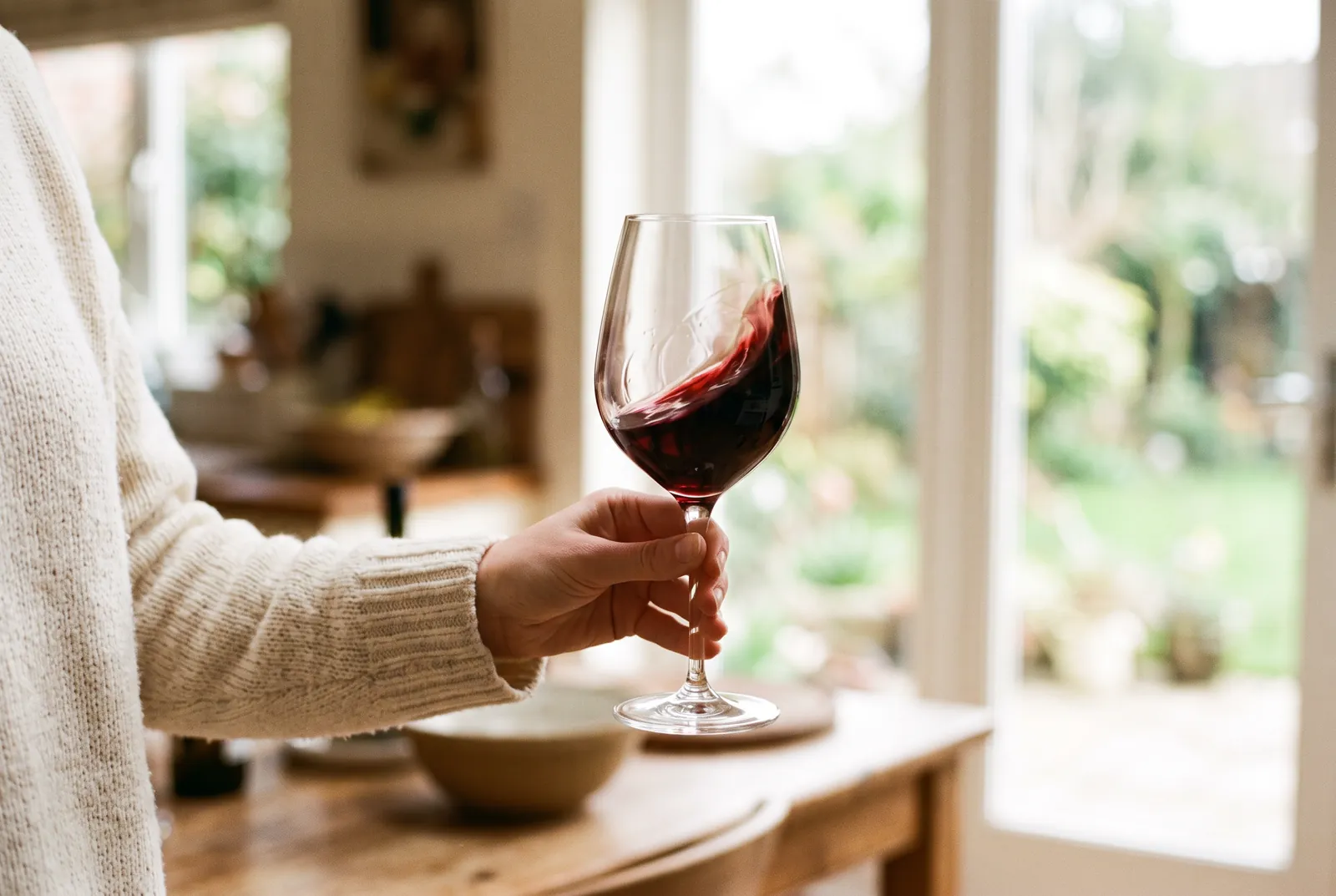
1. Look
Tilt the glass over something white. A pale red is usually lighter in taste and a dark one fuller. A white that is deep gold is often older, sweeter or aged in oak.
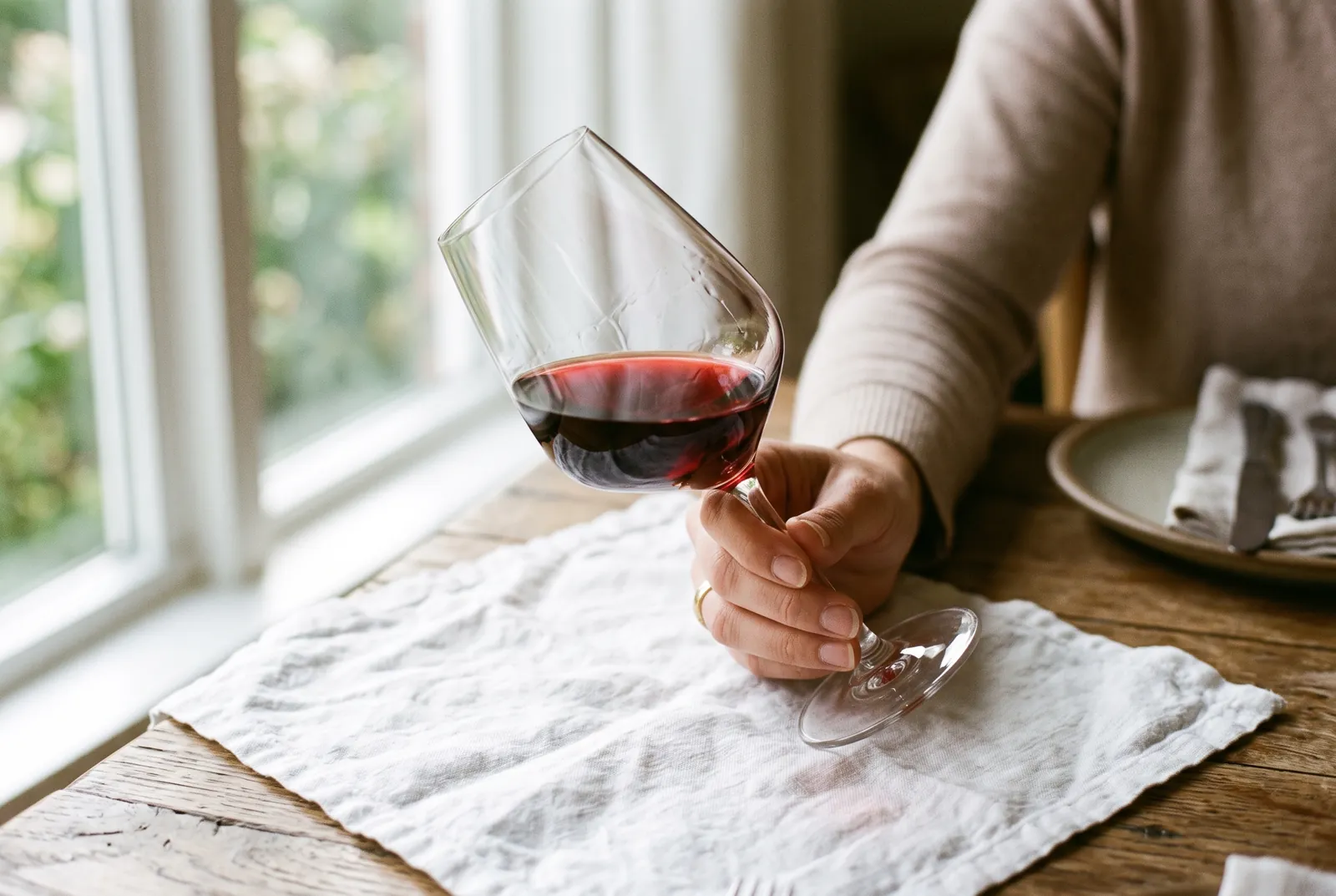
2. Swirl
Keep the base of the glass on the table and draw small circles. Swirling mixes in air and lifts the smells out of the wine. This is the only reason people do it.
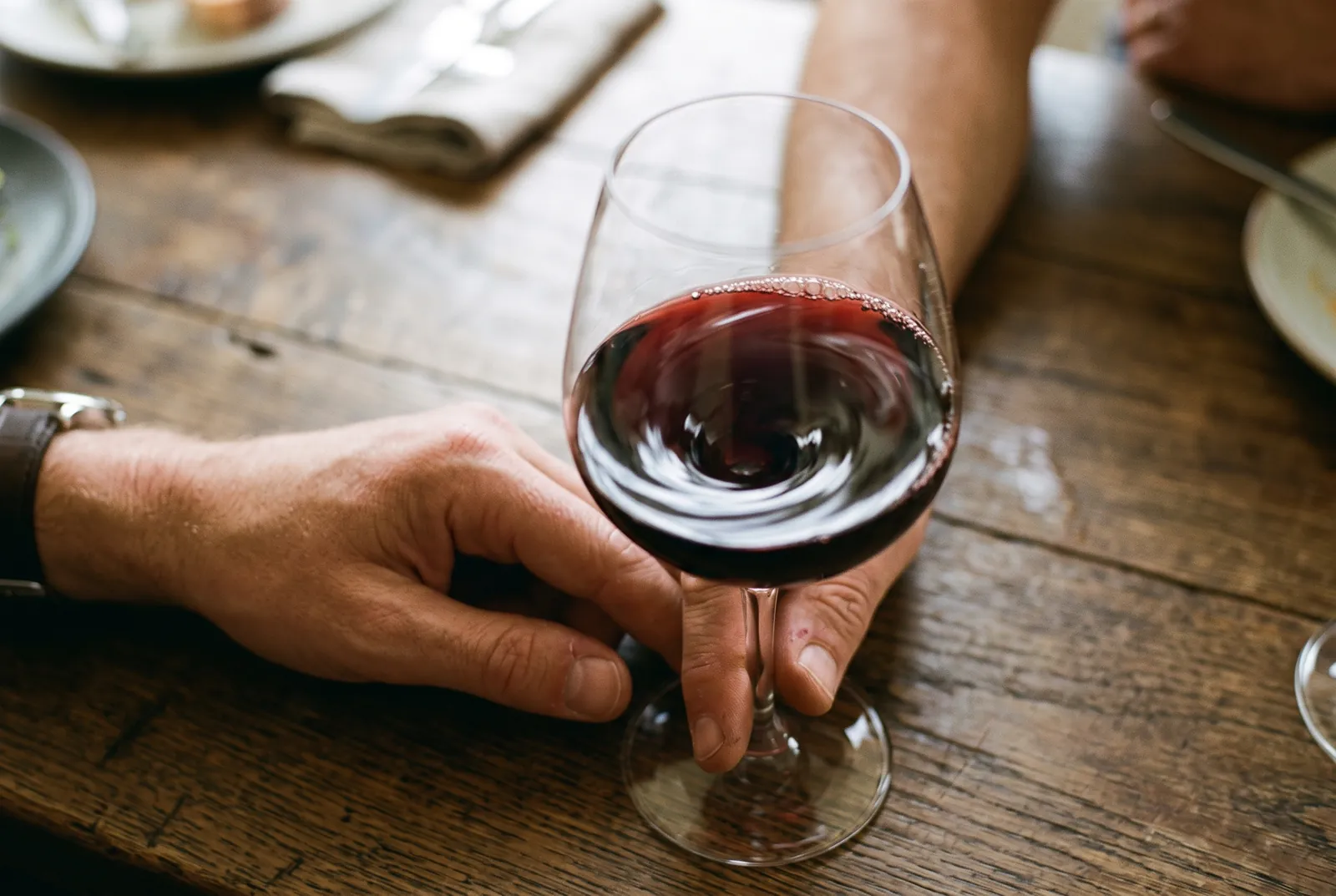
3. Sniff
Put your nose right in the glass and take a short sniff. Most of what we call taste is really smell. You do not need fancy words. Ask yourself one question: fruit, flowers, spice, or something earthy?
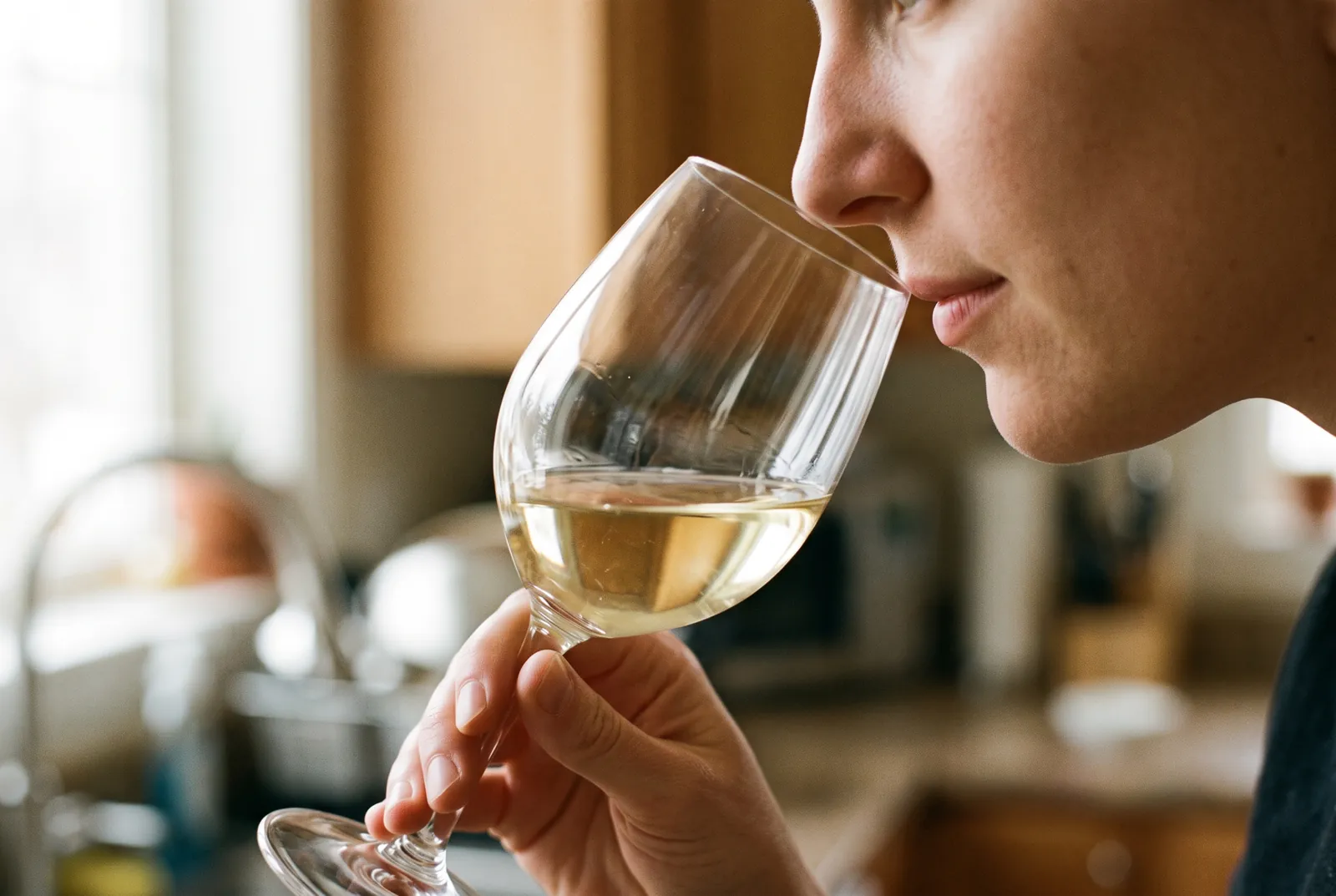
4. Sip
Take a sip and let it sit on your tongue for a second or two. Then notice four things.
- Sweetness. Is there any sugar, or is it dry?
- Acidity. Does it make your mouth water, like lemonade? That is acidity, and it makes wine feel fresh.
- Tannin. Does it dry your gums, like strong tea? That is tannin, found mostly in reds.
- Body. Does it feel light like skimmed milk, or heavy like cream?
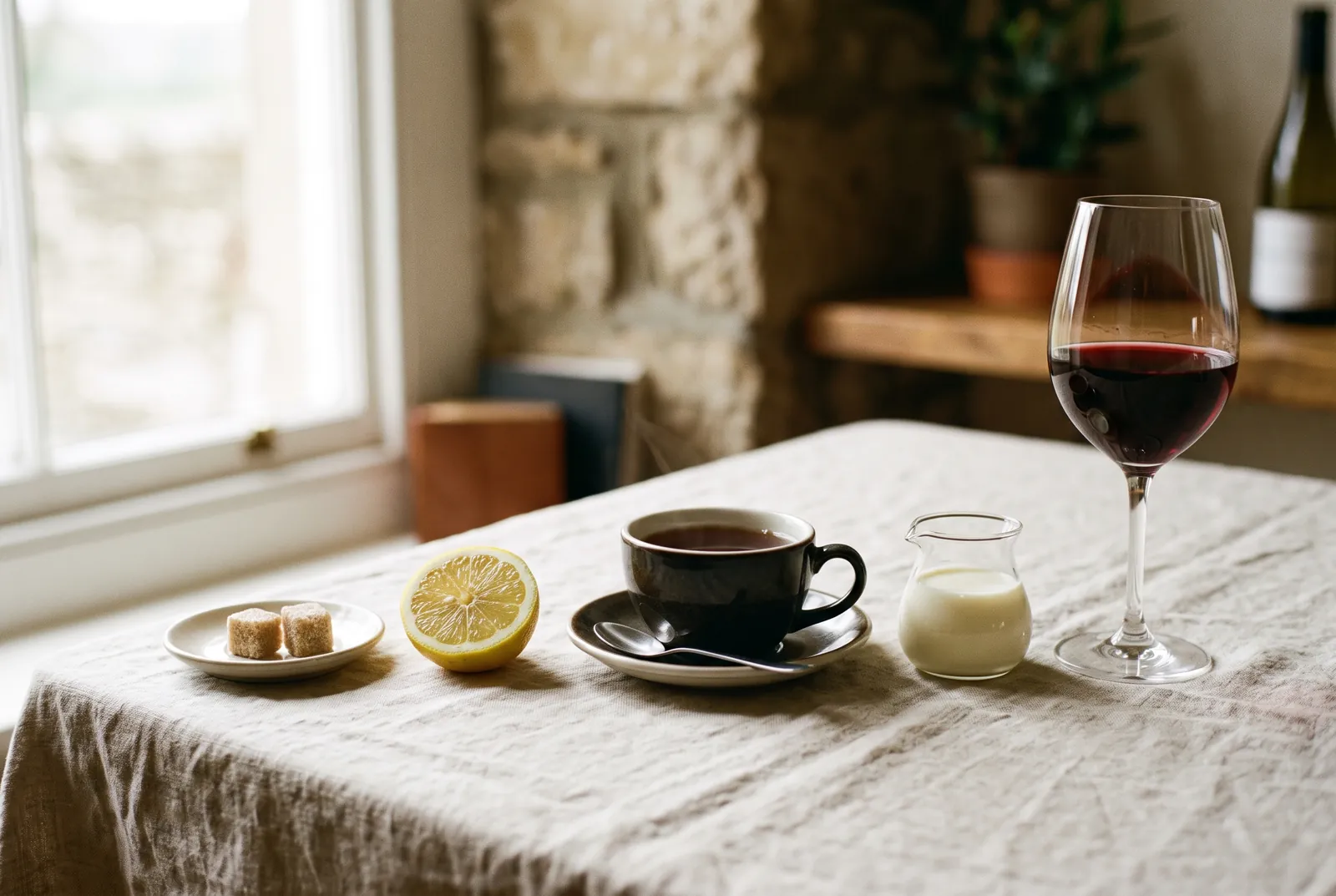
Then the only question that matters
Do you like it? Nobody can answer that for you, and there are no wrong answers. If you remember which grape and which place you enjoyed, you already know how to find your next bottle.
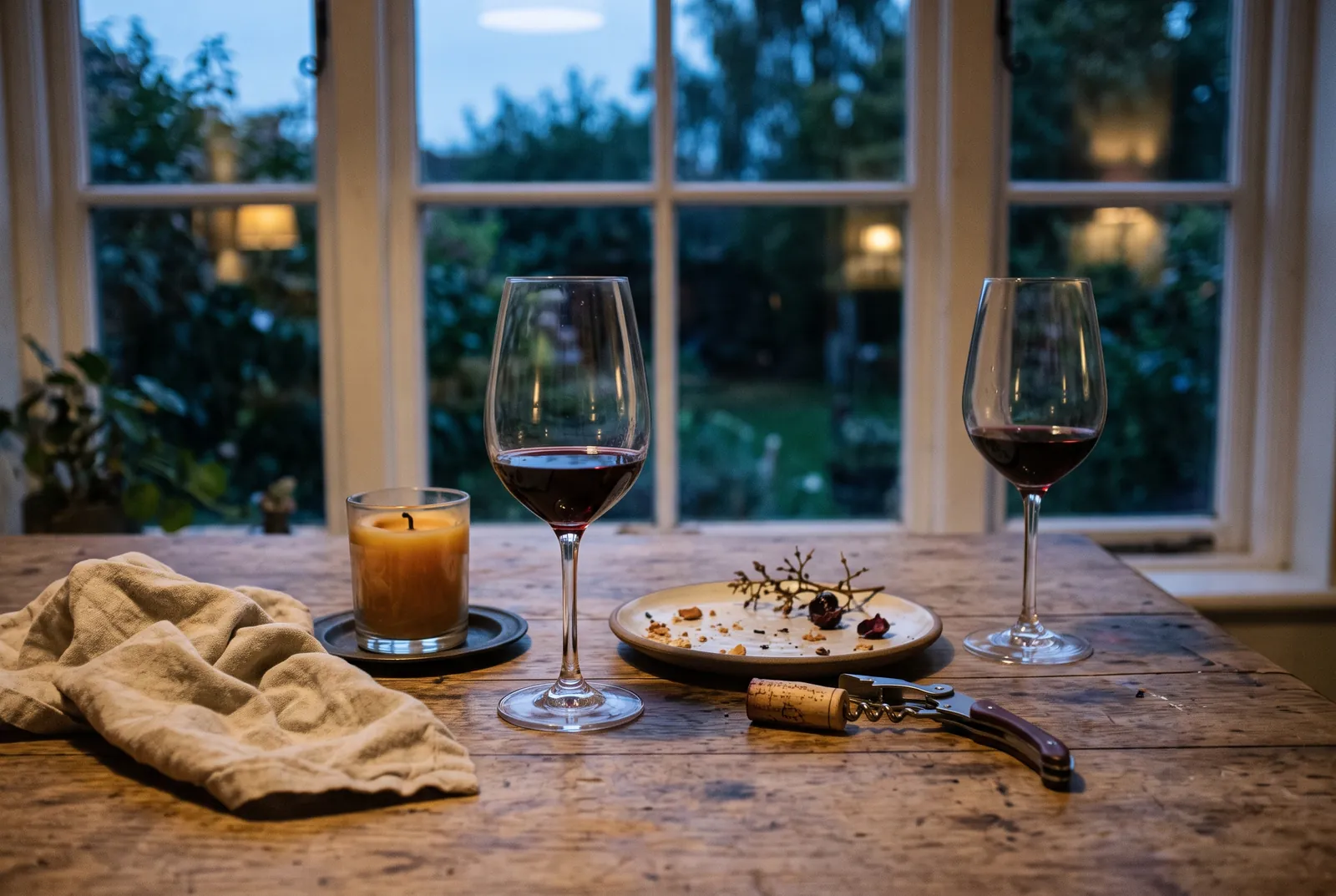
Smells of vanilla, toast or coconut usually come from the oak barrel, not the grape.
More short lessons
 4 min read
How to read a wine label
A label answers four questions: who made it, where, from which grape, and in which year. The trick is knowing…
 5 min read
How wine is made, in five steps
Wine is fermented grape juice. Yeast eats the sugar in ripe grapes and turns it into alcohol. Everything else…
 4 min read
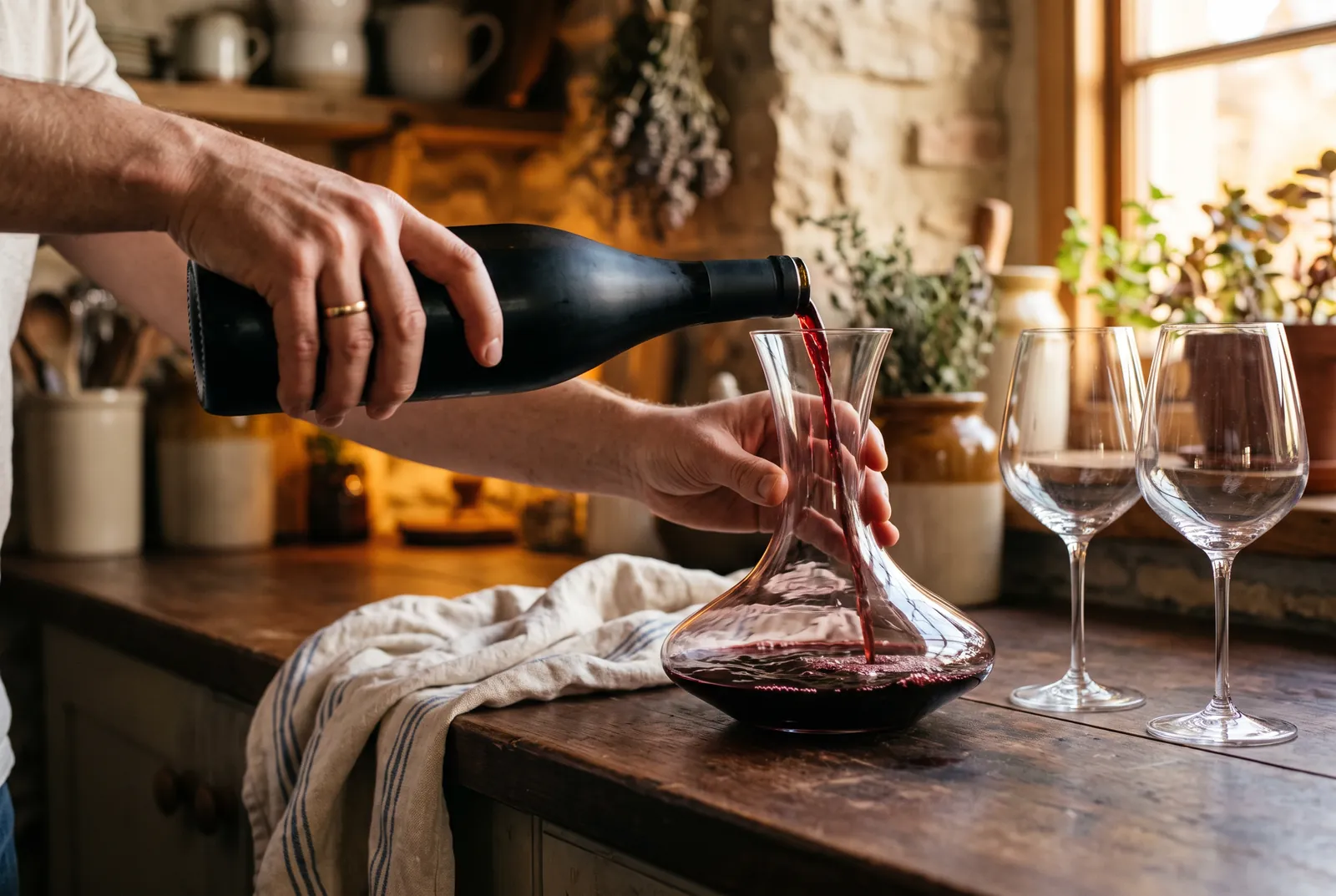
Serving and storing wine at home
You do not need a cellar or special glasses. A few simple habits get the best out of any bottle.