 Bordeaux
 Burgundy
 Champagne
 Rhône
Rhône Napa Valley
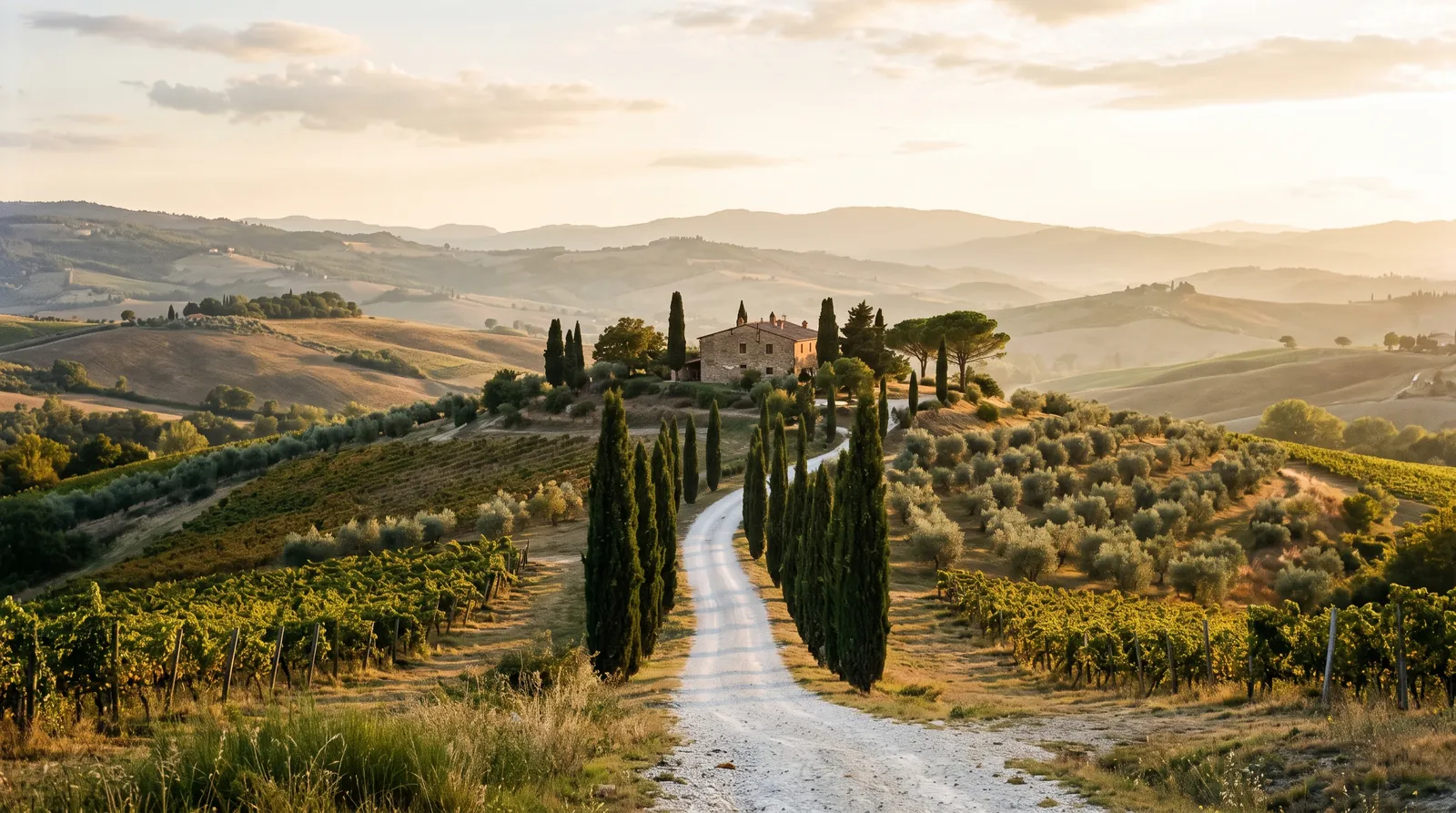
 Tuscany
 Piedmont
 Mosel
Mosel Oregon
 Rioja
Rioja California sparkling
 Valais and Lavaux
 England
 Douro
Douro Etna
Etna Mendoza
 Marlborough
 Stellenbosch
 Barossa Valley
 Tasmania
 Beaujolais
 Jura
Jura Alsace
 Loire
Loire Provence
 Ribera del Duero
 Sonoma
 What land costs
 Good years and bad
 Appellations
 Famous vineyards
 Famous wines
 Who makes them
 Find a vintage
 Compare wines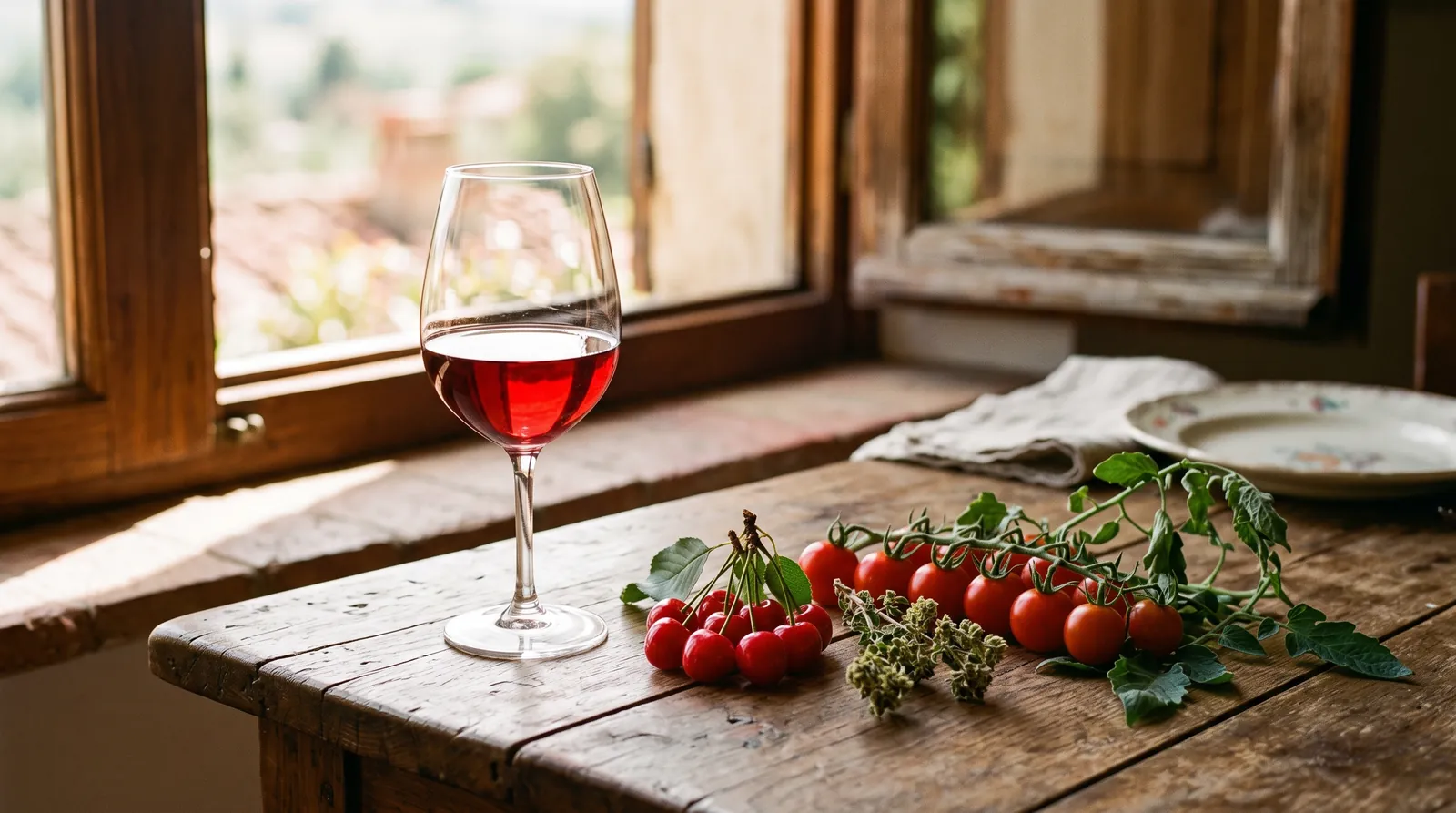
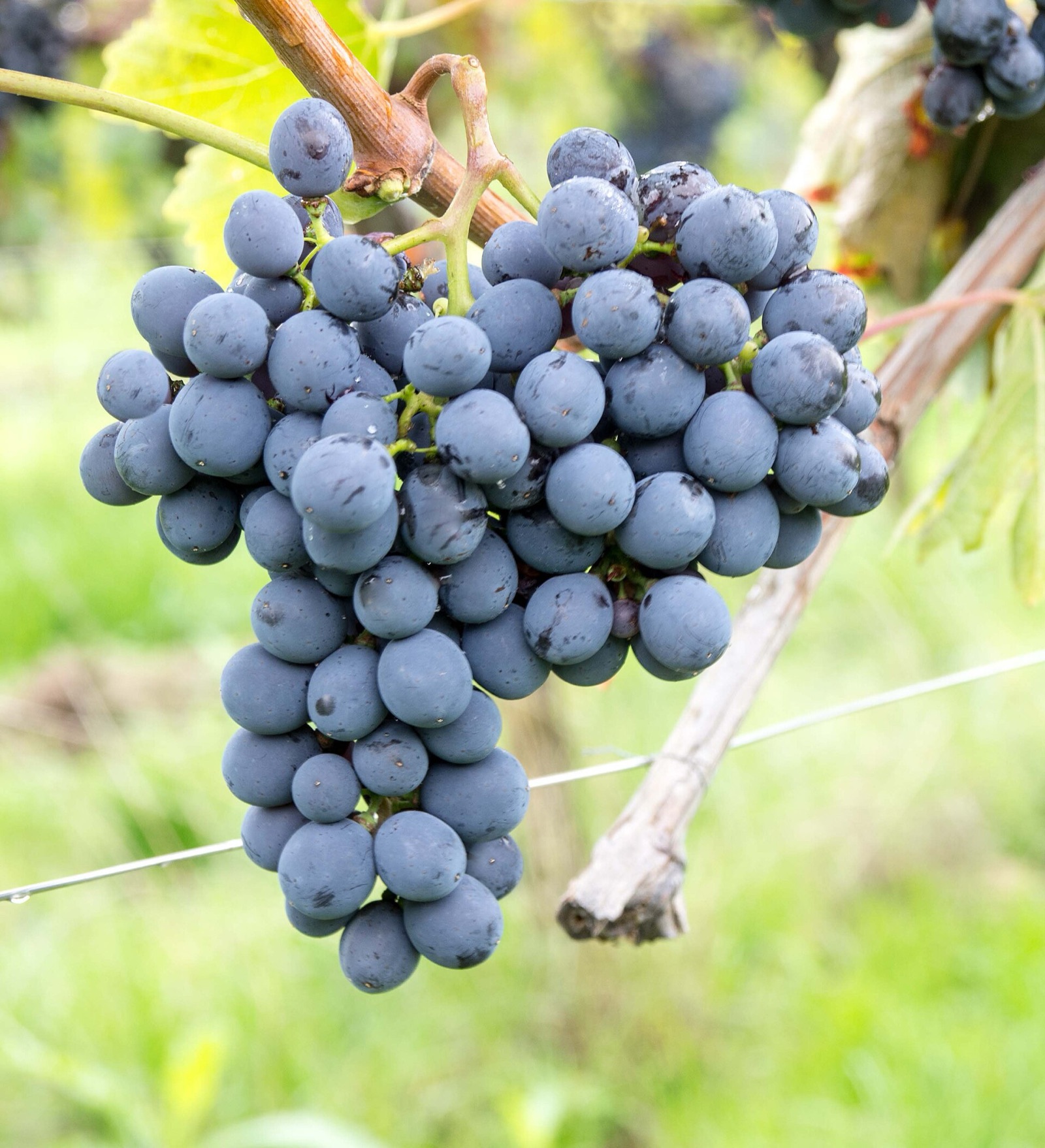
Sangiovese in a minute
- Tastes of
- Sour cherry
- Tomato leaf
- Dried herbs
- Leather
- Most famous in
- Tuscany: Chianti and Brunello di Montalcino
- What to try next
- If you like it, try Nebbiolo for more power, or Tempranillo for more smoothness.
 Nebbiolo
 Tempranillo
How it feels in the glass
- Body
- LightFull
- Tannin
- SoftGrippy
- Acidity
- SoftZingy
Body is how heavy the wine feels. Tannin is the dry grip of strong tea. Acidity is the mouth-watering freshness of lemonade. How to taste wine
At the table
What to eat with it
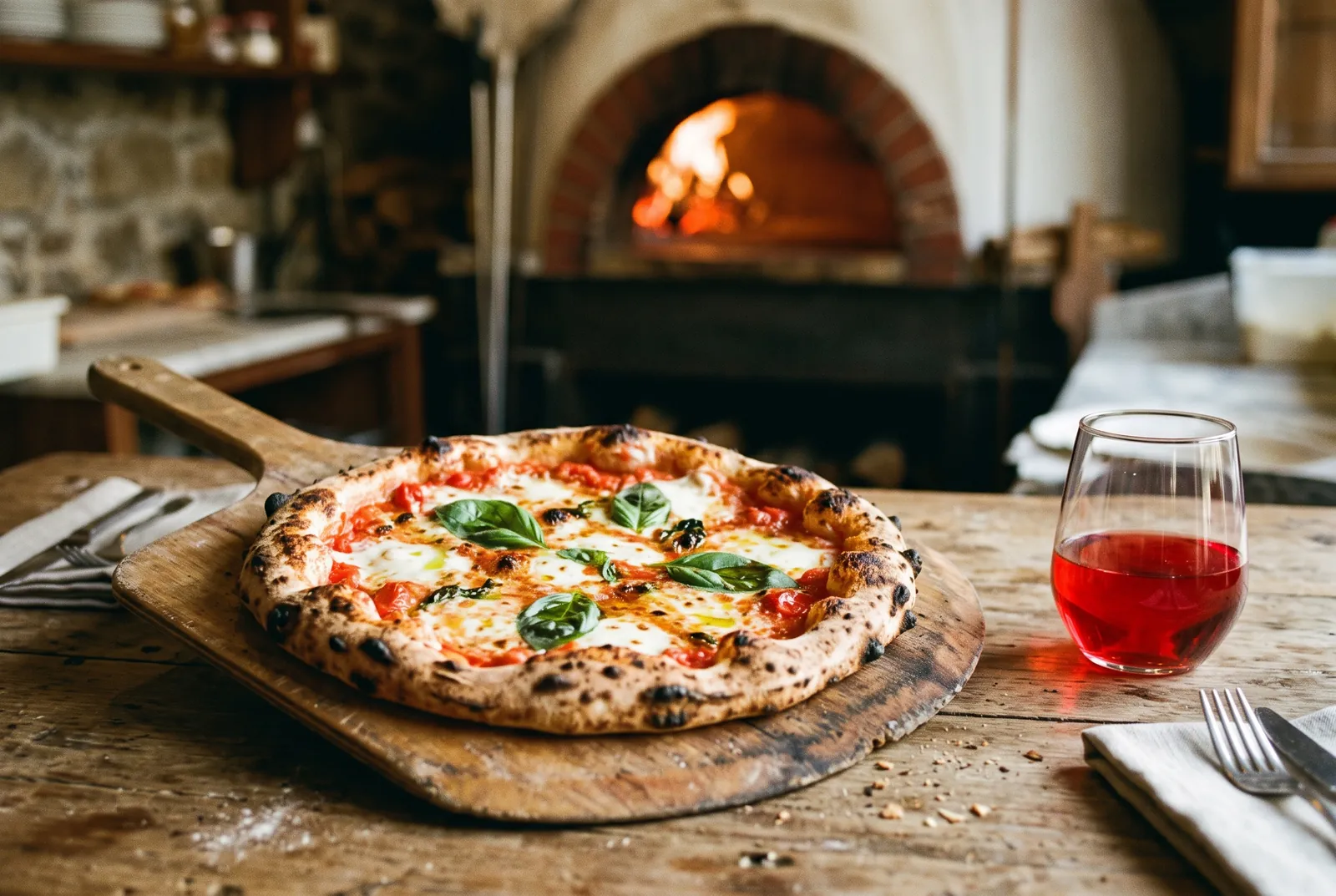
Tomato pasta, pizza, grilled meat.
Tomato is sharp and so is Sangiovese. The two balance each other, which is why Chianti and tomato sauce are old friends.
The business side
Sangiovese makes most of Tuscany's wine and its economics span the whole range from bulk Chianti to Brunello's long-aged riservas. At Montalcino the aging requirement — release in the fifth year — is the dominant cost.
Economics
Sangiovese makes most of Tuscany's wine and its economics span the whole range from bulk Chianti to Brunello's long-aged riservas. At Montalcino the aging requirement — release in the fifth year — is the dominant cost.
Key facts
Plantings
≈ 70,000 ha in ItalyISTAT
Where it grows
Sources
- California Grape Crush Report (prices per ton by variety and district), CDFA / USDA NASS, 2025. Retrieved 3 September 2026.
- OIV Distribution of the world's grapevine varieties, OIV, 2017. Retrieved 3 September 2026.
Last reviewed: September 2026Report an error on this page