 Bordeaux
 Burgundy
 Champagne
 Rhône
Rhône Napa Valley
 Tuscany
 Piedmont
 Mosel
Mosel Oregon
 Rioja
Rioja California sparkling
 Valais and Lavaux
 England
 Douro
Douro Etna
Etna Mendoza
 Marlborough
 Stellenbosch
 Barossa Valley
 Tasmania
 Beaujolais
 Jura
Jura Alsace
 Loire
Loire Provence
 Ribera del Duero
 Sonoma
 What land costs
 Good years and bad
 Appellations
 Famous vineyards
 Famous wines
 Who makes them
 Find a vintage
 Compare wines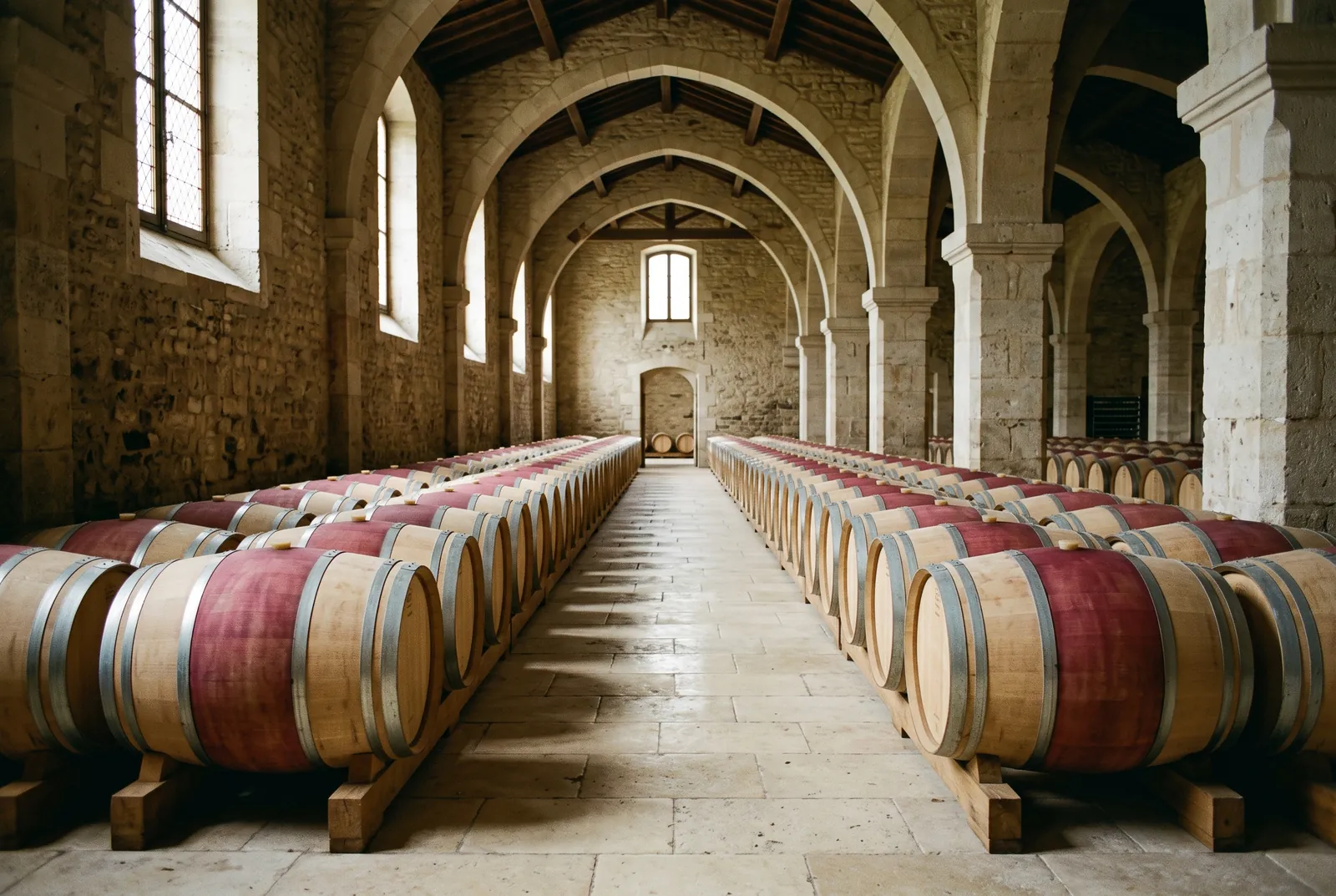
By the end you will be able to
- Compare price-per-ton and price-per-acre grape contracts and who carries the risk in each
- Decide whether lower yields pay by comparing revenue per acre
- Work out a winery's break-even volume from its fixed costs, price and variable cost
- Calculate the interest cost of wine tied up while it ages
- Explain how brand and scarcity let a winery price above its costs
Grape prices and contracts
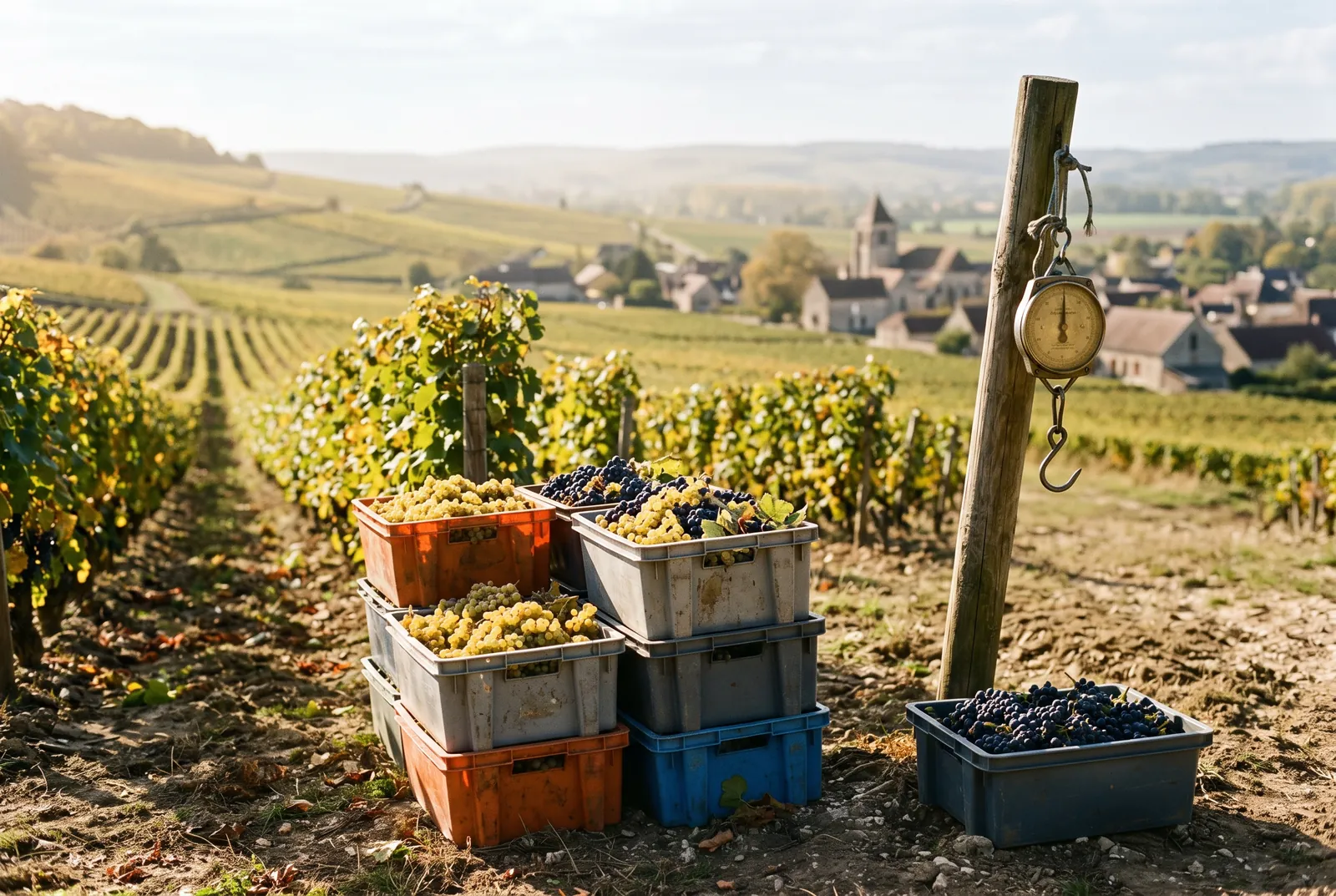
Many wineries buy some or all of their grapes, and many growers never make wine at all. How they deal with each other shapes both businesses. In California, the official crush reports publish the average prices paid per ton by variety and district every year, and they show huge gaps: famous districts and varieties fetch many times what bulk grapes do.
The simplest deal is a price per ton. The winery pays for what is picked. If the vines give a big crop, the grower earns more; if frost halves the crop, the grower earns less. The grower carries the yield risk.
A price per acre contract works differently. The winery rents the output of a block of vines and pays the same amount however much fruit comes off it. Wineries like this when they want low yields for quality, because the grower loses nothing by cutting the crop. Now the winery carries the yield risk.
Contracts can also run for several years, with bonuses or penalties for ripeness, health of the fruit, or picking on time. Long contracts give the grower a steady income and the winery a steady supply. The alternative is the spot market, buying and selling grapes at whatever the going price is that harvest. That brings flexibility but also risk. When there is too much wine around, as there has been in several regions recently with global wine drinking drifting lower, spot prices fall and some growers struggle to find buyers at all. In a short year, wineries without contracts may not get the fruit they need.
Every contract is really a decision about who carries which risk, and at what price.
Remember A per-ton price leaves yield risk with the grower; a per-acre price moves it to the winery.
Quality against quantity
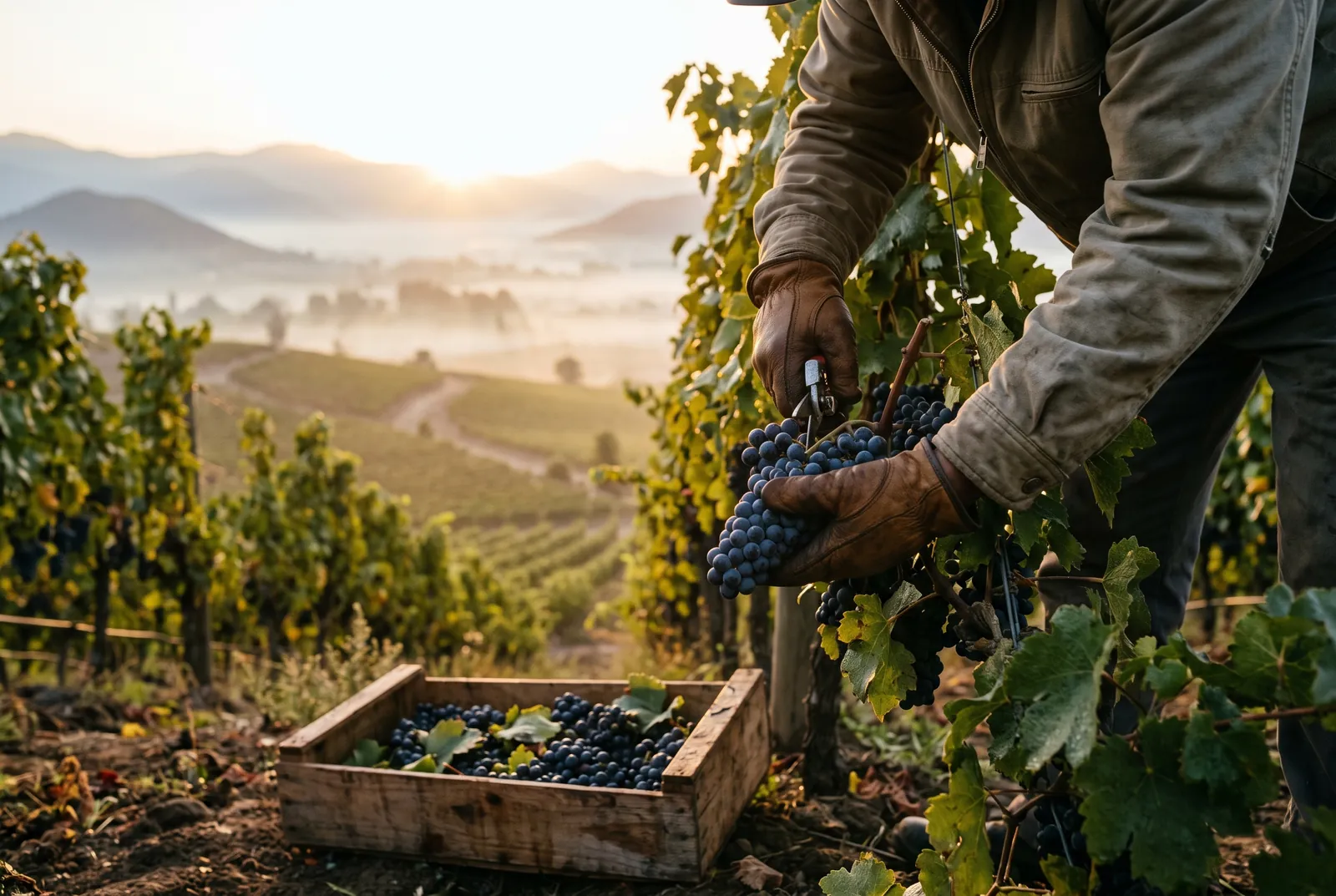
Every grower faces a trade-off. More fruit per acre means more to sell. Less fruit per acre usually means riper, more concentrated grapes that can fetch a higher price. Making quality also costs money directly: cutting off bunches in summer (a "green harvest"), picking by hand rather than by machine, and sorting out damaged berries all take labour.
The economic test is to compare revenue per acre, not price per ton. Here is a made-up grower with round numbers. Farmed for volume, an acre gives 5 tons sold at $2,000 a ton: $10,000 an acre. Farmed for quality, it gives 3 tons, and if a winery will pay $4,000 a ton, that is $12,000 an acre. Quality wins by $2,000, before the extra labour. But if the winery will only pay $3,000 a ton, the 3 tons bring $9,000, and quality loses.
The key point is that the premium must be paid by someone. A grape is only worth more if a winery can sell the finished wine for more, and that depends on reputation, the region's name and the market. A grower in a little-known district may cut yields, make superb fruit, and still be paid the district average.
This is why the same decision makes sense in one place and not another. In a famous appellation, buyers already pay for quality, so low yields are rewarded. In a bulk region selling to supermarkets, the price per ton barely moves with quality, so growers maximise volume and keep costs down. Neither grower is foolish: each is responding to the prices they actually face.
Remember Lower yields pay only when the higher price per ton more than makes up for the smaller crop.
Weather risk
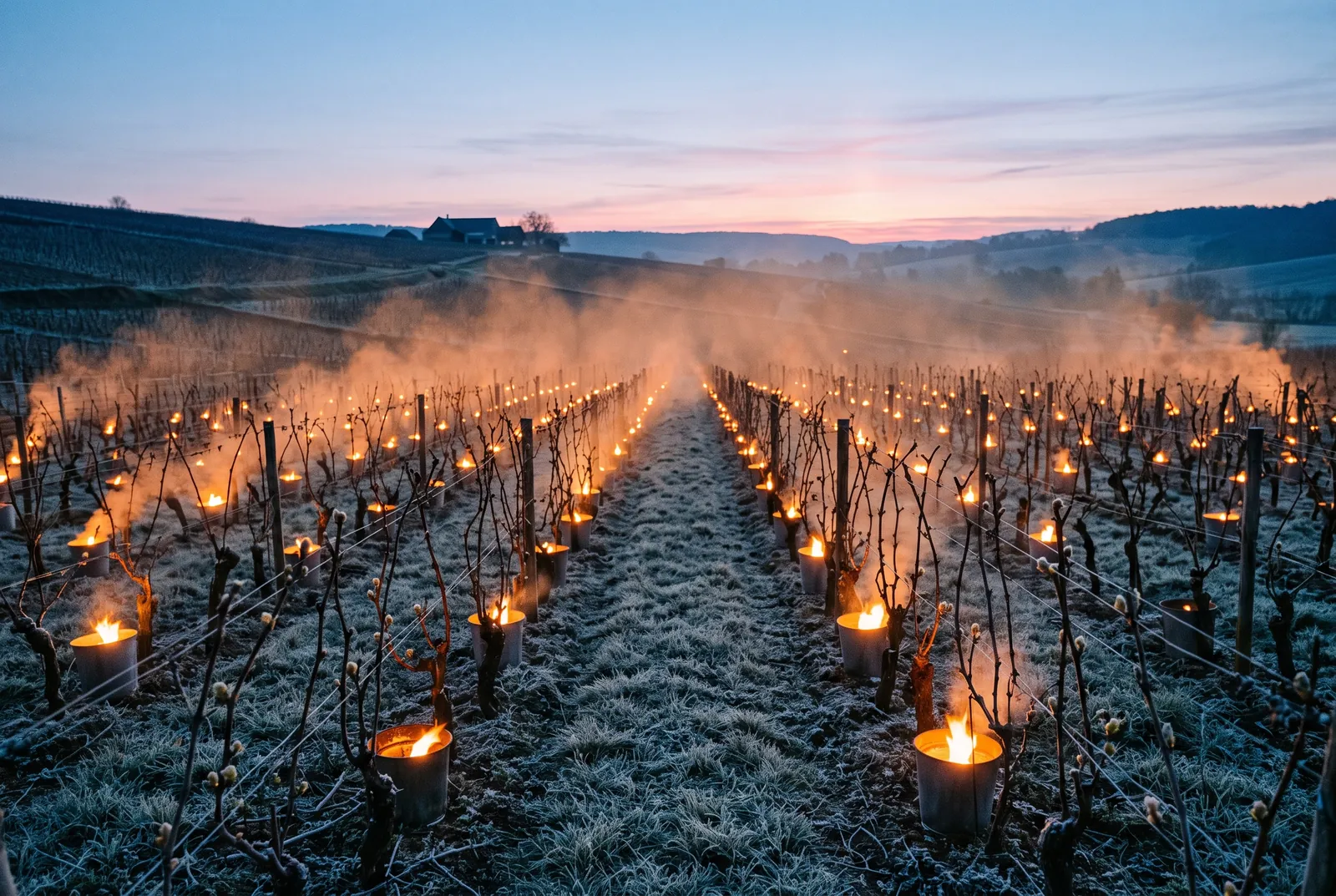
A factory can plan next year's output to the last unit. A vineyard cannot. Spring frost can kill young shoots in one night. Hail can shred a crop in minutes. Heatwaves and drought shrink berries, rain at harvest brings rot, and in recent years wildfire smoke has spoiled grapes in parts of California and Australia. Weather is the biggest risk a grower faces, meaning a chance that things turn out worse than expected.
Weather hurts so much because of fixed costs. Here is a made-up vineyard with round numbers: it spends $100,000 a year farming and normally harvests 50 tons, so each ton costs $2,000. A frost cuts the crop to 25 tons. The $100,000 is still spent, so each ton now costs $4,000. The cost per bottle doubles just when there are fewer bottles to sell.
Growers fight back in several ways. Against frost they light fires or candles between the rows, run wind machines to stir warmer air down, or spray water that freezes and protects the buds. Against hail some put up nets. Against the money side of risk they buy crop insurance, own vineyards in different places so one storm cannot hit them all, keep a reserve of wine from earlier vintages to sell in a short year, and hold some cash as a cushion.
All of these protections cost money in good years too. Choosing how much to spend is like deciding how much insurance to buy on a phone: too little and one accident ruins you, too much and you pay for protection you rarely use. A winery that has had three good years in a row can be tempted to cut back, which is exactly when a bad year does the most damage.
Remember A small crop does not shrink the fixed costs, so bad weather sharply raises the cost of each bottle.
Economies of scale and break-even
Economies of scale are the savings a business gets from being bigger. A large winery buys glass by the truckload at a lower price, runs machines that pick and bottle faster, and spreads the cost of a laboratory or a marketing team over millions of bottles. That is how some wineries can sell drinkable wine at very low prices.
Every winery, big or small, needs to know its break-even point: how many bottles it must sell to cover all its costs. Each bottle sold brings in its price and uses up its variable cost. What is left over, the price minus the variable cost, is called the contribution, because it contributes to paying the fixed costs. Break-even volume is the fixed costs divided by the contribution per bottle.
Here is a made-up winery with round numbers. Its fixed costs are $240,000 a year. It sells to its distributor at $20 a bottle, and each bottle has $8 of variable cost. The contribution is $20 minus $8, which is $12. Break-even is $240,000 divided by $12, which is 20,000 bottles. Sell 19,000 and it loses money; sell 25,000 and the extra 5,000 bottles each add $12 of profit, which is $60,000.
Size is not the only route to survival, though. A tiny estate cannot match a giant on cost, so it competes on something the giant cannot copy: a special site, a famous name, a wine that is genuinely scarce. Raising the price lifts the contribution per bottle and lowers the break-even volume. A winery charging $60 with $10 of variable cost has a $50 contribution and covers the same $240,000 by selling just 4,800 bottles. The hard part is persuading people to pay $60.
Remember Break-even volume is fixed costs divided by contribution per bottle, which is price minus variable cost.
The cost of time, and the power of a brand
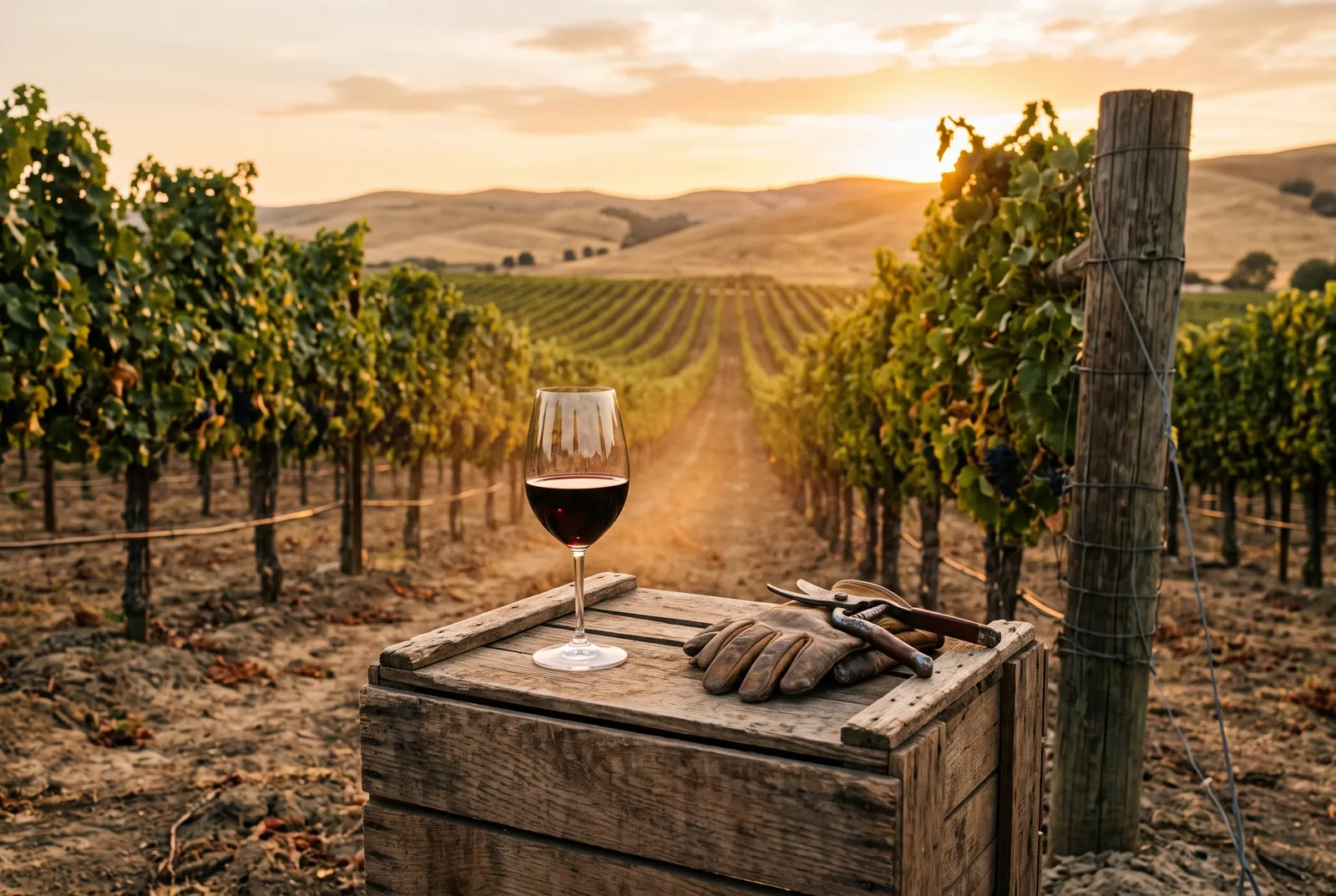
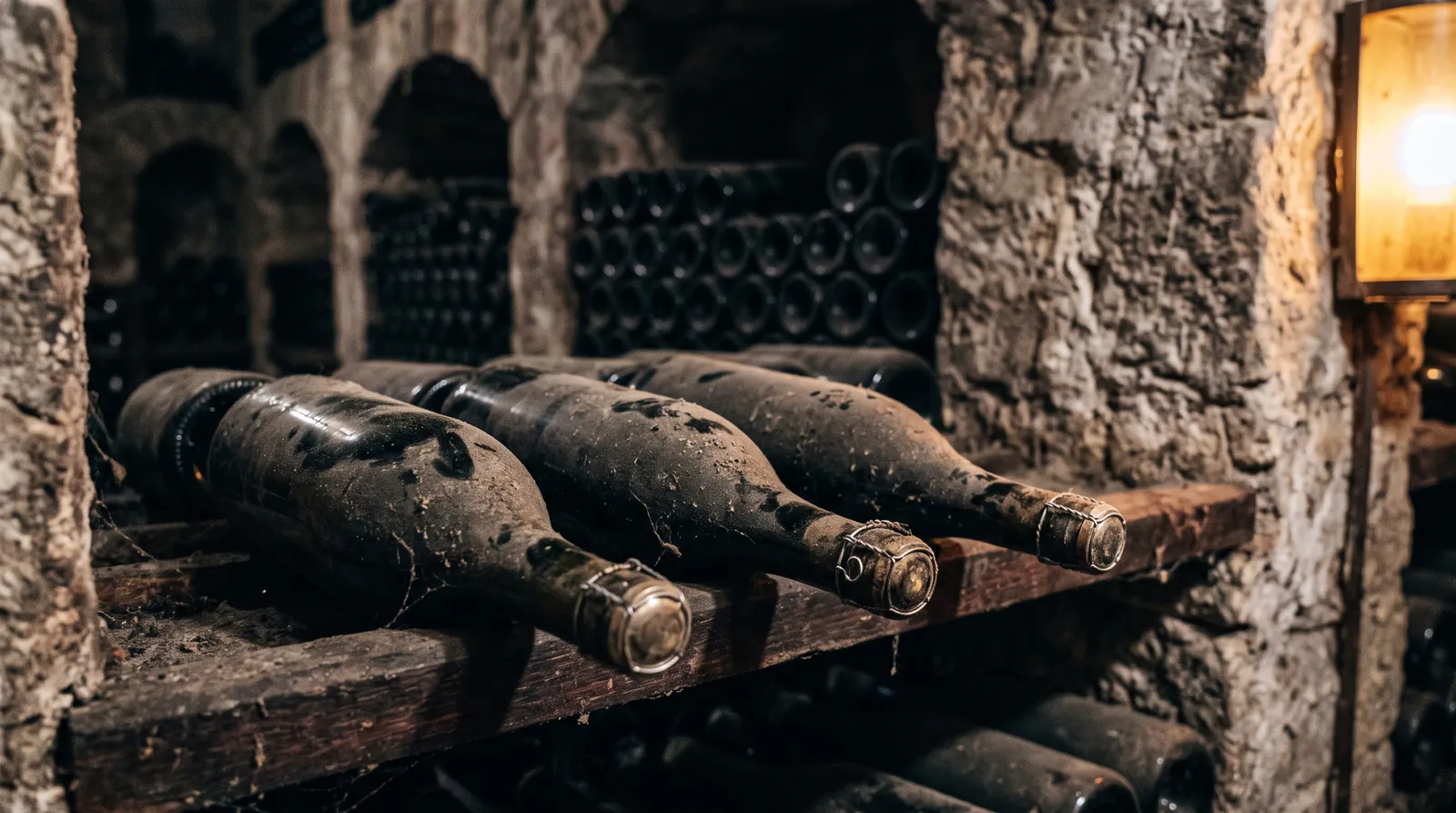
Some wines must wait years before they can be sold. Non-vintage Champagne must age at least 15 months before release and vintage Champagne at least three years. A Rioja Gran Reserva red must be aged at least five years, two of them in oak. All that time the grapes, barrels and labour are already paid for, but no money has come back.
Money spent on stock that has not yet been sold is part of a business's working capital. If the winery borrowed it, it pays interest, the price of borrowing money. If it used its own cash, there is an opportunity cost, because the cash could have earned interest elsewhere. Here is a made-up winery with round numbers: it has $500,000 tied up in ageing wine and borrows at 6% a year. That is $30,000 of interest a year, and $90,000 over three years, more if the interest compounds. Long ageing is expensive even when the wine is just sitting quietly in the dark.
Once the wine is ready, how should it be priced? Cost-plus pricing adds a markup to the cost. Value-based pricing asks what buyers will pay, which for a strong brand can be far above cost. A brand is a promise built up over years, and it lets a winery charge more than its costs alone would suggest.
Protecting a brand shapes many decisions. Cutting the price to clear stock can make buyers think the wine is worth less, and the brand may never recover, so many famous estates would rather sell less than sell cheaply. Many Bordeaux châteaux make a second wine from younger vines or lots not chosen for the main wine. That keeps the main label exclusive while still earning money from the rest of the crop. Some estates sell only to a mailing list, allocating a few bottles to each customer, which keeps demand ahead of supply.
Remember Ageing ties up money that costs interest, and a strong brand lets a winery price above its costs.
Test your knowledge
Ten questions. Pick an answer to see whether it is right and why. Your best score is kept in this browser only.
More courses
-
 Beginner · About 18 minutes · 5 lessons · 10 questions
Wine production economics 101
How a winery makes, or loses, money: revenue, cost and profit, fixed and variable costs, the price of land, what yields mean, and the long chain from vine to glass.
-
 Beginner · About 18 minutes · 5 lessons · 10 questions
From vineyard to shelf: where your money goes
Follow one bottle from grapes to shop shelf. See what the wine really costs to make, how each business in the chain adds its markup, and what taxes and tariffs do to the final price.
-
 Beginner · About 18 minutes · 5 lessons · 10 questions
Fine wine collecting 101
Why a tiny share of the world's wine becomes something people collect, how supply and demand work when no more bottles can ever be made, and how collectors actually get hold of them.