 Bordeaux
 Burgundy
 Champagne
 Rhône
Rhône Napa Valley
 Tuscany
 Piedmont
 Mosel
Mosel Oregon
 Rioja
Rioja California sparkling
 Valais and Lavaux
 England
 Douro
Douro Etna
Etna Mendoza
 Marlborough
 Stellenbosch
 Barossa Valley
 Tasmania
 Beaujolais
 Jura
Jura Alsace
 Loire
Loire Provence
 Ribera del Duero
 Sonoma
 Wat land kost
 Goede en slechte jaren
 Appellations
 Beroemde wijngaarden
 Beroemde wijnen
 Wie ze maken
 Zoek een oogstjaar
 Wijnen vergelijken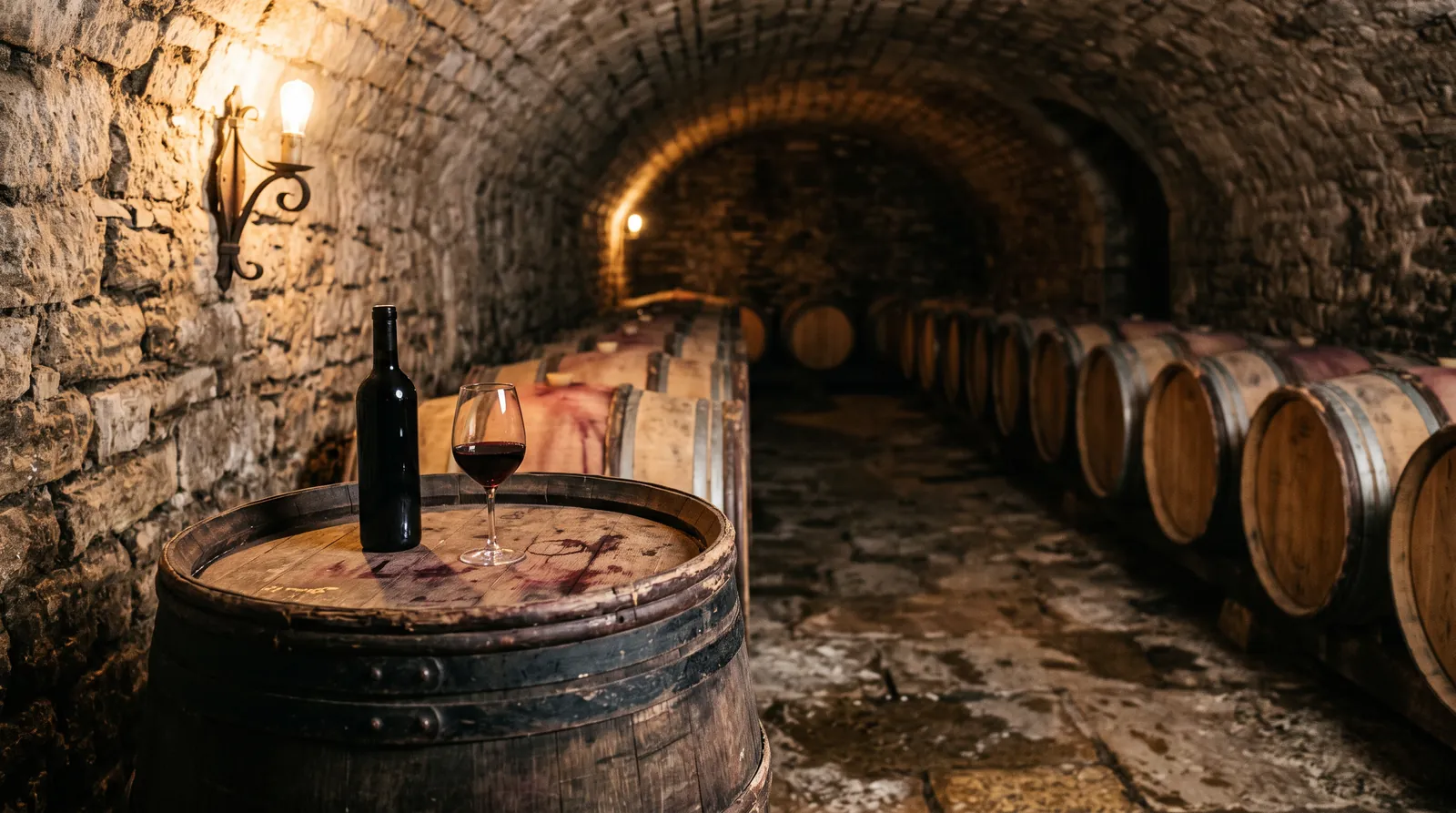
By the end you will be able to
- Build the cost stack of a bottle from grapes, winemaking, barrels and packaging
- Calculate the oak cost per bottle from the price of a barrel
- Follow a bottle through the US three-tier system and work out each markup
- Tell the difference between a markup and a margin
- Explain why a tariff can raise the shelf price by more than the tariff itself
The first layer: grapes
Pick up a bottle in a shop and ask a simple question: where does the money go? To answer it, economists build a cost stack, a list of every cost that goes into one bottle, piled up layer by layer. In this course we build the stack for a made-up everyday red with round numbers, then follow it all the way to the shelf.
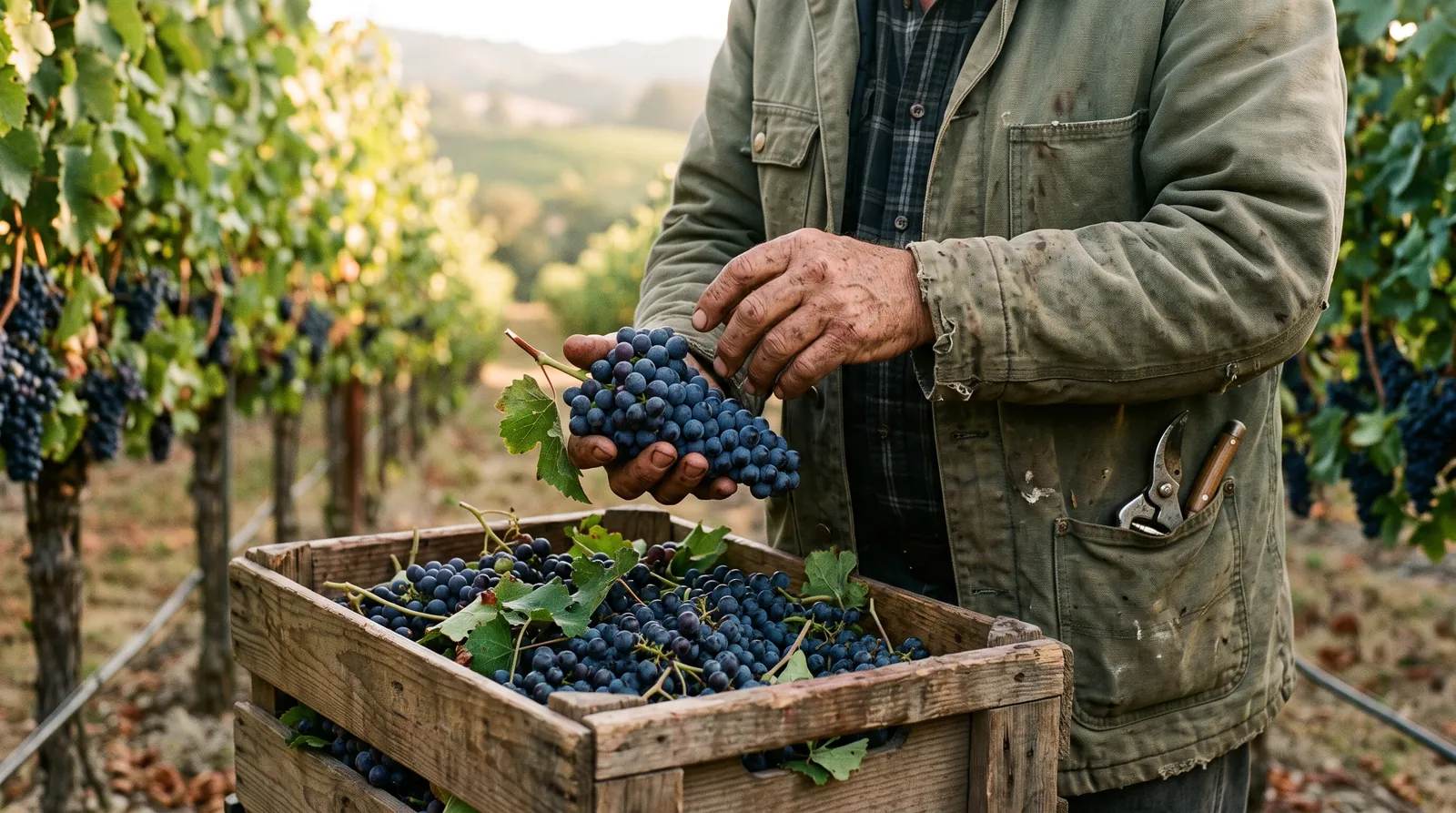
The first layer is the fruit. Wineries that buy grapes pay by the ton, and a ton of grapes makes very roughly 700 to 800 bottles. We will use 720 bottles to the ton because it divides neatly. If our made-up winery pays $1,440 a ton, the grapes in each bottle cost $1,440 divided by 720, which is $2.00.
Grape prices vary enormously. In California, the official crush reports show that Cabernet Sauvignon from Napa Valley often sells for several times the price of the same grape grown in the hot Central Valley, where yields are high and the wine is sold cheaply. The same is true across the world: famous places and low yields mean expensive fruit. For a top wine, the grapes alone can cost more than the whole price of an everyday bottle.
Wineries that grow their own grapes do not get a bill per ton, but they still pay: for pruning, spraying, picking, machinery and the land itself. Dividing those yearly costs by the tons harvested gives a cost per ton they can compare with buying fruit. Either way, grapes are usually one of the biggest layers in the stack.
Remember Grape cost per bottle is the price per ton divided by the bottles a ton makes.
Making the wine, and the price of oak
The second layer is turning grapes into wine. That means crushing and pressing, tanks for fermentation, electricity for cooling, laboratory tests, cleaning, and the wages of the winemaker and cellar team. Much of this is fixed cost, spread over every bottle the winery makes.
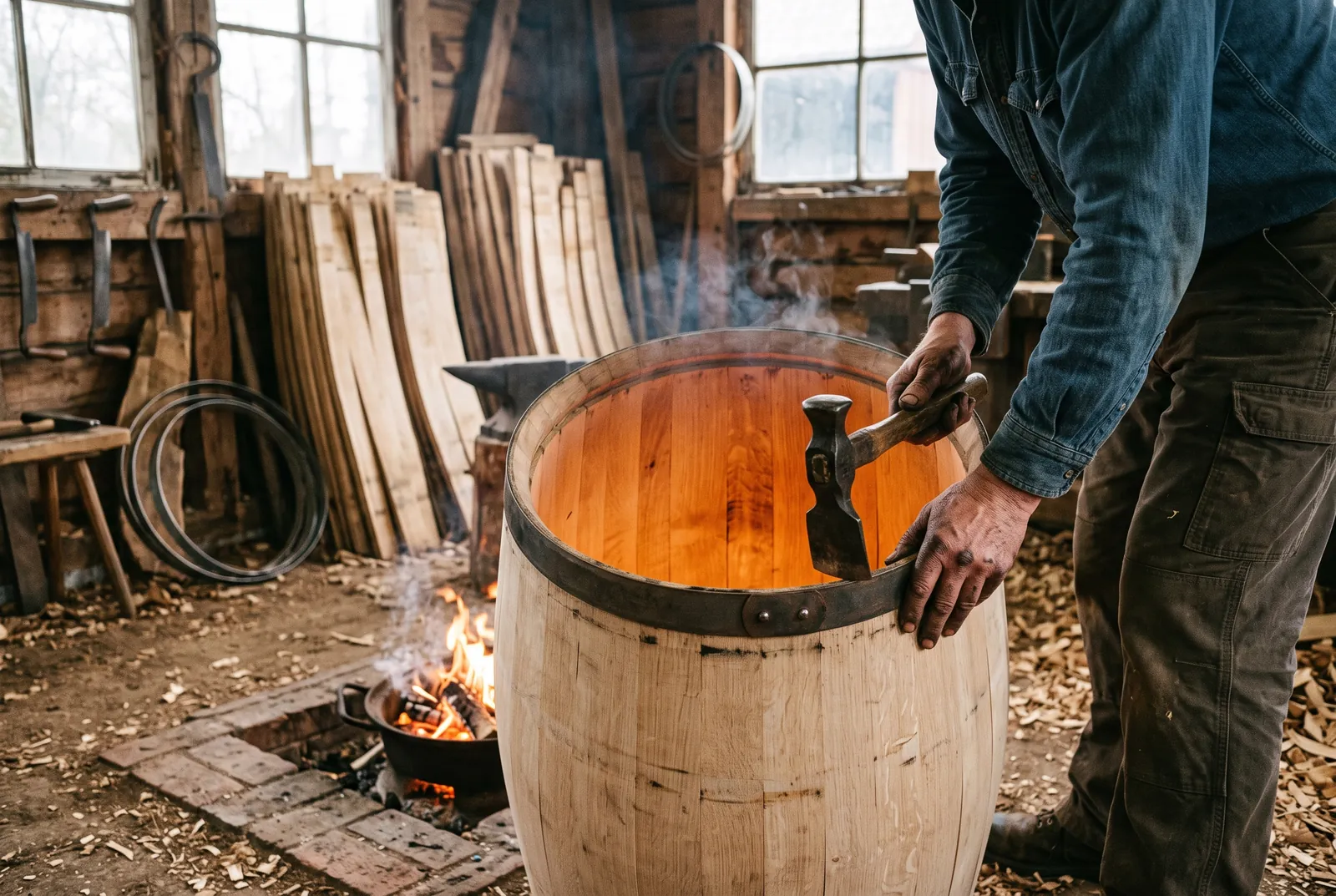
Then there is oak. Barrels give wine flavours and let it breathe slowly, but they are costly. A new French oak barrel costs roughly $1,000 to $2,000 or more and holds about 225 litres, which is around 300 bottles. Here is the sum with a made-up price of $1,200: if a barrel is used once, $1,200 divided by 300 bottles is $4.00 of oak in every bottle. That is more than the grapes in our everyday red.
Wineries soften that cost in several ways. They reuse barrels for several vintages, so the price is spread over more wine, although an older barrel gives less flavour. American oak is usually cheaper than French. Many affordable wines never see a barrel at all: they are made in steel tanks, sometimes with oak staves or chips added for flavour at a fraction of the price.
Time costs money too. Wine in a barrel cannot be sold, so the money spent on it is tied up, and the cellar has to be kept cool and staffed. For our made-up everyday red, made mostly in tanks with a little older oak, we will put all of winemaking, including oak, at $1.25 a bottle. A wine aged two years in new French oak would carry a far bigger layer.
Remember Oak cost per bottle is the barrel price divided by the bottles it holds and the number of times it is used.
Glass, cork and the rest of the package
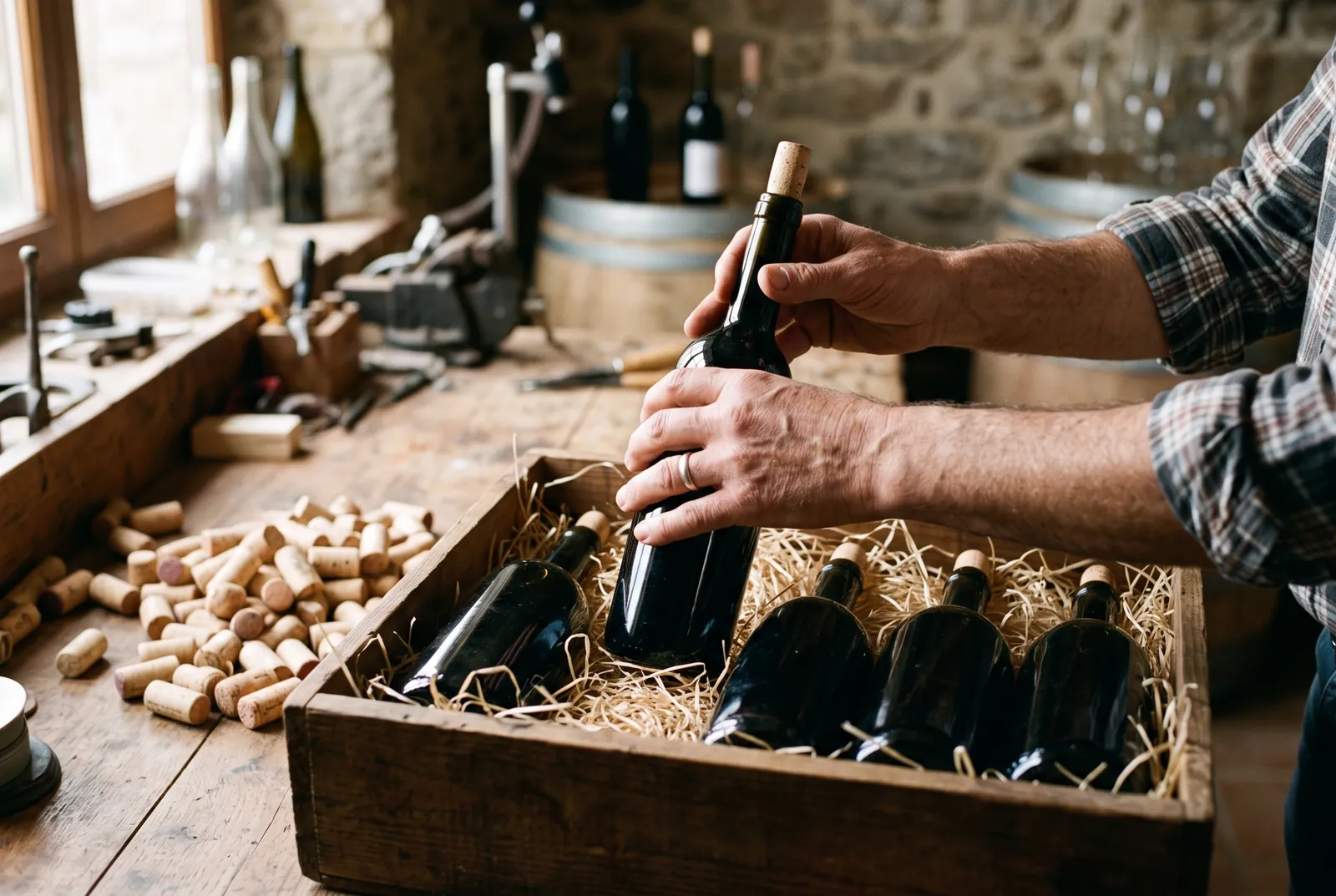
The third layer is the package: the bottle, the closure, the label, the capsule over the neck, and the cardboard or wooden case. Each piece is a variable cost, because every extra bottle of wine needs one more of each.
Packaging can surprise you. A heavy, thick-glassed bottle can cost several times as much as a light one, and it costs more to ship too. A long natural cork costs more than a screwcap. A wooden case with a branded lid costs far more than a cardboard box. Wineries selling expensive wine often choose heavy glass and fine labels because buyers judge the wine partly by how it looks, just as a phone in a beautiful box feels more valuable.
For our made-up everyday red, let us put the whole package at $1.25 a bottle. On top of that comes a share of overhead: the costs of running the business that are not tied to one wine, such as the office, accounts, website and marketing. We will put that at $0.50 a bottle.
Now we can add up the stack. Grapes $2.00, winemaking $1.25, packaging $1.25 and overhead $0.50 make $5.00. That is what one bottle of our made-up everyday red costs the winery before anyone else touches it. Keep that $5 in mind, because in the next lesson we will watch it grow on its way to a shop.
Remember Our made-up bottle costs the winery $5.00: $2.00 grapes, $1.25 winemaking, $1.25 packaging and $0.50 overhead.
Markups through the three-tier system
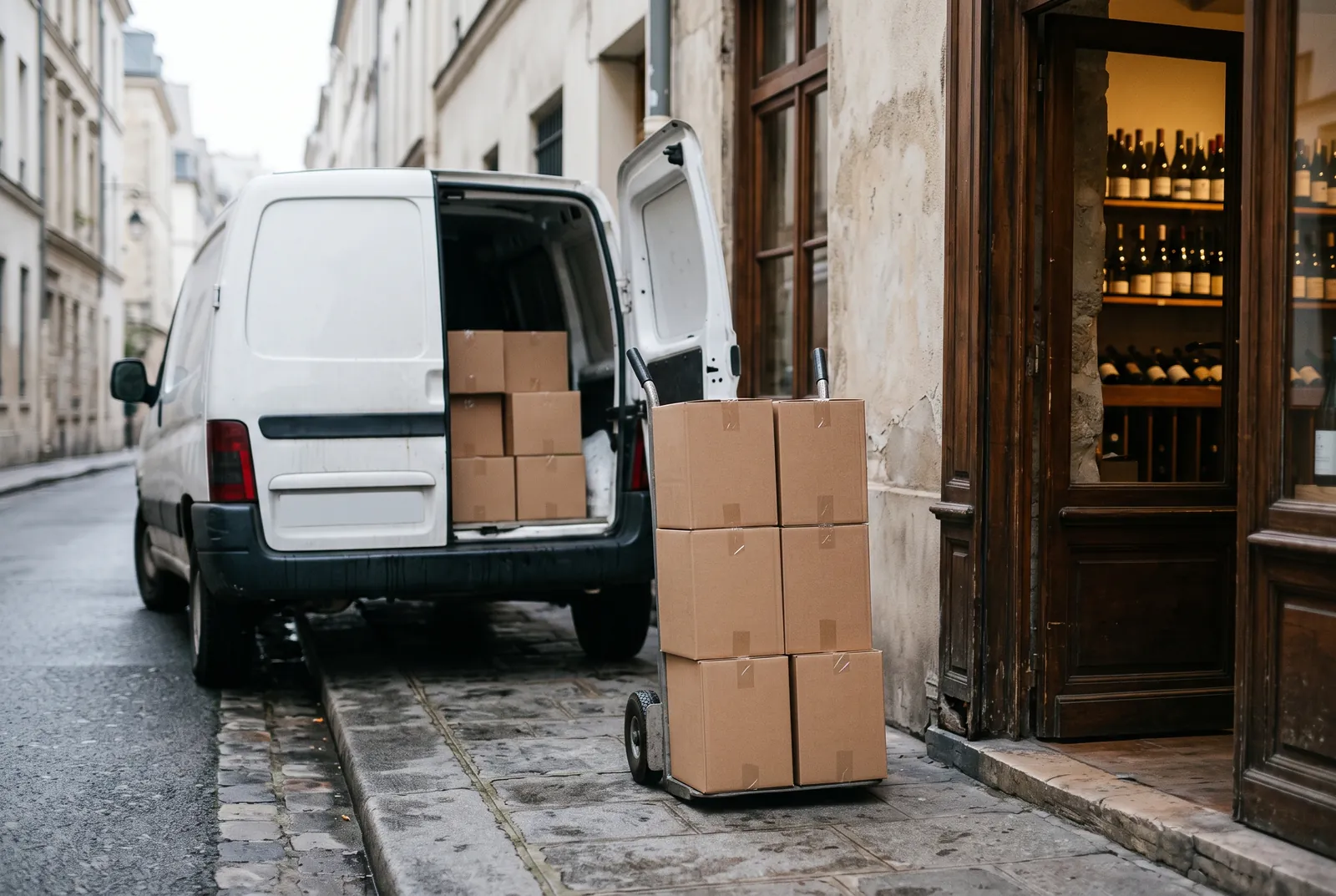
In the United States, most wine travels through the three-tier system, set up after Prohibition ended in 1933. The producer (or importer) sells to a distributor, the distributor sells to a retailer or restaurant, and the retailer sells to you. Each tier is a separate business that needs to cover its costs and make a profit.
Each one does this with a markup: a percentage added on top of what it paid. Here is our made-up chain with round numbers. Real markups vary by state, by wine and by business. The winery's cost is $5.00 and it sells to the distributor for $8.00. The distributor adds a 25% markup: 25% of $8 is $2, so it sells to the shop for $10.00. The shop adds a 50% markup: 50% of $10 is $5, so the bottle goes on the shelf at $15.00.
Watch a common trap. A markup is worked out on the cost; a margin is worked out on the selling price. The shop makes $5 on a bottle it sells for $15. That is a 50% markup on its $10 cost but only a 33% margin on its $15 price. Same $5, two different percentages. Mixing them up is one of the most frequent mistakes in business.
Restaurants usually charge more than shops, because the price also pays for the glasses, the staff, the kitchen and the room. Outside the US, the chain looks different, with importers, wholesalers and supermarkets, but the idea is the same: every business between the cellar and your glass adds its share.
Remember A markup is added to cost and a margin is a share of price, so the same profit gives two different percentages.
Taxes, tariffs, and what is left for the winery
Governments take a slice too. In the US, wine pays a federal excise tax, a tax on a particular product, collected by the Alcohol and Tobacco Tax and Trade Bureau. For ordinary still wine it works out at roughly 20 cents a bottle before credits that small producers can claim. States add their own excise taxes, and most add sales tax at the till.
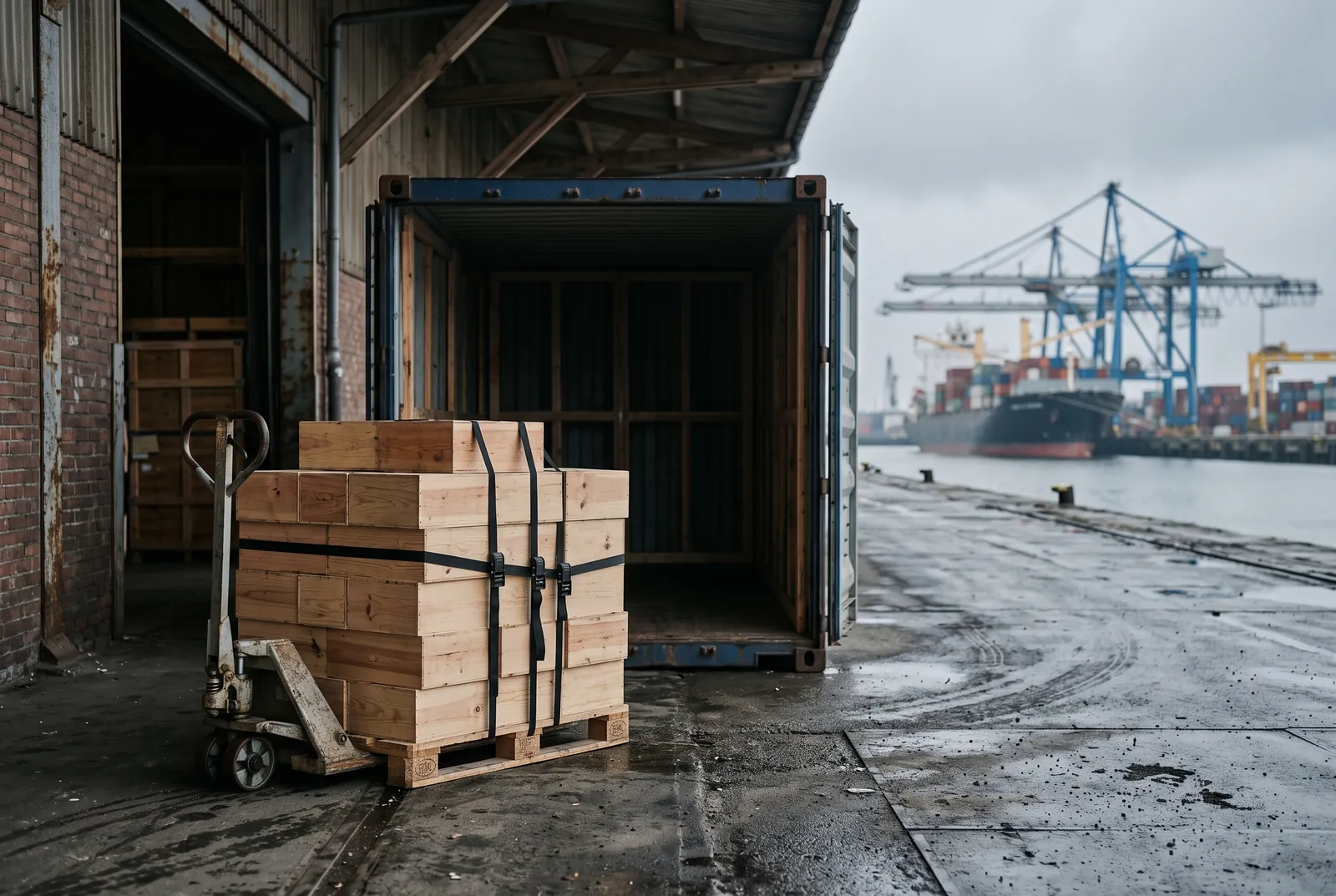
Imported wine may also pay a tariff, a tax on goods brought in from another country, paid by the importer. US tariffs on European wine have changed several times in recent years. Here is why tariffs bite harder than they look. Take a made-up imported wine that lands at $8.00, then use our chain: a 25% distributor markup and a 50% shop markup. Without a tariff it goes $8.00, $10.00, $15.00. Now add a made-up 20% tariff: $1.60 more, so $9.60. The distributor's 25% takes it to $12.00 and the shop's 50% to $18.00. A $1.60 tariff has raised the shelf price by $3.00, because every percentage markup is charged on top of it.
So what is left for the winery in our domestic example? It sold at $8.00 a bottle and spent $5.00 making it, a profit of $3.00. That is just 20% of the $15.00 you paid. The distributor took $2.00, the shop $5.00, and the rest went on making the wine.
That is why so many wineries try to sell directly, through tasting rooms, wine clubs and websites. Selling a bottle at $15.00 to a visitor, instead of $8.00 to a distributor, keeps far more of the price, though selling direct brings its own costs: staff, shipping and marketing.
Remember Taxes and tariffs get marked up along the chain, and the winery often keeps only a small share of the shelf price.
Test your knowledge
Ten questions. Pick an answer to see whether it is right and why. Your best score is kept in this browser only.
More courses
-
 Beginner · Over 18 minutes · 5 lessons · 10 questions
Wine production economics 101
How a winery makes, or loses, money: revenue, cost and profit, fixed and variable costs, the price of land, what yields mean, and the long chain from vine to glass.
-
 Intermediate · Over 18 minutes · 5 lessons · 10 questions
Running a vineyard and winery
The decisions that make or break a wine business: how grapes are bought and sold, quality against quantity, weather risk, break-even, the hidden cost of ageing, and pricing a brand.
-
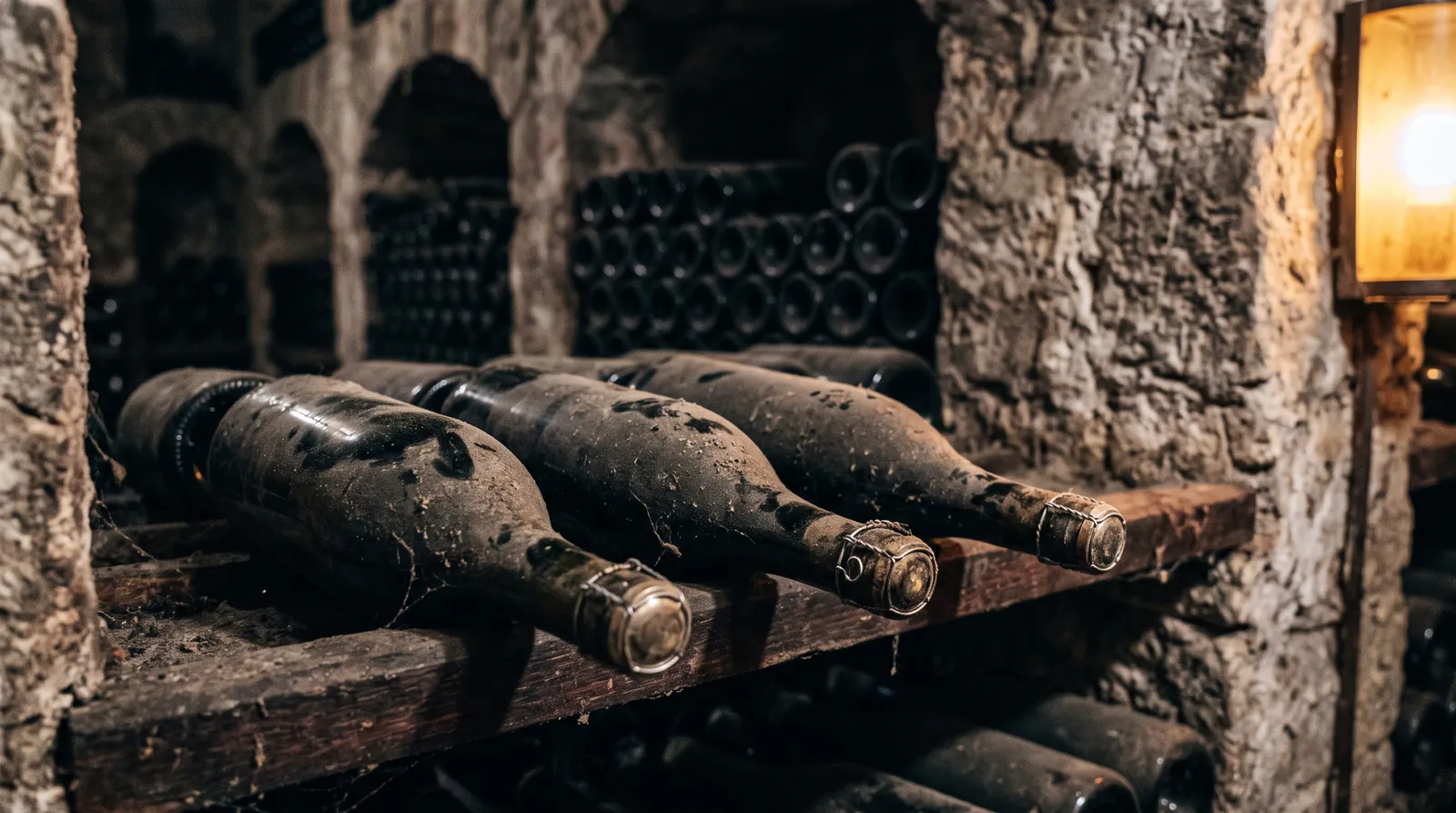 Beginner · Over 18 minutes · 5 lessons · 10 questions
Fine wine collecting 101
Why a tiny share of the world's wine becomes something people collect, how supply and demand work when no more bottles can ever be made, and how collectors actually get hold of them.