 Bordeaux
 Burgundy
 Champagne
 Rhône
Rhône Napa Valley
 Tuscany
 Piedmont
 Mosel
Mosel Oregon
 Rioja
Rioja California sparkling
 Valais and Lavaux
 England
 Douro
Douro Etna
Etna Mendoza
 Marlborough
 Stellenbosch
 Barossa Valley
 Tasmania
 Beaujolais
 Jura
Jura Alsace
 Loire
Loire Provence
 Ribera del Duero
 Sonoma
 Quanto costa il terreno
 Annate buone e cattive
 Denominazioni
 Vigneti famosi
 Vini famosi
 Chi li produce
 Cerca un'annata
 Confronta vini
By the end you will be able to
- Work out a winery's profit and profit margin from its revenue and costs
- Sort a winery's costs into fixed and variable, and explain why making more bottles lowers the cost of each one
- Explain why vineyard land can cost a fortune in one place and very little in another
- Calculate the grape cost in a bottle from a price per ton and a yield
- Describe the value chain that takes wine from the vineyard to the drinker
Revenue, cost and profit
Every business, from a lemonade stand to a famous château, runs on three numbers. Revenue is the money that comes in from selling things. Cost is the money that goes out to make and sell them. Profit is what is left when you take the costs away from the revenue. If the costs are bigger than the revenue, the profit is negative, and we call it a loss.
Here is a made-up winery with round numbers. It sells 10,000 bottles a year to shops and restaurants at $20 each. Its revenue is 10,000 times $20, which is $200,000. Growing the grapes, making the wine, paying the staff and buying the bottles costs it $150,000. Its profit is $200,000 minus $150,000, which is $50,000.
Profit on its own does not tell you much. A giant company making $50,000 would be in trouble; a tiny family estate might be delighted. So economists also look at the profit margin: profit divided by revenue, written as a percentage. Our made-up winery has a margin of $50,000 divided by $200,000, which is 0.25, or 25%. That means a quarter of every dollar it takes in is kept as profit, and three quarters goes on costs.
Notice that the winery sells at $20, not at the price you see in a shop. The shop and any wholesaler in between add their own share, so the winery's revenue per bottle is usually well below the shelf price. Keep that in mind: when people say a bottle costs $30, they rarely mean the winery received $30.
Profit matters for more than greed. It pays for new barrels, replanting old vines, and surviving a bad year. A winery that never makes a profit eventually runs out of money, however good its wine tastes.
Remember Profit is revenue minus costs, and the profit margin is profit divided by revenue.

Fixed costs and variable costs
Costs come in two kinds. A fixed cost stays the same however much you make: the rent or loan on the land, the tractor, the winery building, the insurance, the winemaker's salary. A variable cost rises with every extra bottle: the glass, the cork, the label, the box, the grapes you buy by the ton, the pickers paid by the hour.
Think of a school bake sale. The oven is there whether you bake ten cakes or a hundred, so it is a fixed cost. The flour and eggs go up with every cake, so they are variable.
This split matters because of average cost, the total cost divided by the number of bottles. Here is a made-up winery with round numbers. Its fixed costs are $100,000 a year, and each bottle adds $5 of variable cost. If it makes 10,000 bottles, the total cost is $100,000 plus $50,000, which is $150,000, so each bottle costs $15 on average. If it makes 20,000 bottles, the total is $100,000 plus $100,000, which is $200,000, and each bottle now costs only $10 on average.
Why did each bottle get cheaper? Because the same fixed costs are now shared out over twice as many bottles. This is one reason big wineries can sell wine for less than small ones. It also explains why a bad harvest hurts so much: the fixed costs do not shrink when the crop does, so each of the fewer bottles has to carry a bigger share.
Some costs are a little of both. A vineyard worker on a yearly contract is fixed, but extra pickers hired at harvest are variable. Economists still find the split useful, because it shows which costs you can cut quickly and which you are stuck with.
Remember Fixed costs are spread over every bottle, so making more bottles lowers the average cost of each.
Land: the most expensive ingredient
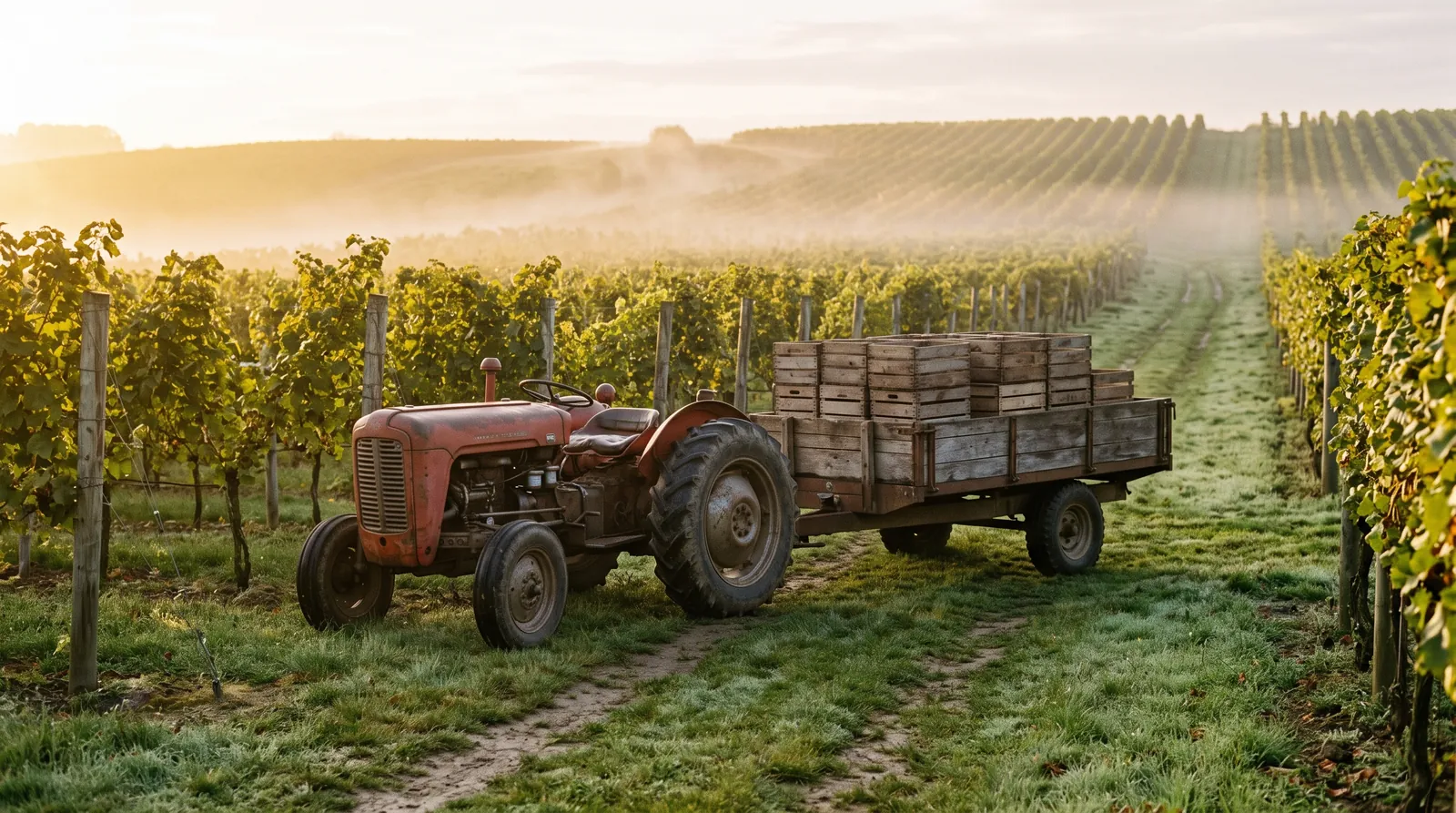
A winery needs grapes, and grapes need land. Vineyard land is measured in hectares (one hectare is about 2.47 acres, or roughly one and a half football pitches). Its price varies more than almost anything else in wine. The best grand cru vineyards of Burgundy trade at many millions of euros per hectare, while land for bulk wine in other regions can cost a tiny fraction of that.
Why such a gap? Land is worth what it can earn. A grand cru plot produces wine that sells for hundreds of dollars a bottle, and there is no way to make more of it, because the boundaries were fixed long ago. When something is scarce and many people want it, its price rises. Land that makes wine selling for a few dollars a bottle simply cannot earn enough to justify a high price.
Land also brings a hidden cost. Suppose a family owns its vineyard outright, with no loan. It can feel free, but it is not. The land could be sold and the money put somewhere safe to earn interest. What you give up by choosing one option over the next best one is called opportunity cost. Here is a made-up example with round numbers: if the land is worth $1,000,000 and that money could earn 5% a year elsewhere, the family is giving up $50,000 a year by keeping it as a vineyard. A careful economist counts that as a cost of making the wine.
Planting a new vineyard also takes patience. Young vines usually need about three years before they give a crop worth picking, so a new grower pays for land, vines, posts and wires long before any wine is sold.
Remember Land is priced by what its wine can earn, and even land you own outright has an opportunity cost.
Yields: how much fruit a vineyard gives
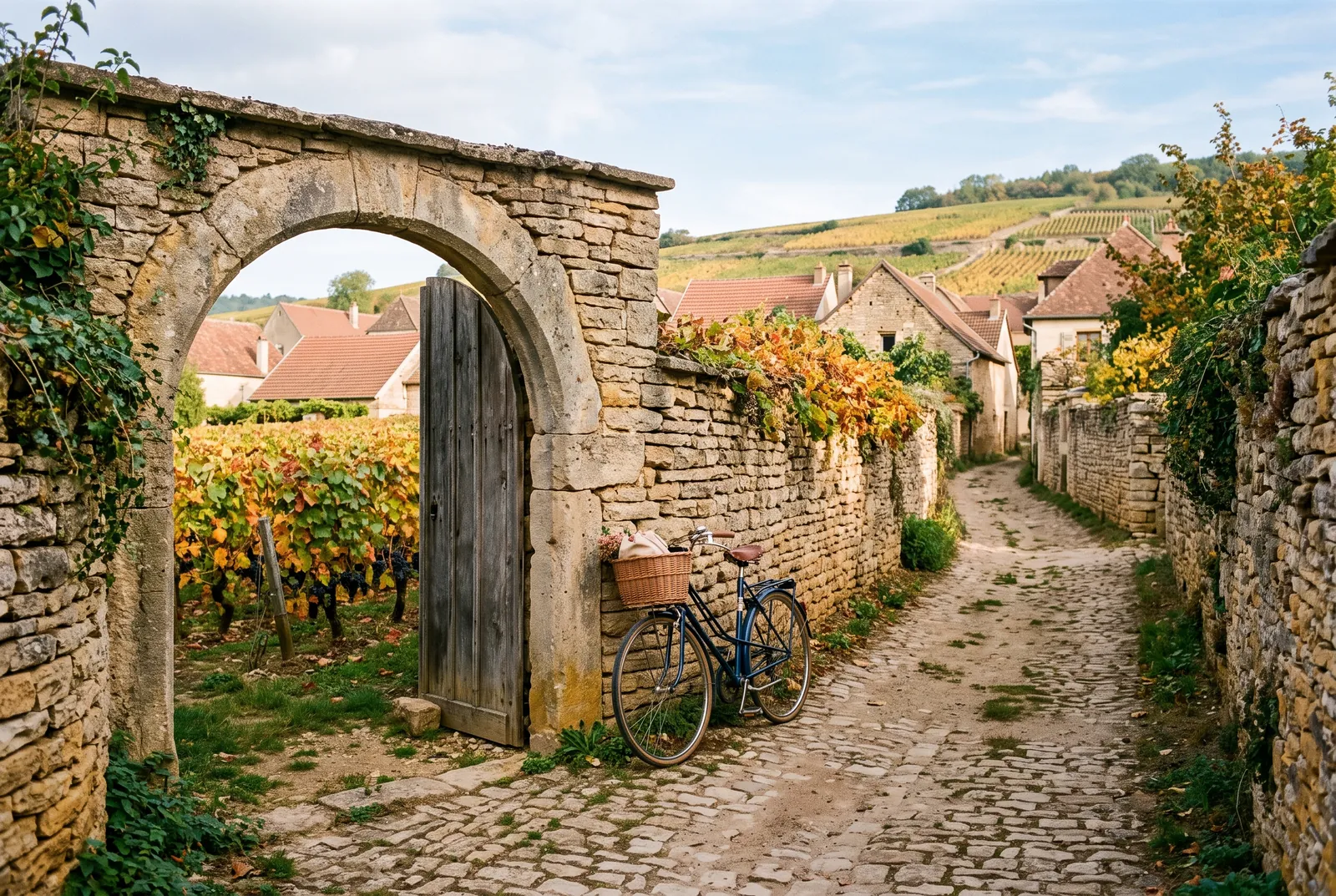
The yield is how much fruit a piece of vineyard produces. In the United States it is usually measured in tons of grapes per acre; in Europe it is often given in hectolitres of wine per hectare (a hectolitre is 100 litres). A ton of grapes makes very roughly 60 to 70 cases of wine, which is about 700 to 800 bottles.
Yield matters because most vineyard costs are paid per acre, not per ton. Pruning, spraying, mowing and tractor time cost about the same whether the vines carry a big crop or a small one. Here is a made-up vineyard with round numbers: it costs $7,200 an acre a year to farm. If an acre gives 4 tons, each ton costs $1,800 to grow. If it gives only 2 tons, each ton costs $3,600. Using 720 bottles to the ton, that is $2.50 of grapes per bottle at the high yield and $5.00 at the low yield.
So why would anyone choose a low yield? Many winemakers believe that vines carrying fewer bunches ripen them more fully and give more concentrated wine. Old vines naturally give less fruit, and steep, stony sites often do too. In many European regions the appellation rules set a maximum yield, partly to protect quality and reputation.
The economic question is simple to ask and hard to answer: will the better wine sell for enough extra to pay for the smaller crop? For a famous name, often yes. For an unknown wine on a supermarket shelf, often no. That is why yields in bulk wine regions are usually much higher than in prestige regions.
Remember Lower yields raise the cost of each ton, so they only pay off if the wine sells for more.
The value chain from vine to glass
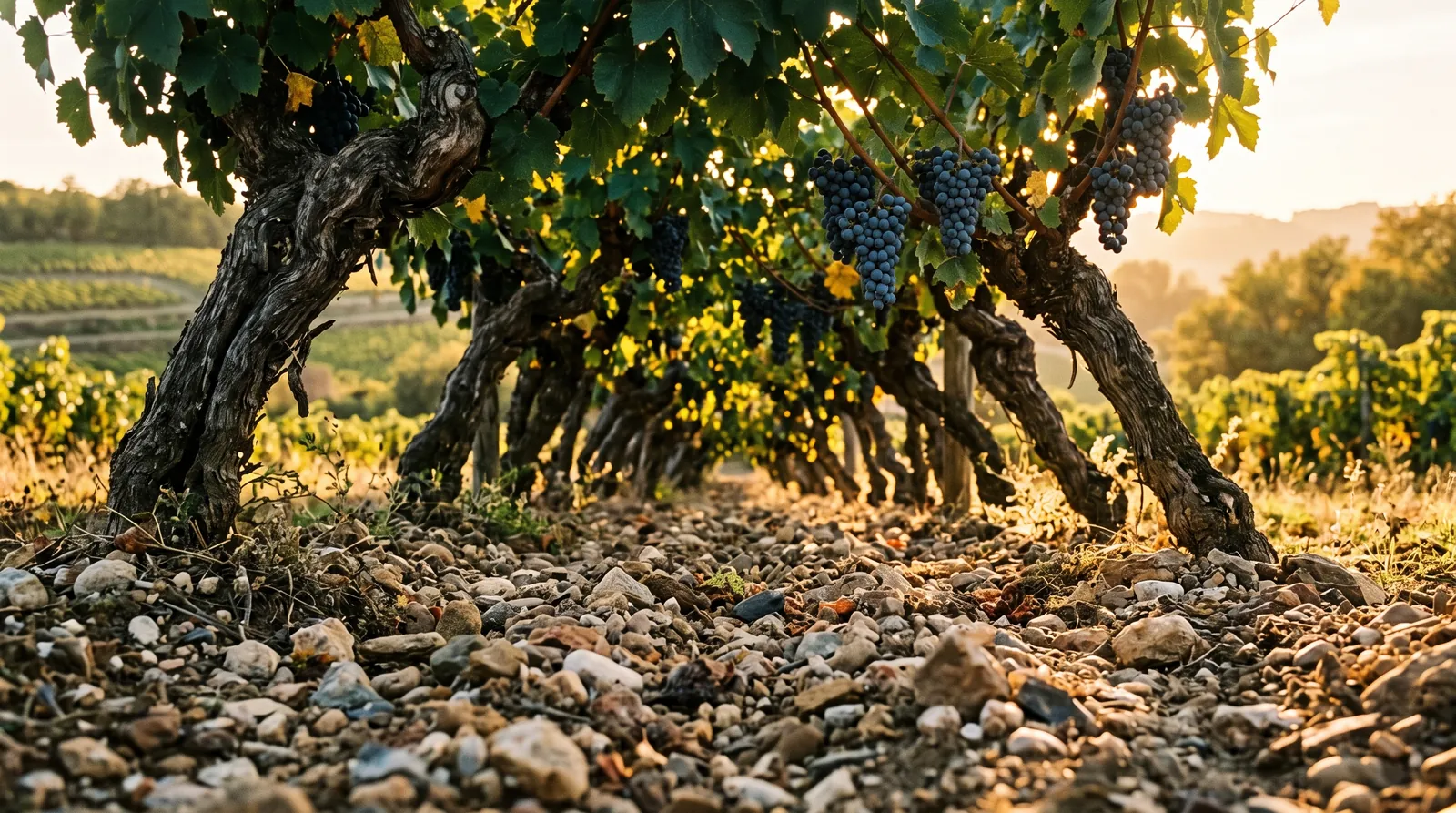
A value chain is the series of steps that turns raw materials into something a customer buys, with value added at each step. For wine the chain usually runs like this: a grower farms the vineyard; a winery crushes, ferments, ages and bottles the wine; an importer or distributor moves it to the right market; a shop or restaurant sells it; and finally someone drinks it.
Each step costs money and each business in the chain wants a profit, so the price climbs as the wine moves along. That is not automatically unfair. The distributor stores the wine, delivers it, and persuades shops to stock it. The shop pays rent, staff and electricity and lets you buy a single bottle on a Tuesday evening.
Not every winery does every step. Many wineries own no vineyards and buy grapes from growers. In Burgundy, a négociant buys grapes, juice or young wine from many growers and sells it under its own name. Some small growers sell their whole crop and never make a bottle. Others do everything themselves and sell straight to visitors at the cellar door, keeping the shares that would otherwise go to the middle of the chain.
Where a business sits in the chain shapes its risks. A grower depends on the weather and on finding buyers for the grapes. A winery ties up money in wine that may sit in barrels for years. A shop worries about wines that do not sell. Understanding the chain is the first step to understanding why a bottle costs what it does, which is exactly what the next course on this site works through, step by step.
Remember Wine passes through several businesses on its way to you, and each one adds cost, value and its own profit.
Test your knowledge
Ten questions. Pick an answer to see whether it is right and why. Your best score is kept in this browser only.
More courses
-
 Beginner · Informazioni 18 minutes · 5 lessons · 10 questions
From vineyard to shelf: where your money goes
Follow one bottle from grapes to shop shelf. See what the wine really costs to make, how each business in the chain adds its markup, and what taxes and tariffs do to the final price.
-
 Intermediate · Informazioni 18 minutes · 5 lessons · 10 questions
Running a vineyard and winery
The decisions that make or break a wine business: how grapes are bought and sold, quality against quantity, weather risk, break-even, the hidden cost of ageing, and pricing a brand.
-
 Beginner · Informazioni 18 minutes · 5 lessons · 10 questions
Fine wine collecting 101
Why a tiny share of the world's wine becomes something people collect, how supply and demand work when no more bottles can ever be made, and how collectors actually get hold of them.