 Bordeaux
 Burgundy
 Champagne
 Rhône
Rhône Napa Valley
 Tuscany
 Piedmont
 Mosel
Mosel Oregon
 Rioja
Rioja California sparkling
 Valais and Lavaux
 England
 Douro
Douro Etna
Etna Mendoza
 Marlborough
 Stellenbosch
 Barossa Valley
 Tasmania
 Beaujolais
 Jura
Jura Alsace
 Loire
Loire Provence
 Ribera del Duero
 Sonoma
 Quanto costa il terreno
 Annate buone e cattive
 Denominazioni
 Vigneti famosi
 Vini famosi
 Chi li produce
 Cerca un'annata
 Confronta vini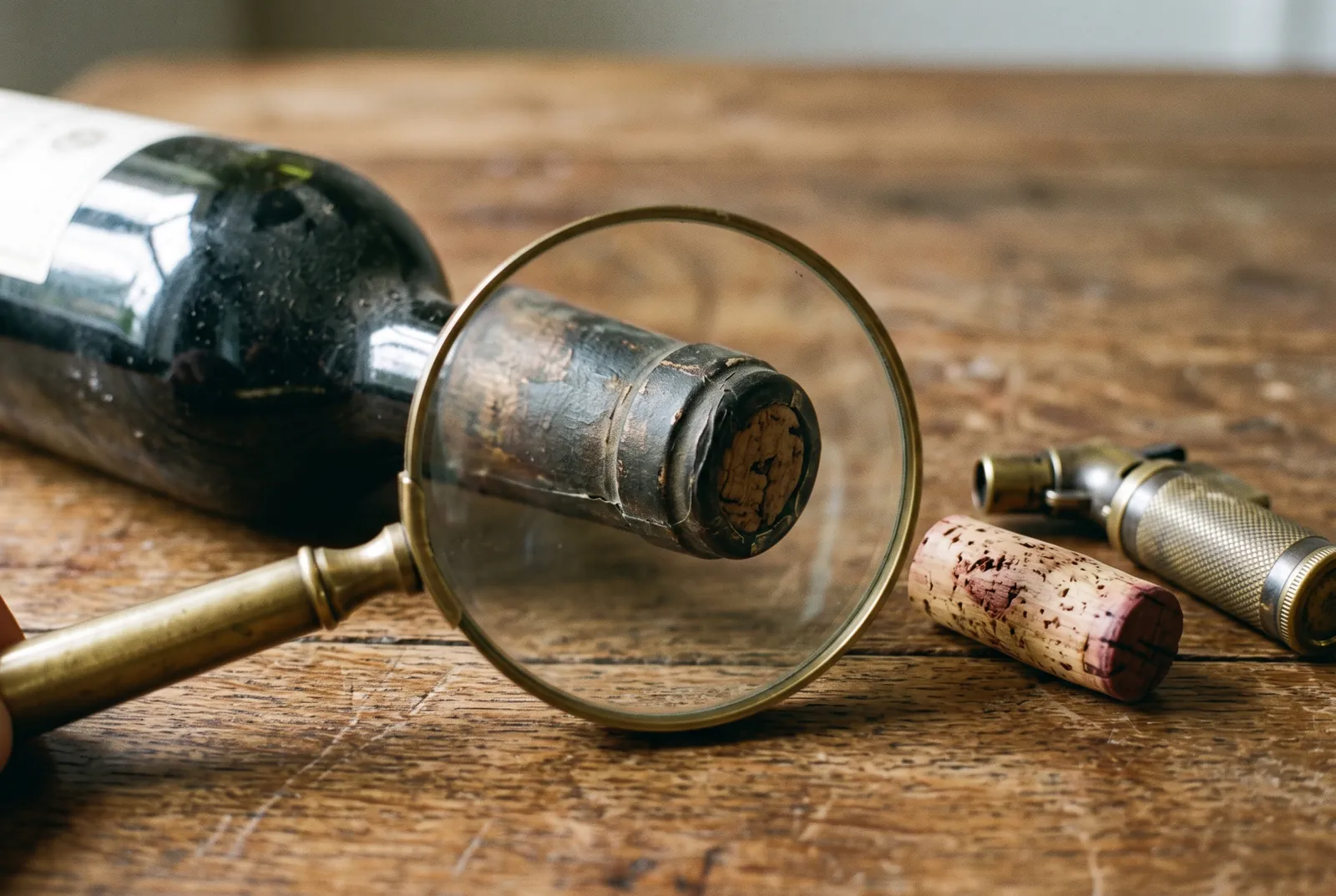
Why fake wine exists
Counterfeiting is an economic activity, just a criminal one. A forger compares the cost of making a fake with the price it might fetch. An empty bottle, a cheaper wine to fill it, a printed label and a cork might cost very little. If the finished bottle passes as a rare old vintage worth thousands of dollars, the potential profit is enormous.
Wine also has an unusual weakness: you cannot fully test it without opening it, and once it is open it cannot be sold. Many famous old bottles are never drunk by their buyers, or are drunk by people who have never tasted the real thing and so cannot tell the difference. That makes fakes much harder to catch than, say, a forged banknote.
The Rudy Kurniawan case
The most famous wine fraud of recent times involved Rudy Kurniawan, a collector who was a well-known figure at fine-wine auctions in the United States in the early 2000s. He sold large quantities of supposedly rare old Burgundy and Bordeaux, much of it through major auction sales.
Doubts grew when some of the wines he offered seemed impossible, and when producers questioned bottles bearing their names. In 2013 a US court convicted him of selling counterfeit fine wine. Investigators reported finding materials for faking bottles, such as labels and corks, at his home. Some of his fakes are thought to still be in circulation, which is one reason buyers now ask so many questions about where old bottles came from.
How authentication works
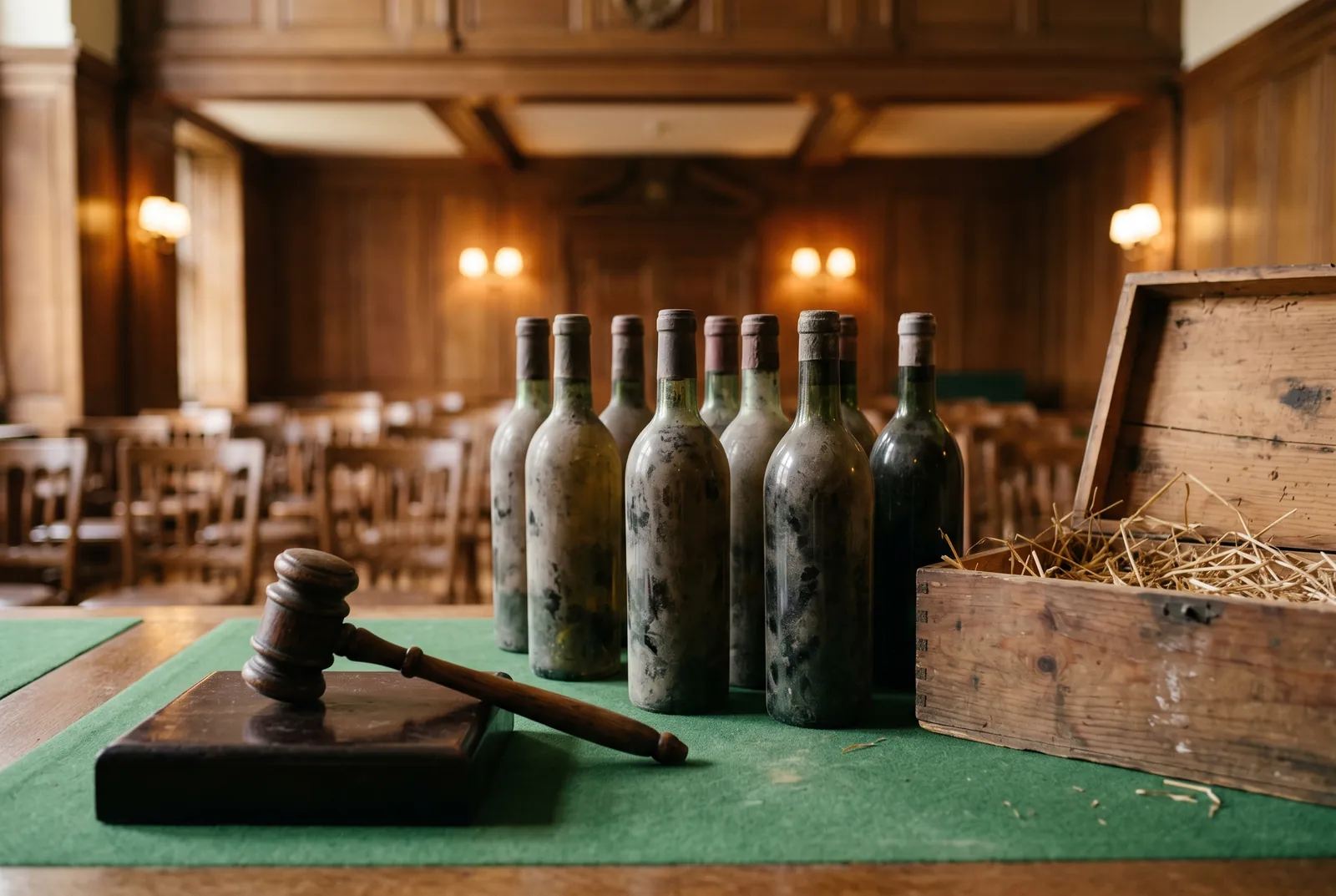
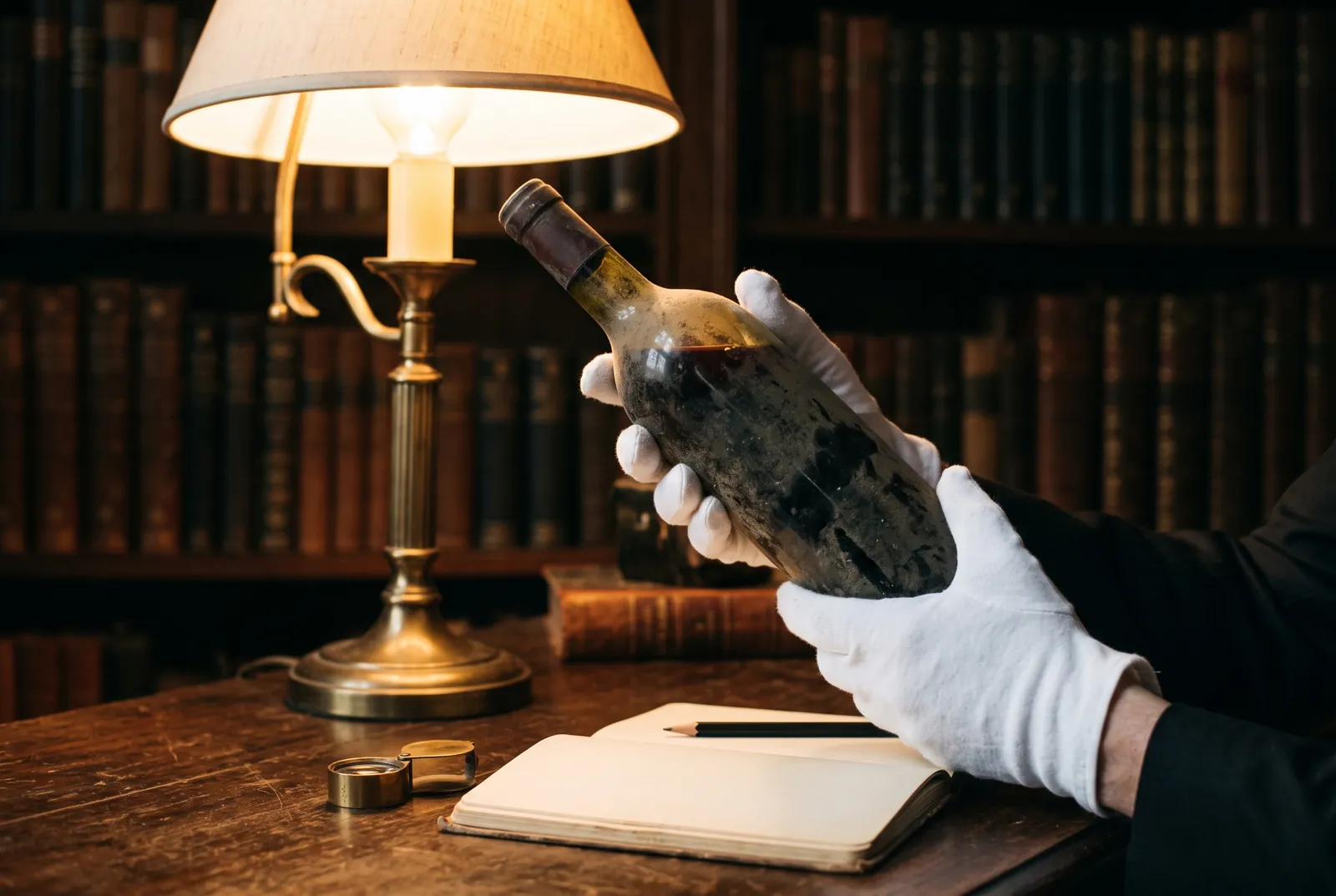
Checking whether a bottle is genuine is called authentication. Specialists, auction houses and some producers look at many clues together, because a skilled forger may get some details right but rarely all of them:
- The glass: its shape, colour and markings should match how the estate bottled that vintage.
- The label: paper, printing method and typeface should fit the era.
- The cork and capsule: many estates brand their corks with the name and vintage.
- Fill level and colour, viewed against a strong light.
- Provenance: invoices and storage records linking the bottle back to the estate.
- Anti-fraud features: many producers now add codes, special seals or other security marks to new bottles.
Why fakes hurt honest sellers too
In 1970 the economist George Akerlof wrote a famous paper about used cars, called "The Market for Lemons". A lemon is a car with hidden faults. His point was that when buyers cannot tell good cars from bad ones, they will only pay an average price for any car. Owners of good cars then refuse to sell at that price, so more of the cars on offer are lemons, and buyers lower their offers again. In the worst case the market for good cars shrinks away.
Fake wine creates exactly this problem. If buyers suspect that some old bottles of a famous wine are counterfeit, they will pay less for all of them, including the genuine ones. Honest owners with real bottles lose money they did nothing to deserve. Some may decide not to sell at all, which leaves even more of the bottles on offer coming from doubtful sources.
This is why the wine trade invests so much in trust. Auction houses employ specialists to inspect bottles, producers add security features, and buyers pay more for clear provenance. Each of these is a way of letting buyers tell good bottles from bad ones, so that genuine bottles can command a fair price again.
The economic idea at the heart of this is information asymmetry: one side of a deal knows much more than the other. Many scams and many market failures grow from that gap.
Investment scams: the other kind of fraud
A different kind of fraud does not need a single fake bottle. In wine investment scams, a company contacts people, often older savers, and offers them wine "as an investment". The wine may be real but sold at several times its true market price, or it may never have been bought at all. Victims are told their cases are safely stored, receive glossy statements showing rising values, and only discover the truth when they try to sell.
Regulators in several countries have warned about these schemes for years. The warning signs are remarkably consistent:
- An unexpected phone call, email or social-media message offering an "opportunity".
- Promises of high or guaranteed returns. No honest seller can guarantee what a market will do.
- Pressure to decide quickly, such as "this offer closes today".
- Wine you never see, held in a store you cannot check in your own name.
- Prices you cannot compare with independent auction or merchant prices.
- Difficulty getting your money or your wine back when you ask.
A simple rule taught by fraud regulators: if a stranger contacts you out of the blue about an investment, assume it is a scam until you have checked independently.
Protecting yourself and others
The defences follow directly from the economics. Ask where the wine has been and ask for proof. Compare any price with independent sources such as auction results. Insist that wine held for you is registered in your own name at a warehouse you can contact directly. Never let a seller rush you.
Official bodies publish free, plain-English guidance. In the UK, the Financial Conduct Authority's ScamSmart pages explain how investment scams work and how to check a firm. In the US, the Securities and Exchange Commission's investor.gov site does the same. If you think someone you know is being targeted, talking it through with them is one of the most useful things you can do.

Worked example: the maths of a wine scam
Here is a made-up cold call with round numbers. A firm sells 5 cases at $3,000 each and promises a "guaranteed" 15% a year. Independent auction results show similar cases trading at about $1,000.
| Price paid (5 × $3,000) | $15,000 |
|---|---|
| Independent market value (5 × $1,000) | $5,000 |
| Loss on day one | $10,000, two thirds of the money |
| Promised value after 5 years ($15,000 × 1.15 five times) | about $30,170 |
| Growth the wine would need from its real value | $30,170 ÷ $5,000 = about 6 times |
The victim is $10,000 down the moment they pay. For the promise to come true, the wine would have to become worth about six times its real value in five years, before any fees. The "guarantee" is simply a sales line.
Key words
- Counterfeit
- A fake made to look like the real thing in order to deceive buyers.
- Authentication
- Checking whether an item is genuine by examining physical details and its history.
- Provenance
- The documented history of who has owned a bottle and where it has been kept.
- Investment scam
- A scheme that persuades people to hand over money for an investment that is overpriced, misdescribed or does not exist.
- Cold call
- An unexpected call or message from someone you have never dealt with, trying to sell you something.
- Guaranteed return
- A promise of a fixed profit. For assets like wine, whose prices go up and down, no honest seller can make one.
Check your understanding
Why is wine easier to fake successfully than many other luxury goods?
Show the answer
It cannot be fully tested without opening it, many rare bottles are never drunk, and few people know what a genuine old bottle should taste like.
List three warning signs of a wine investment scam.
Show the answer
Any three of: an unexpected call or message; guaranteed or very high returns; pressure to act fast; wine you never see or cannot check in your own name; prices you cannot compare; trouble getting your money back.
In the worked example, how much of the buyer's money was lost on day one, as a fraction?
Show the answer
$10,000 out of $15,000, which is two thirds.
What did a US court convict Rudy Kurniawan of in 2013?
Show the answer
Selling counterfeit fine wine, after he had sold large amounts of supposedly rare old wine, much of it through auctions.
Go deeper on Corkonomics
Sources and further reading
- ScamSmart: avoid investment scams UK Financial Conduct Authority
- Investor education and fraud alerts US Securities and Exchange Commission
Research and education only. Nothing here is investment advice.
Next chapterMeasuring returns honestly← Previous chapterAll chapters