 Bordeaux
 Burgundy
 Champagne
 Rhône
Rhône Napa Valley
 Tuscany
 Piedmont
 Mosel
Mosel Oregon
 Rioja
Rioja California sparkling
 Valais and Lavaux
 England
 Douro
Douro Etna
Etna Mendoza
 Marlborough
 Stellenbosch
 Barossa Valley
 Tasmania
 Beaujolais
 Jura
Jura Alsace
 Loire
Loire Provence
 Ribera del Duero
 Sonoma
 What land costs
 Good years and bad
 Appellations
 Famous vineyards
 Famous wines
 Who makes them
 Find a vintage
 Compare wines
The year on the label
A wine labelled 2020 was made from grapes picked in 2020. It may not have gone on sale until two or three years later, after ageing at the winery.
Why years differ
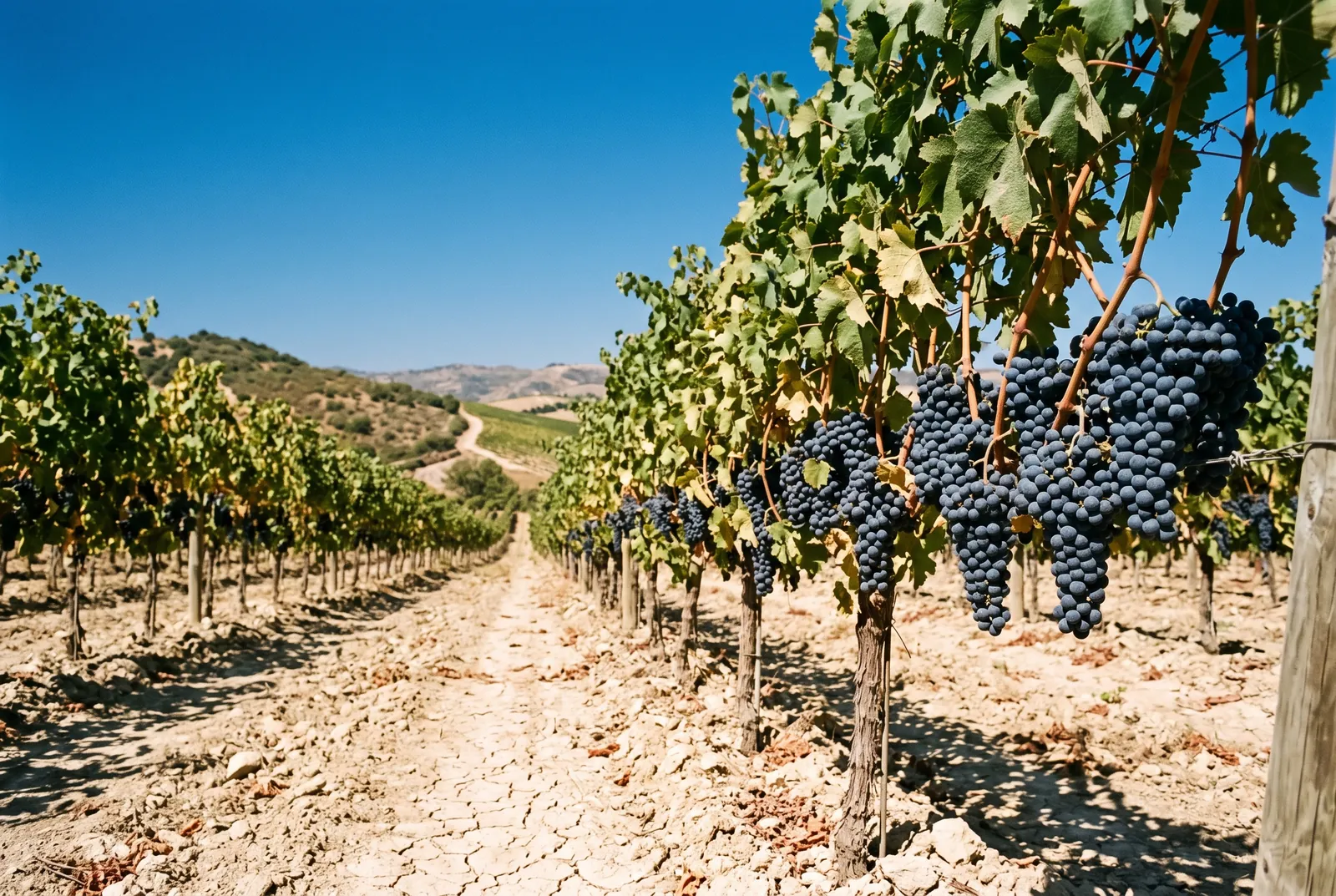
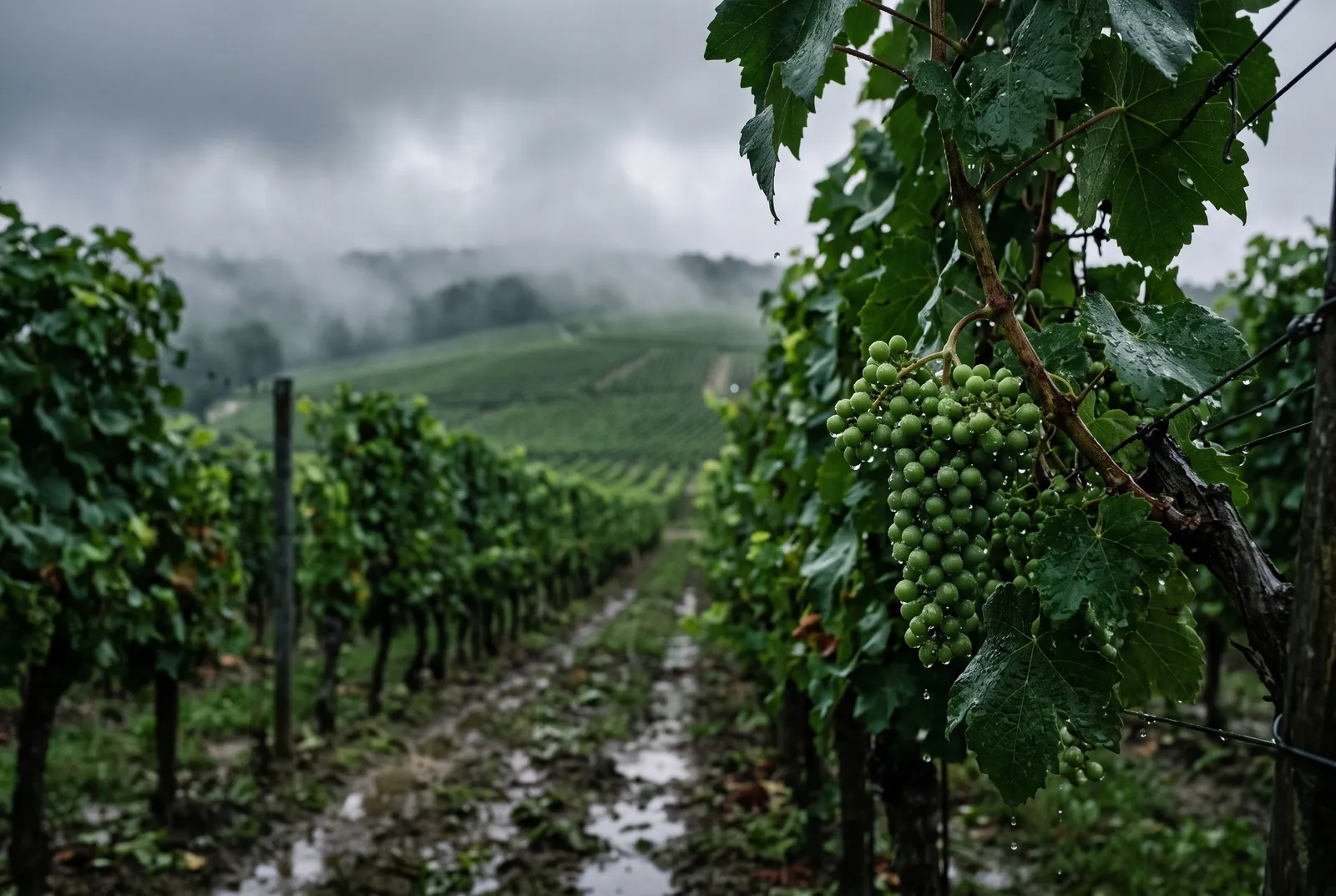
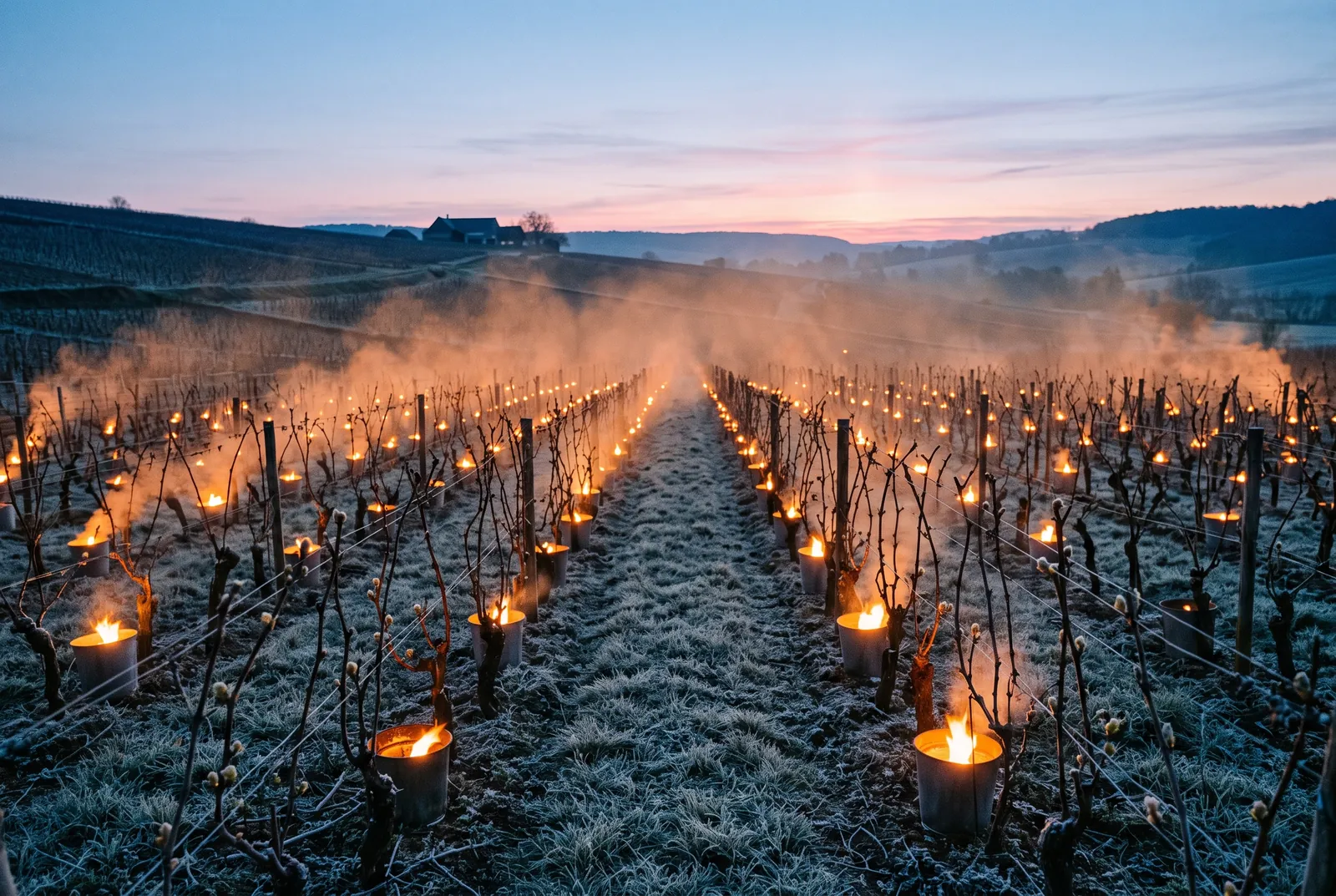
A warm, dry, sunny summer gives ripe, generous wines. A cool or rainy one gives lighter, sharper wines, and sometimes far fewer bottles. Frost in spring or hail in summer can wipe out much of a crop.
When it matters, and when it does not
For everyday bottles it hardly matters. Buy the youngest and enjoy it. Vintage matters most for fine wine from places with changeable weather, such as Bordeaux, Burgundy, Piedmont and Champagne. A great year there can taste better, last longer and cost more.
Non-vintage
Most Champagne and sparkling wine has no year on the label. It is a blend of several years, mixed so the house style tastes the same every time. The letters NV mean non-vintage.
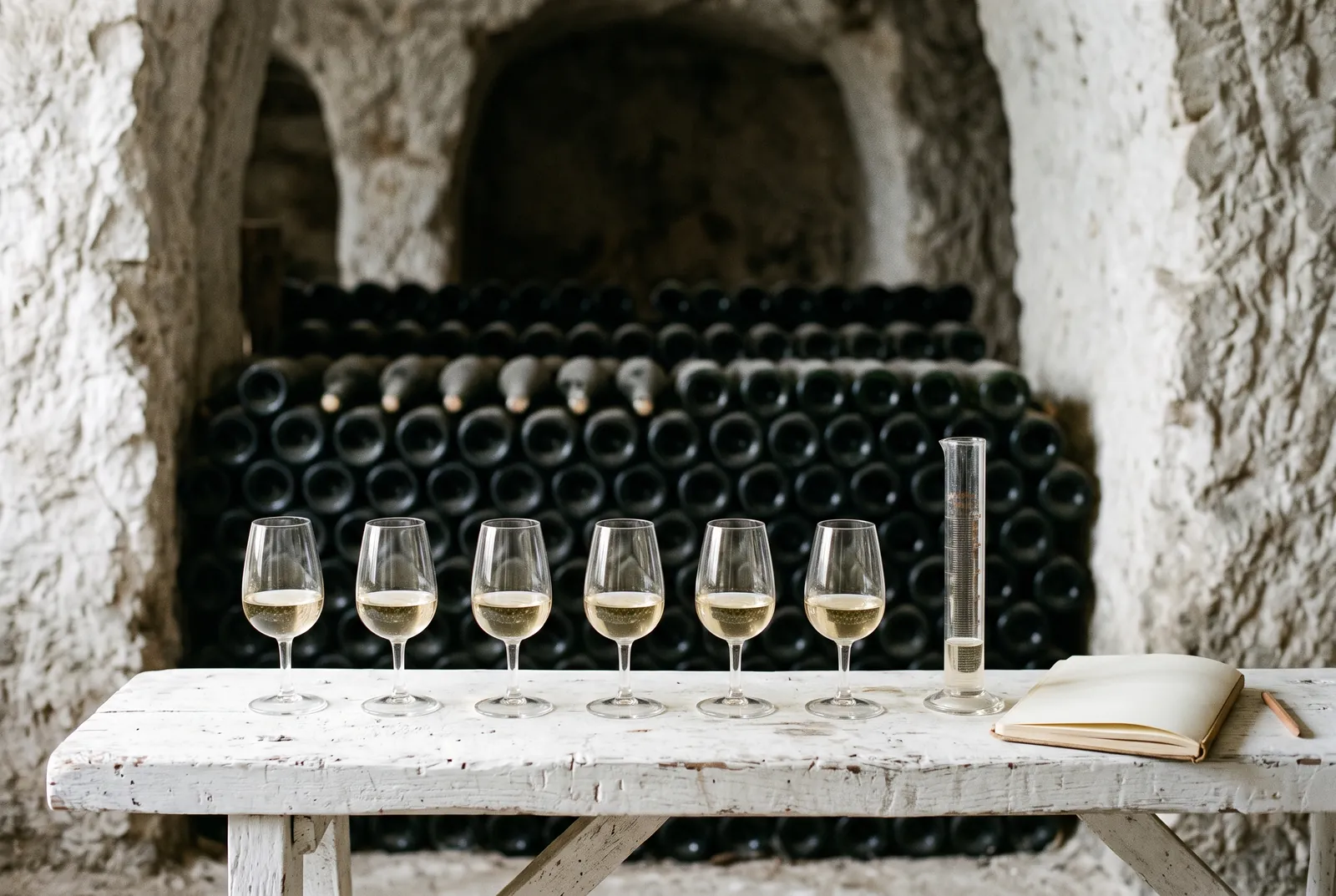
Our year-by-year chart colours every vintage from difficult to exceptional, region by region.
More short lessons
 4 min read
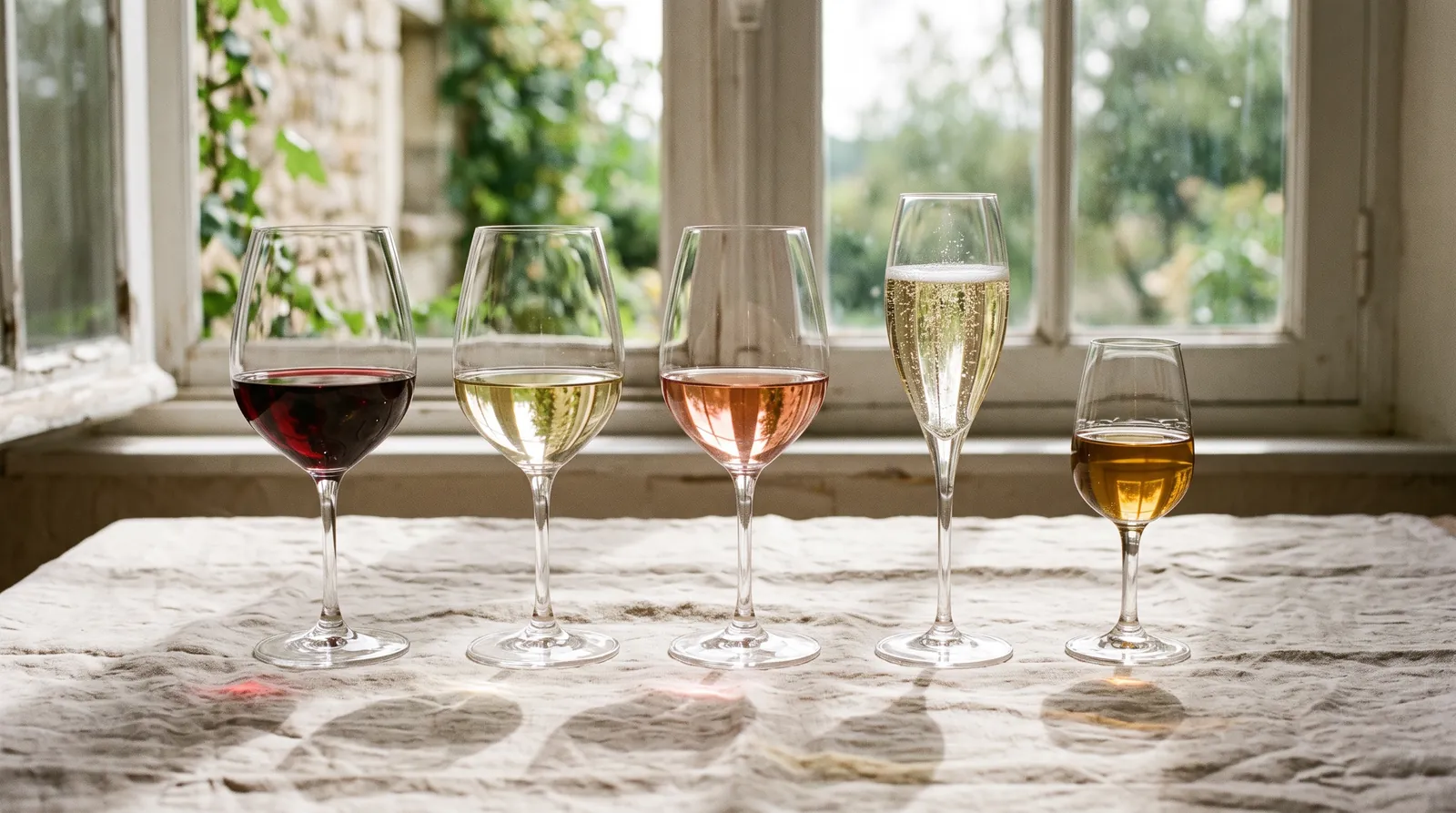
The five types of wine
Red, white, rosé, sparkling and sweet. Once you know what makes each one different, the wine aisle stops…
 4 min read
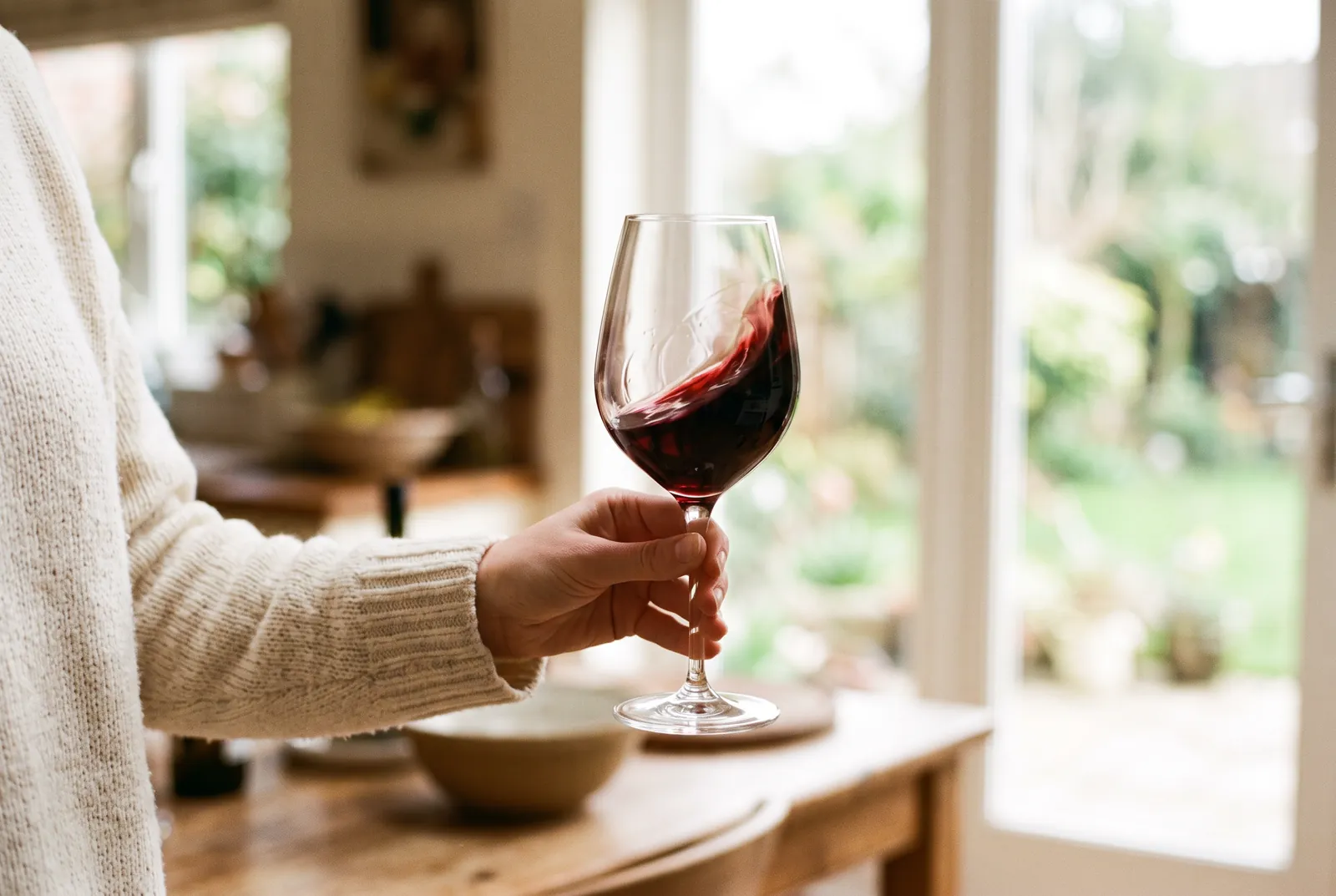
How to taste wine without feeling silly
Four small steps: look, swirl, sniff, sip. They take ten seconds and they really do make a glass more…
 4 min read
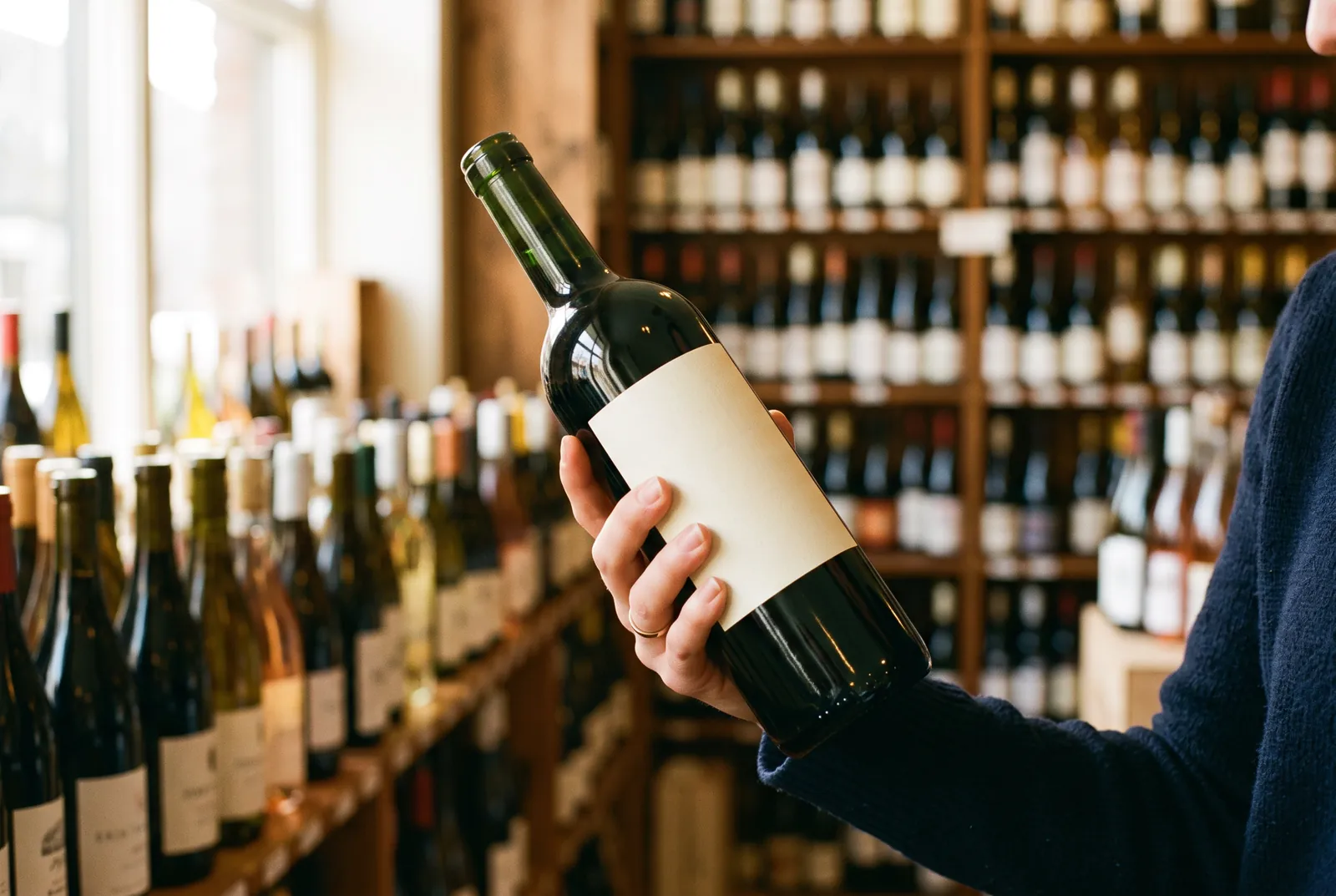
How to read a wine label
A label answers four questions: who made it, where, from which grape, and in which year. The trick is knowing…