 Bordeaux
 Burgundy
 Champagne
 Rhône
Rhône Napa Valley
 Tuscany
 Piedmont
 Mosel
Mosel Oregon
 Rioja
Rioja California sparkling
 Valais and Lavaux
 England
 Douro
Douro Etna
Etna Mendoza
 Marlborough
 Stellenbosch
 Barossa Valley
 Tasmania
 Beaujolais
 Jura
Jura Alsace
 Loire
Loire Provence
 Ribera del Duero
 Sonoma
 Arazi ne kadara mal olur
 İyi yıllar ve kötü yıllar
 Appellation'lar
 Ünlü bağlar
 Ünlü şaraplar
 Kim üretir
 Bir vintage bul
 Şarapları karşılaştır
Between the winery and the glass sit two to four businesses, each with a margin. In Bordeaux a négociant adds 10–20% and a courtier 2%; an importer and retailer then add their own. In the United States the three-tier system commonly doubles the winery price by the time a bottle reaches a shelf. The cult estates that sell direct keep all of it.
The Place de Bordeaux
A classified growth sells to a négociant through a courtier (broker). The courtier takes about 2%; the négociant takes 10–20% depending on the wine's desirability — for the first growths in a hot campaign, less; for an unloved fifth growth, more. The négociant sells to importers and merchants worldwide, who add their own margin. The château sees only its ex-château release price; everything above it belongs to the chain, which is why a château cares so much about where the secondary market sits relative to its release.
Three tiers in the United States
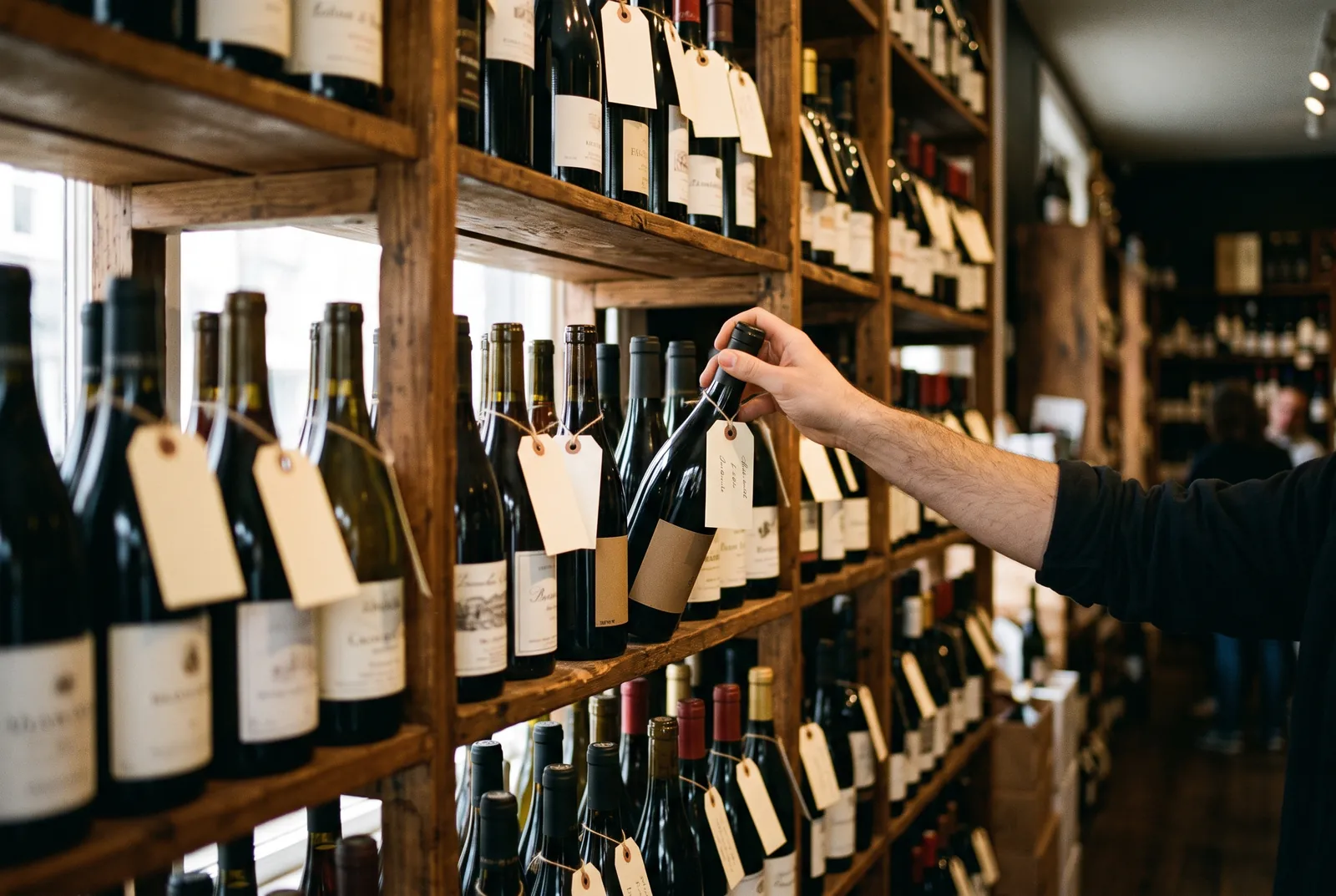
Post-Prohibition law requires most wine to pass from producer to distributor to retailer. Distributors commonly work on 25–30% gross margin and retailers on 30–50% on their cost, so a $50 winery price is $65–70 to the retailer and $90–105 on the shelf. Restaurants mark up two to three times. Direct-to-consumer sales — mailing lists, tasting rooms, wine clubs — bypass all of it, and are the reason Napa's cult estates can release at $500 and keep $500.
Allocation and the secondary market
Where release prices sit far below market — Burgundy, cult Napa — the largest margin is not a distributor's but the allocation holder's: the difference between the release price and the auction price, captured by whoever had the right to buy. This is the economics of the waiting list.

What it means for value
A collector's 'return' is measured from the price paid, which includes every margin above; a wine bought at retail must appreciate by the retail margin before the buyer is even. It is one reason the gross index return on the benchmarks page is not a return anyone earns.
Kaynaklar
- How the Place de Bordeaux works, Liv-ex, 2024. Alındı 3 September 2026.