 Bordeaux
 Burgundy
 Champagne
 Rhône
Rhône Napa Valley
 Tuscany
 Piedmont
 Mosel
Mosel Oregon
 Rioja
Rioja California sparkling
 Valais and Lavaux
 England
 Douro
Douro Etna
Etna Mendoza
 Marlborough
 Stellenbosch
 Barossa Valley
 Tasmania
 Beaujolais
 Jura
Jura Alsace
 Loire
Loire Provence
 Ribera del Duero
 Sonoma
 Giá đất
 Năm tốt và năm xấu
 Appellations
 Các vườn nho nổi tiếng
 Những chai vang nổi tiếng
 Ai sản xuất chúng
 Tìm một vintage
 So sánh rượu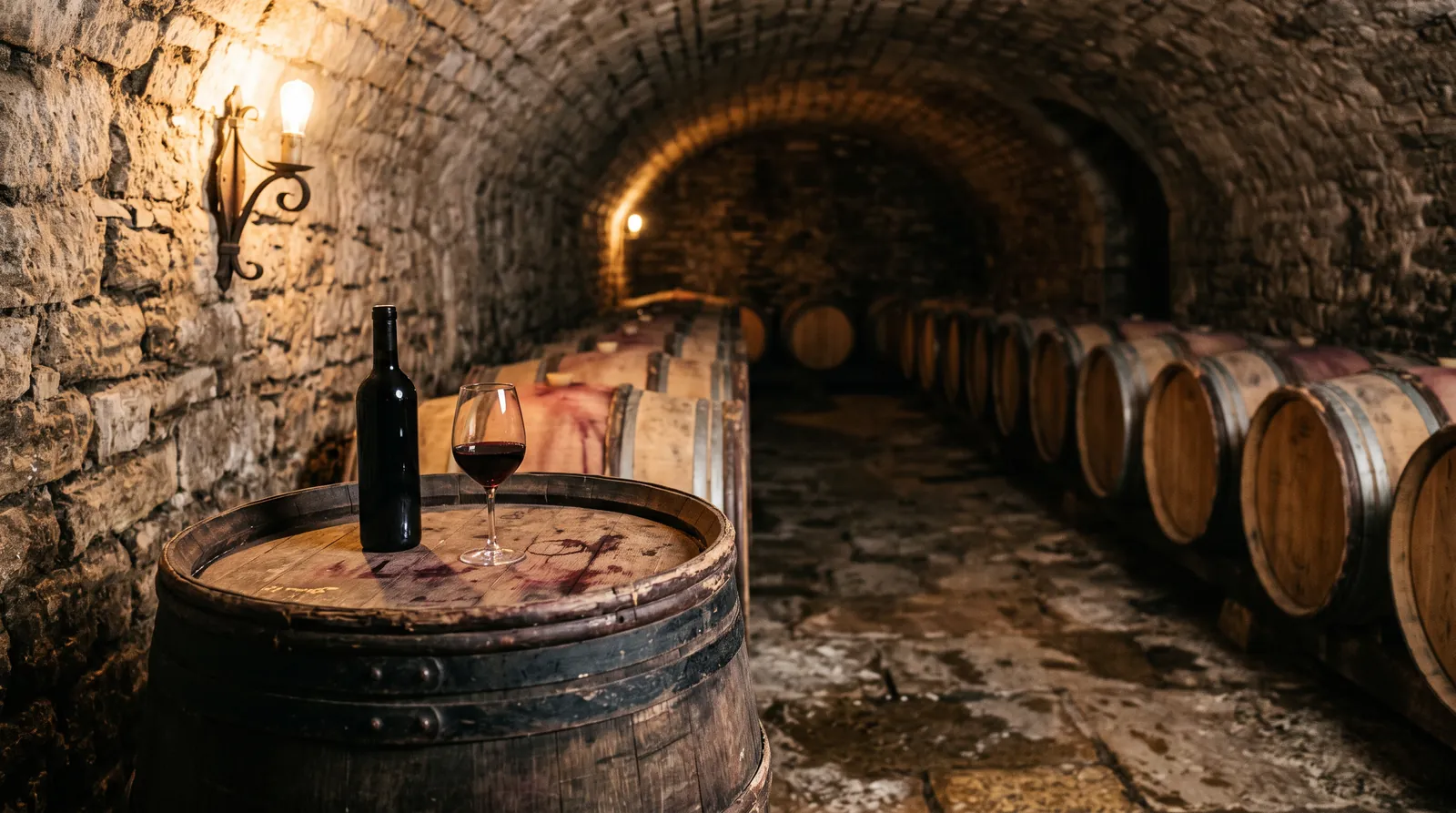
A bottle of collectible wine costs its producer somewhere between roughly ten and sixty dollars to make, depending on region and the price of the land it grows on. The market pays five to a hundred times that. The gap is not a swindle; it is the price of scarcity, reputation and years of somebody else's storage.
Start with the vineyard
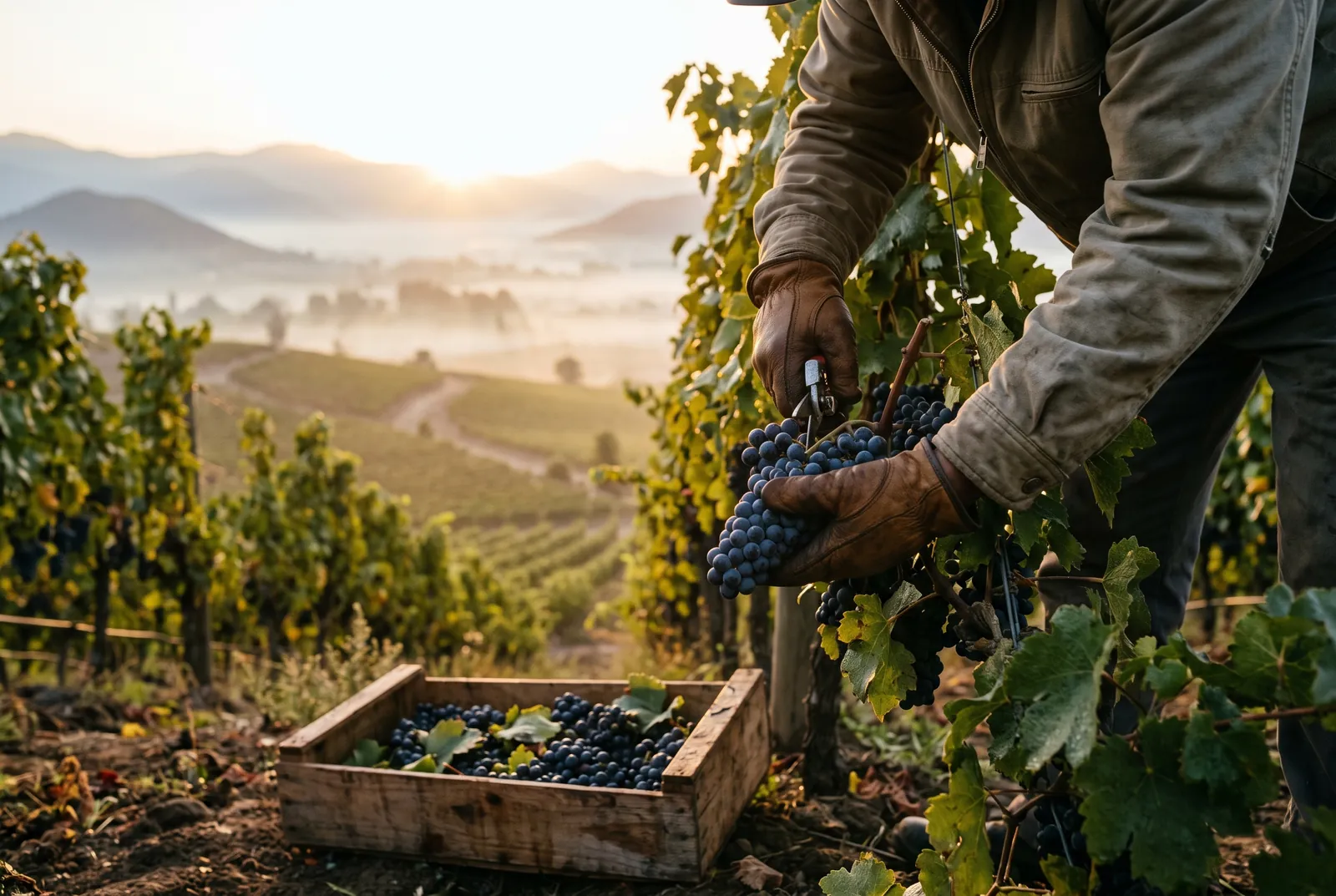
Every bottle begins as about 1.2 to 1.4 kilograms of grapes. Where a winery buys fruit, that number has a public price: in Napa Valley the county reported Cabernet Sauvignon at about $9,146 a ton in 2024, which is roughly $12 of grapes in a bottle; in Champagne the reference price for grand cru grapes has run at €7–8.50 a kilo, about €9–11 a bottle. Where an estate grows its own — every Bordeaux château, every Burgundy domaine — the grape has no price, and the honest substitute is the cost of farming a hectare divided by the bottles it yields, plus the opportunity cost of the land.
Farming is where the ranges widen. A UC Davis cost study puts the operating cost of an established, hand-harvested Napa Cabernet vineyard at $5,500–8,500 an acre a year; the cult estates, with denser planting, organic regimes and multiple passes, are reported far above that. At 2.5 tons an acre and 60 cases a ton, $8,000 an acre is about $4.50 a bottle; at $20,000 an acre and 2 tons, it is $14.
The land nobody paid for
The largest number in the model is one the winery never writes a cheque for. Pauillac vineyard was reported by SAFER at about €2.5 million a hectare in 2024; Côte de Nuits grand cru far above that; prime Oakville at $300,000–500,000 an acre. A domaine that inherited its land carries no mortgage on it, but the land still has a value it could sell for, and the honest way to price the bottle is to charge the land a modest return — Corkonomics uses 3–5% — and divide by the bottles. At €2.5 million a hectare, 4% and 40,000 bottles a hectare, that is €2.50 a bottle; at a €10 million grand cru hectare making 30,000 bottles, over €13. This is why the same farming produces a €30 bottle in one village and a €300 bottle in the next: the site sets the imputed cost, and the market prices the site far above even that.
Oak, time and money
A new French oak barrel costs $1,000–1,500 (some cooperages more) and holds 300 bottles. Used once, as the cult estates use it, that is $3–5 a bottle; used four times, under a dollar. Aging is a cost twice over: the cellar space and labour for 18 to 24 months, and the interest on everything already spent. Champagne is the extreme — Dom Pérignon holds its wine eight years, Salon ten — which is why houses, not growers, dominate prestige Champagne: only a house can finance a decade of stock.
The glass and the box
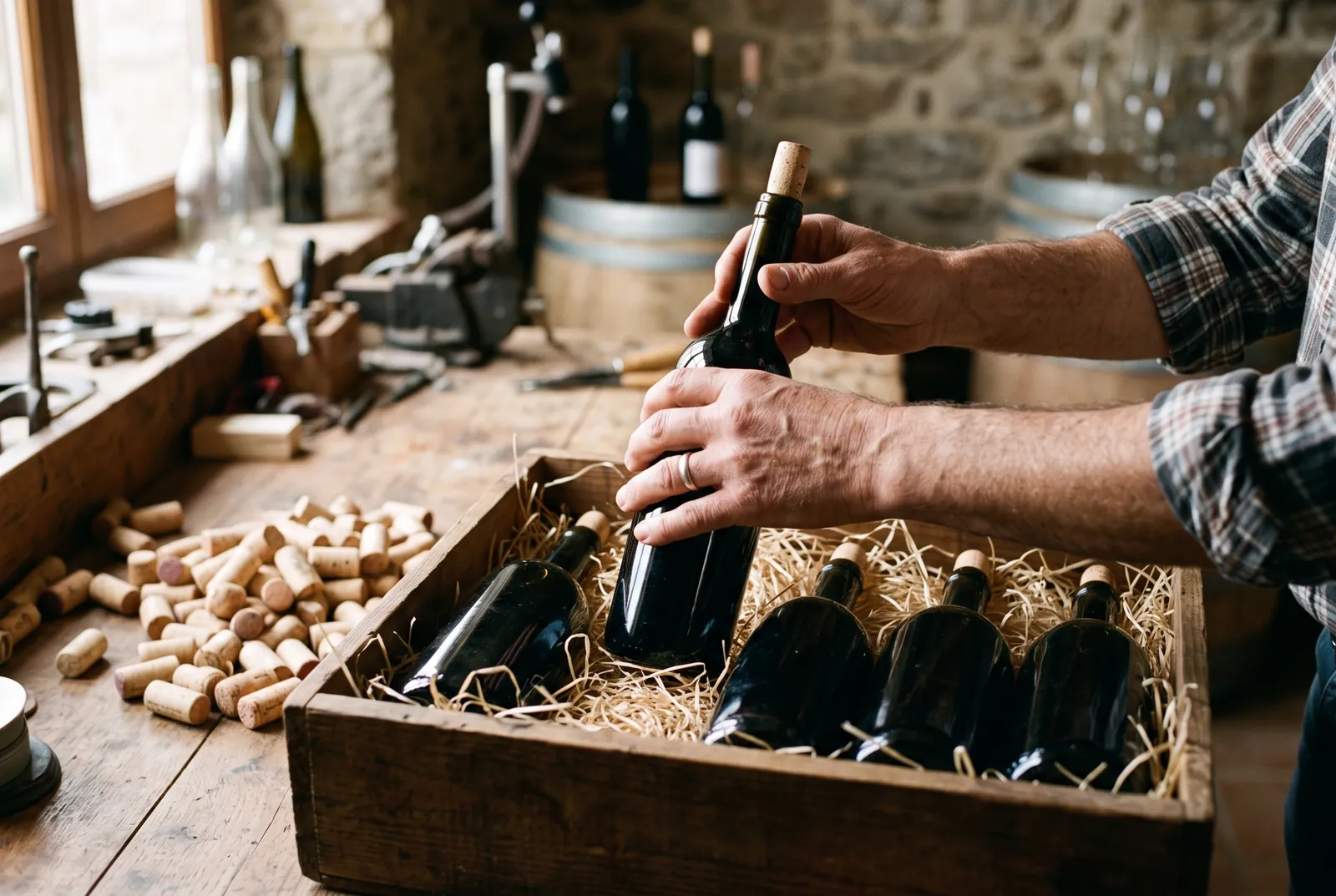
Bottle, cork, capsule, label and case run from about $2.50 for a standard package to $10 for the heavy glass, long cork and wooden case that top estates use. Bottling itself is under a dollar. Overhead — the cellar master, the compliance, the insurance, the depreciation on a winery that cost tens of millions — spreads across the bottles, and at the small estates it is not small per bottle.
What the model says
Corkonomics' cost models, with every input and source on the page, put a Bordeaux first growth in the range of tens of euros a bottle, a Napa cult Cabernet somewhat higher on land and farming, a Burgundy grand cru higher still on imputed land, and a prestige Champagne in the same territory once grapes and a decade of aging are counted. Against release prices in the hundreds and secondary prices in the thousands, the winery cost is a small fraction — and the estates that have spoken about it publicly say much the same.
Why the price is not the cost
Because the site cannot be reproduced, because the name took a century to build, because the buyer of a fifteen-year-old bottle is paying someone to have kept it, because the négociant, importer, distributor and retailer each take a margin, and because a fixed supply of a few thousand bottles meets demand from every market on earth. None of those is a cost of production. All of them are the economics of wine.
Nguồn
- California Grape Crush Report 2024, preliminary and final, CDFA / USDA NASS, 2025. Đã truy xuất 3 September 2026.
- Sample Costs to Establish a Vineyard and Produce Winegrapes, Cabernet Sauvignon, Napa County, UC Davis / UC Cooperative Extension, 2020. Đã truy xuất 3 September 2026.
- Le prix des terres — vignes 2024, SAFER / FNSAFER (as reported by Réussir Vigne), 2025. Đã truy xuất 3 September 2026.
- Key market statistics, Comité Champagne, 2025. Đã truy xuất 3 September 2026.