 Bordeaux
 Burgundy
 Champagne
 Rhône
Rhône Napa Valley
 Tuscany
 Piedmont
 Mosel
Mosel Oregon
 Rioja
Rioja California sparkling
 Valais and Lavaux
 England
 Douro
Douro Etna
Etna Mendoza
 Marlborough
 Stellenbosch
 Barossa Valley
 Tasmania
 Beaujolais
 Jura
Jura Alsace
 Loire
Loire Provence
 Ribera del Duero
 Sonoma
 Qué cuesta el terreno
 Años buenos y malos
 Apelaciones
 Viñedos famosos
 Vinos famosos
 Quiénes los elaboran
 Busca una añada
 Comparar vinos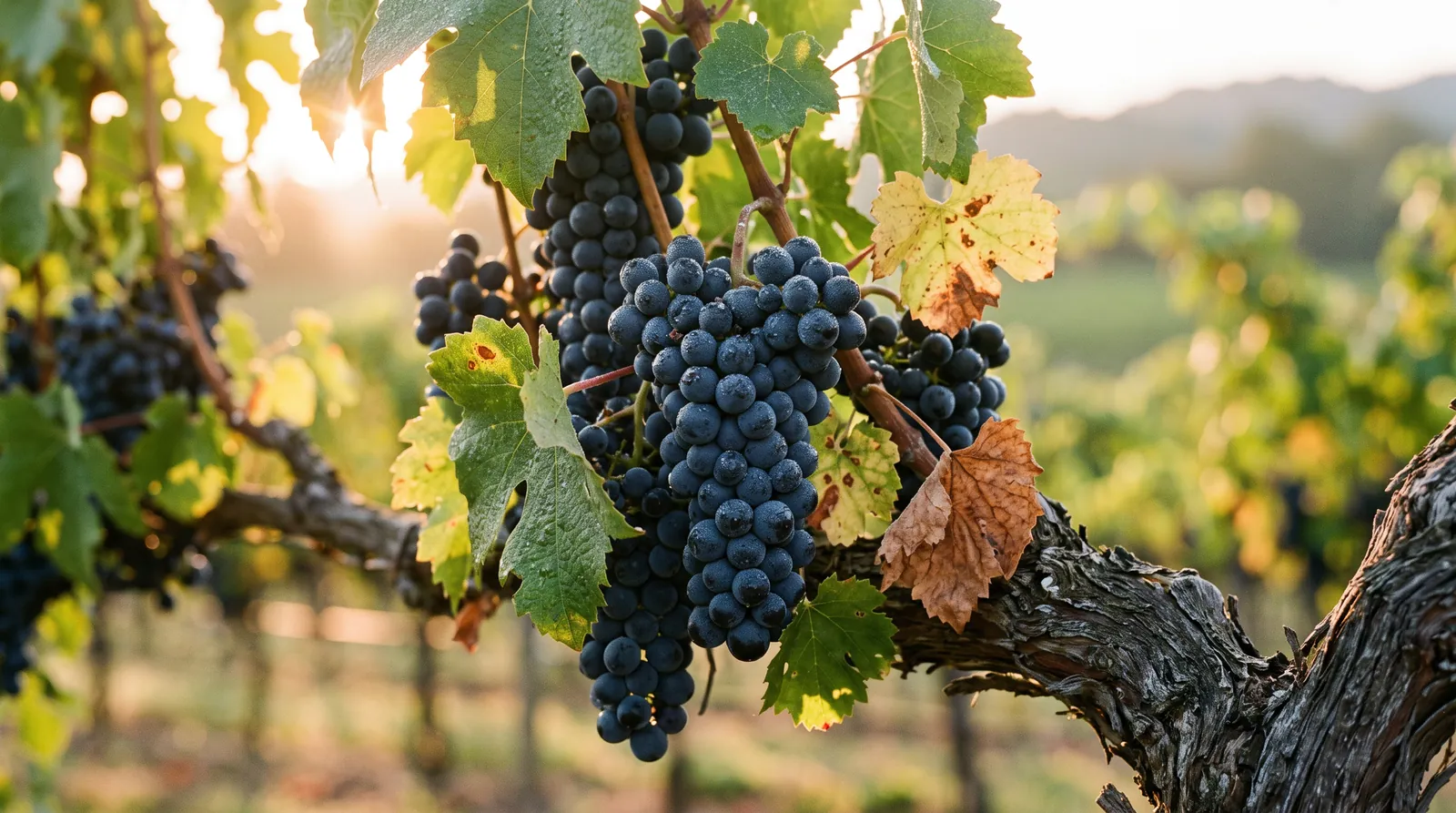
Two sides of a market
A market is any place where buyers and sellers meet and agree a price. In the grape market, the sellers are growers who farm vines but do not make wine, and the buyers are wineries that need more fruit than their own vineyards give them. In California, many wineries buy most of their grapes this way. In Champagne, the big houses buy a large share of their grapes from thousands of small growers.
Grapes are sold mostly by weight. In the United States the unit is the ton, and a ton of grapes makes very roughly 60 to 70 cases of wine, or about 700 to 800 bottles. That ratio is handy: it lets you turn a grape price into a cost per bottle. If grapes cost $2,250 a ton and a ton makes 750 bottles, the grapes in each bottle cost $3.
Why prices differ so much
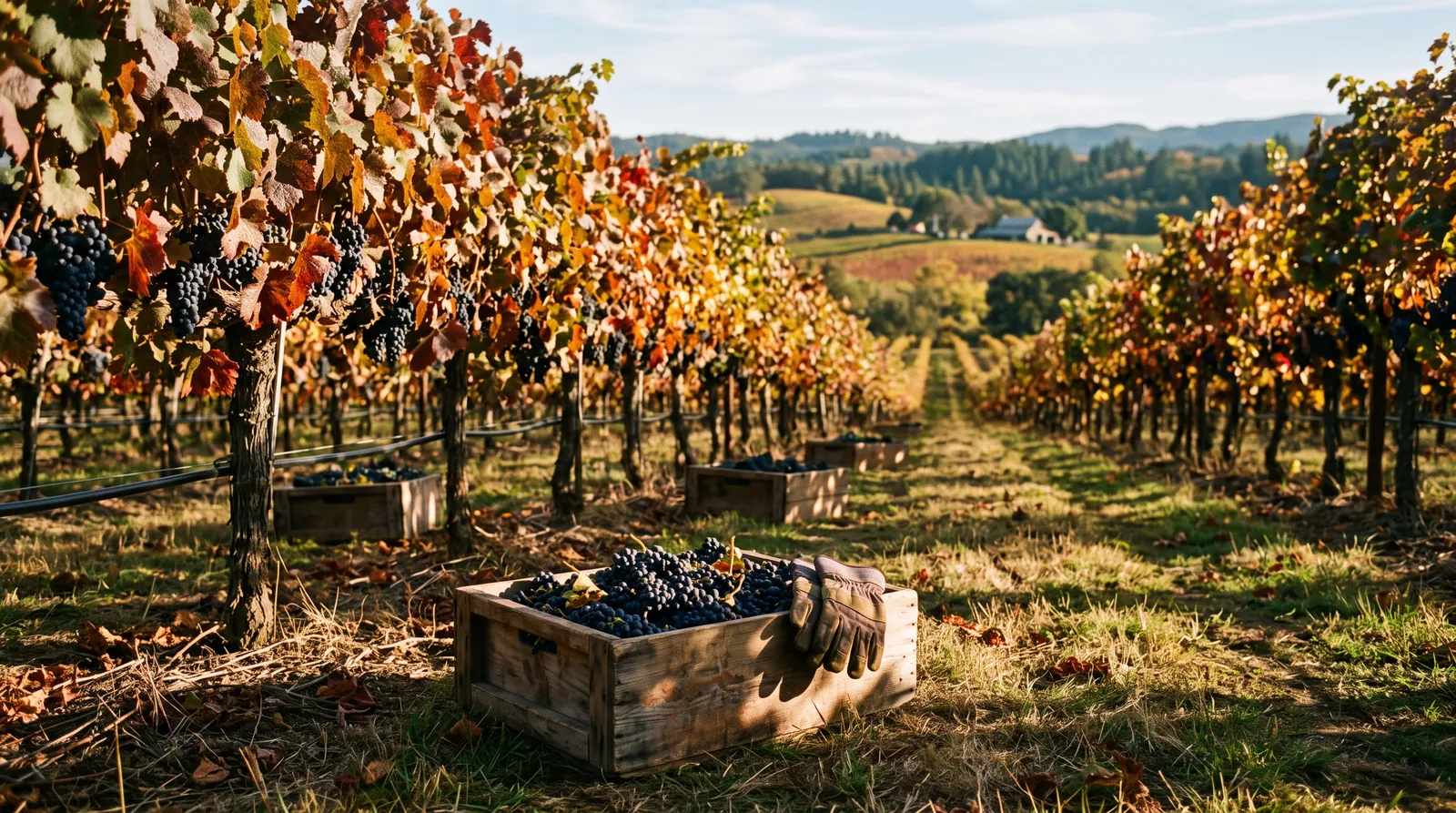
The California Grape Crush Report, published every year by the US Department of Agriculture, lists the tons crushed and the average price paid for each grape variety in each district of the state. It is one of the richest public price records in the wine world. It shows enormous gaps. Cabernet Sauvignon from Napa County has averaged many thousands of dollars a ton in recent reports, while grapes from the hot Central Valley often fetch only a few hundred dollars a ton.
The reasons echo the land chapter. Napa grapes go into wines that sell for high prices, so wineries will pay more for them. They also come from expensive land with low yields, so growers need high prices to cover costs. Central Valley grapes go into inexpensive wines where every cent matters.
Surplus and shortage
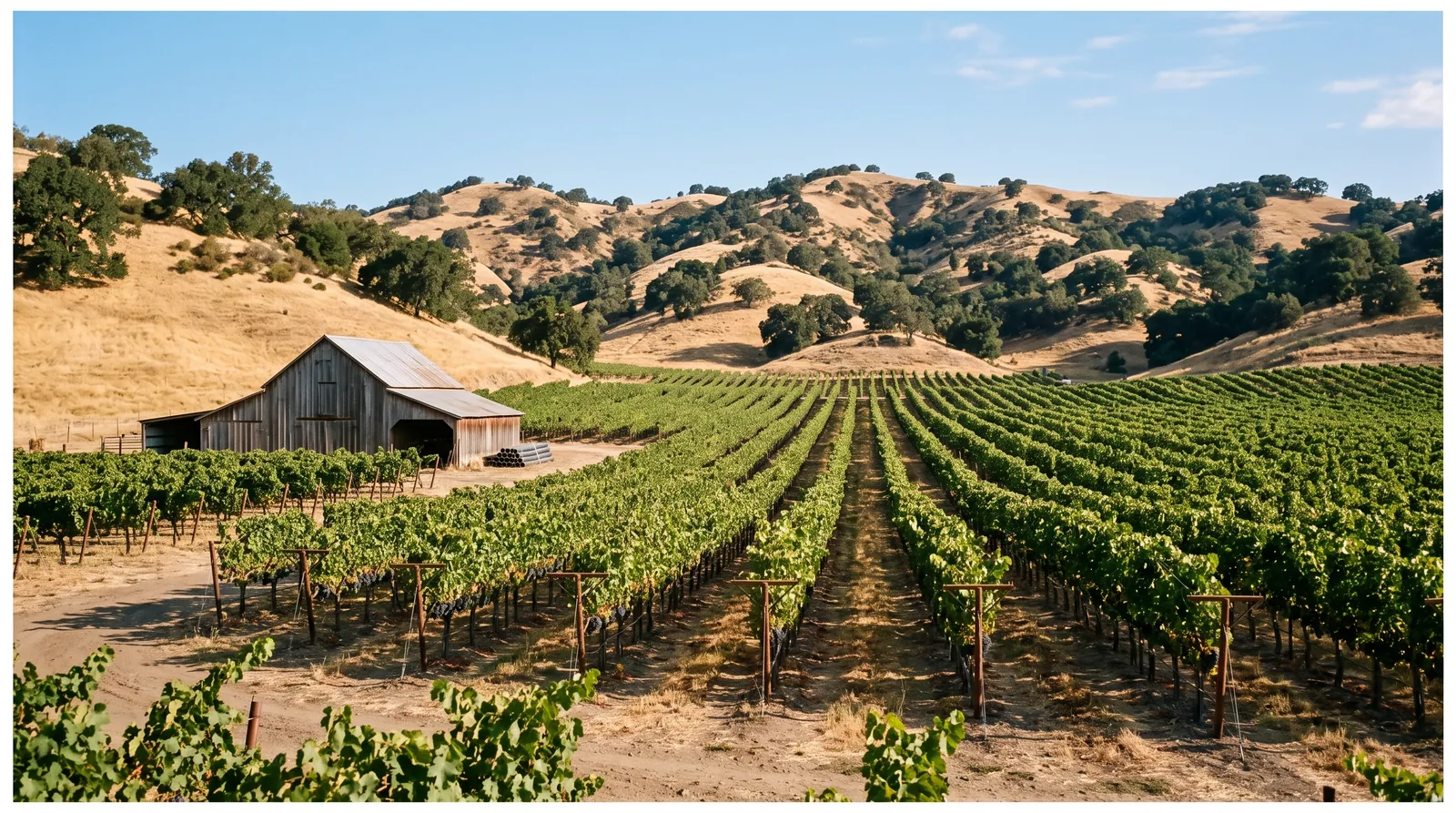
Supply and demand explain why grape prices rise and fall from year to year. A surplus happens when there is more of something for sale than buyers want at the current price. A shortage is the opposite.
Here is a simple story. For a few years, a certain grape is popular and prices are high, so growers plant more of it. Vines take about three years to give a usable crop, so all the new vines come into production at once, just as drinkers drift towards a different style. Now there are too many grapes. Wineries can pick and choose, prices fall, and some growers cannot sell their fruit at all and leave it hanging on the vine. Low prices then push growers to pull out vines or plant something else, supply shrinks, and in time prices recover. This boom and bust pattern repeats in many farm markets, and California's wine grape market has swung between shortage and surplus several times.
Think about it: concert tickets can also be in surplus or shortage. What happens to resale prices when a band adds extra dates in your city?
Contracts versus the spot market
Growers and wineries can trade in two main ways. On the spot market, grapes are sold close to harvest at whatever price buyers and sellers agree that week. Under a contract, they agree in advance, often for several years, on the price per ton (or a formula for it), the amount, and quality rules such as sugar levels and picking dates.
Contracts reduce risk on both sides. The grower knows the fruit has a home and roughly what it will earn. The winery knows it will have grapes, of a known quality, at a known cost. The price of that safety is giving up the chance of a better deal: in a shortage the grower on a fixed contract misses out on high spot prices, and in a surplus the winery pays more than it could have.
From grape price to bottle price
An old rule of thumb in California says that a wine's shop price per bottle is roughly the grape price per ton divided by 100. So grapes at $2,000 a ton suggest a bottle around $20, and grapes at $8,000 a ton suggest a bottle around $80. It is only a rough guide, and many wines break it, but it captures something true: the more a winery pays for fruit, the more it must charge for the wine.
You can see why using the numbers from this track. At $2,000 a ton and 750 bottles per ton, the grapes alone cost about $2.67 a bottle. Add winemaking, barrels, packaging, the winery's profit, the distributor's markup and the shop's markup, and each link pushes the price up again. A dollar saved or spent on grapes becomes several dollars on the shelf.
The rule also works in reverse. A winery that wants to sell a $10 bottle cannot afford grapes at $5,000 a ton, however good they are. Each price tier of wine needs grapes from the right kind of vineyard, which is why the grape market is really many smaller markets, one for each region and quality level.
Reading the price signals
For students and researchers, the crush report is a gift. You can follow a single variety in one district for decades and watch prices react to planting booms, wildfires, droughts and changing tastes. Comparing tons crushed with prices often tells you whether a year was a surplus or a shortage: lots of tons and falling prices suggest too much supply; few tons and rising prices suggest too little.
Europe works differently in places. In Champagne, growers and houses have long used collective arrangements that affect how many grapes can be harvested each year, which helps keep supply and prices steady. Rules like these show that a market's shape is not just nature: it is also the result of choices made by people.

Worked example: contract or spot?
Here is a made-up grower with round numbers. She has 100 tons of grapes to sell each year. She can sign a contract at a fixed $2,000 a ton, or sell on the spot market and take whatever the price is at harvest.
| Contract income in any year (100 tons at $2,000) | $200,000 |
|---|---|
| Spot income in a normal year (100 tons at $2,000) | $200,000 |
| Spot income in a shortage year (100 tons at $2,500) | $250,000 |
| Spot income in a surplus year (100 tons at $1,200) | $120,000 |
| Spot income in a surplus year if she sells only 60 tons | $72,000 |
The contract pays the same $200,000 whatever happens. The spot market could pay $50,000 more in a shortage, or $80,000 less in a surplus, and $128,000 less if some fruit finds no buyer. If her farming costs are about $180,000 a year, one bad spot year could wipe out several years of profit, which is why many growers prefer contracts.
Key words
- Mercado
- Any place or system where buyers and sellers meet and agree a price.
- Surplus
- When more of something is for sale than buyers want at the current price, which pushes the price down.
- Shortage
- When buyers want more of something than is available at the current price, which pushes the price up.
- Spot market
- Buying and selling for immediate delivery at today's price, with no long-term agreement.
- Contract
- An agreement made in advance on price, quantity and quality, often for several years.
- Grape Crush Report
- A yearly US Department of Agriculture report listing the tons crushed and average prices paid for wine grapes in California, by variety and district.
Check your understanding
Grapes cost $3,000 a ton and a ton makes 750 bottles. What is the grape cost per bottle?
Show the answer
$3,000 divided by 750 is $4 a bottle.
Why do surpluses often follow a period of high grape prices?
Show the answer
High prices encourage growers to plant more vines. Those vines all start cropping a few years later, often just as demand cools, so supply overshoots.
What does a grower give up by signing a fixed-price contract?
Show the answer
She gives up the chance of higher prices in a shortage year, in return for a steady, certain income.
In the crush report, what might lots of tons and falling prices suggest?
Show the answer
That supply is greater than demand: a surplus year.
Go deeper on Corkonomics
Sources and further reading
- California Grape Crush Reports USDA National Agricultural Statistics Service
- The Champagne trade body Comité Champagne
- Cost and return studies for wine grapes UC Davis Agricultural and Resource Economics
← Previous chapterAll chapters
All chaptersThe economics of wine production
- The wine business at a glance: from vineyard to glass
- Land: why some vineyard ground costs millions
- Growing grapes: farming costs and yields
- Grape prices: buying, selling and contracts
- Making the wine: winery costs and economies of scale
- Time is money: ageing, inventory and the cost of waiting
- From cellar door to shop shelf: packaging, distribution, taxes and tariffs
- Pricing, brands and the global picture