 Bordeaux
 Burgundy
 Champagne
 Rhône
Rhône Napa Valley
 Tuscany
 Piedmont
 Mosel
Mosel Oregon
 Rioja
Rioja California sparkling
 Valais and Lavaux
 England
 Douro
Douro Etna
Etna Mendoza
 Marlborough
 Stellenbosch
 Barossa Valley
 Tasmania
 Beaujolais
 Jura
Jura Alsace
 Loire
Loire Provence
 Ribera del Duero
 Sonoma
 ज़मीन की कीमत
 अच्छे और बुरे साल
 Appellations
 प्रसिद्ध वाइनयार्ड
 मशहूर वाइन
 इसे कौन बनाता है
 विंटेज खोजें
 वाइन की तुलना करें
A chain of businesses, not one
When you pick up a bottle in a shop, it is tempting to think the money you pay goes to the person who made the wine. In fact it is split between several businesses, each doing one job. Economists call this line of jobs a value chain: every link adds something the buyer is willing to pay for, and every link wants to be paid for it.
For a typical bottle sold in the United States, the chain looks like this. A grower farms the vines and sells grapes. A winery buys or grows the grapes, turns them into wine, bottles it and sells it. A distributor (or an importer, for foreign wine) buys from the winery, stores it, moves it around the country and sells it on. A retailer (a shop) or a restaurant sells it to you. Governments take a share along the way as tax.
- Grower: owns or rents vineyard land, farms the vines, sells grapes by weight.
- Winery: crushes, ferments, ages and bottles the wine, and builds a brand.
- Importer or distributor: buys in bulk, warehouses, delivers, and sells to shops and restaurants.
- Retailer or restaurant: chooses what to stock, displays it, and sells to drinkers.
- Government: collects excise duty, sales tax and, on imports, tariffs.
Sometimes one business does several jobs
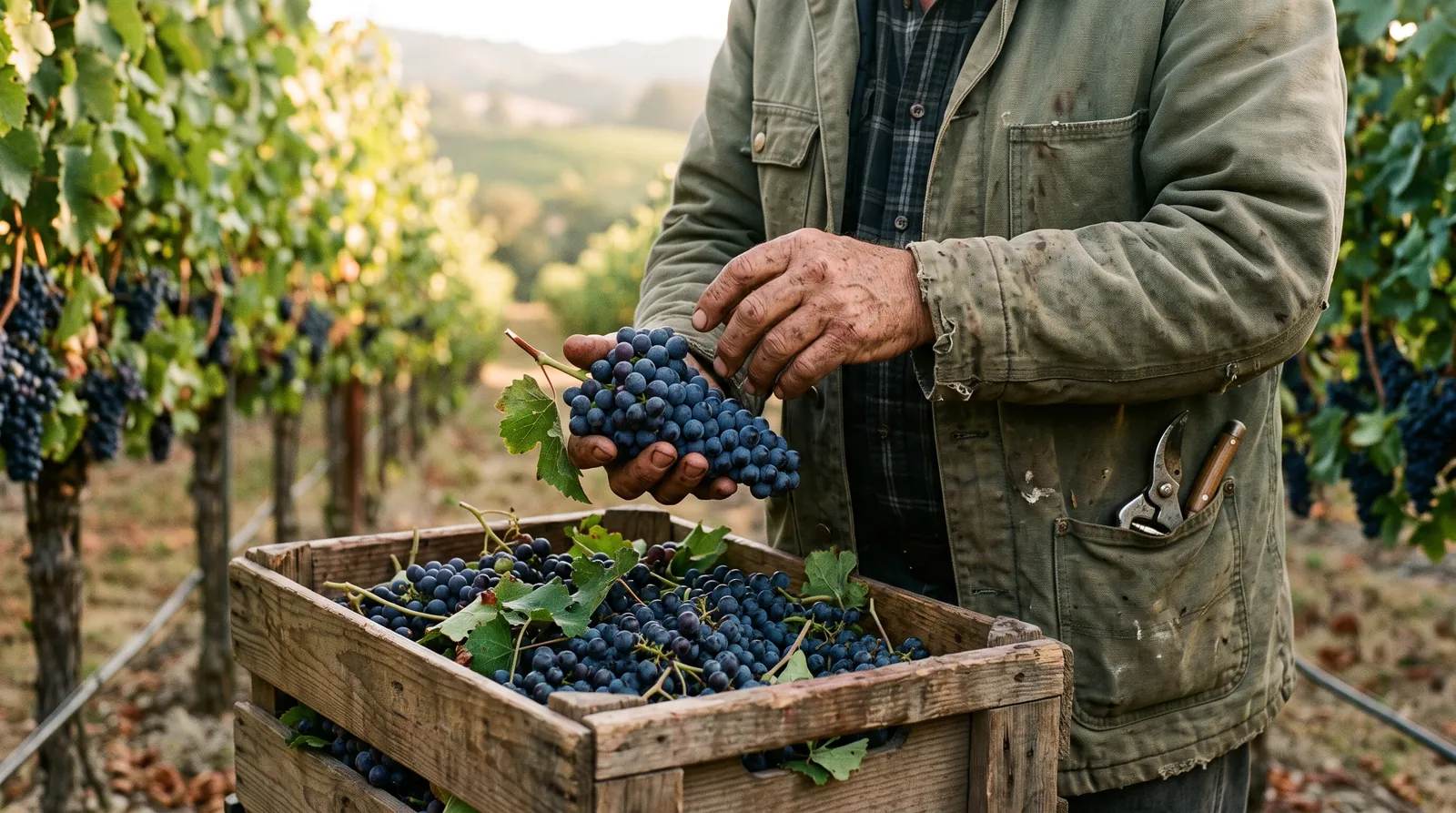
The links are not always separate companies. Many wineries own their own vineyards, so they are grower and winemaker at once. Some sell straight to drinkers from a tasting room or a website, skipping the distributor and the shop. Big supermarket chains sometimes buy wine directly from overseas producers. Each time a business takes over a link, it also takes over that link's costs and its share of the price.
This matters because the shape of the chain changes who earns what. A family estate in Burgundy that farms its own grand cru vines and sells to loyal private customers keeps far more of the final price than a grower in a hot inland region selling grapes by the truckload to a giant winery.
Think about it: when a winery sells a bottle through its own website, which links of the chain has it cut out, and what new jobs has it taken on instead?
Why have a chain at all?
It might seem simpler for one business to do everything. The reason it rarely happens is specialisation: people and firms that focus on one job usually get better and cheaper at it. A grower who farms every day learns her vines inside out. A distributor that delivers a thousand brands can fill one lorry for a whole street of shops, which no single winery could afford to do on its own.
Each specialist also spreads its costs over a lot of business. One warehouse, one sales team and one delivery route can serve hundreds of wineries. That is why, even after every link takes a slice, the wine can still reach you at a price you are willing to pay. The chain survives because, most of the time, it is cheaper than the alternatives.
Four words every economist uses
To tell whether a business in the chain is doing well, you need four words. Revenue is all the money that comes in from sales: bottles sold times the price of each. Cost is all the money that goes out to make and sell them: grapes, wages, glass, rent, electricity. Profit is what is left: revenue minus cost. If cost is bigger than revenue, the profit is negative and we call it a loss.
The fourth word is margin, which is profit shown as a share of revenue. A lemonade stand that takes in $50 on a Saturday and spends $40 on lemons, sugar and cups makes $10 profit. Its margin is $10 out of $50, or 20%. Margin lets you compare businesses of very different sizes. A giant winery making $10 million profit on $200 million of sales has a 5% margin, which is thinner than the lemonade stand's.
Be careful with one trap. Revenue is not profit. A winery that sells a million dollars of wine sounds rich, but if it spent $1.1 million to make and sell that wine, it lost money.
Who gets what share of a shop bottle
The exact split varies from wine to wine, but for an everyday bottle the pattern is often something like the worked example below: the grower gets a small slice, perhaps a tenth or so, the winery a bit over a third, and the distributor and retailer together a large share of the rest. That can sound unfair, but each link has real costs. A distributor runs warehouses, lorries and sales teams. A shop pays rent, staff and the cost of wine sitting unsold on its shelves.
For expensive wines the split shifts. A famous name lets a winery charge far more than its costs, so its share grows. A top Napa Valley or Bordeaux wine may cost a few tens of dollars a bottle to make but sell to the trade for hundreds. That gap is the reward for land, reputation and scarcity, ideas we will meet in later chapters.
Where the bottle finally meets the drinker
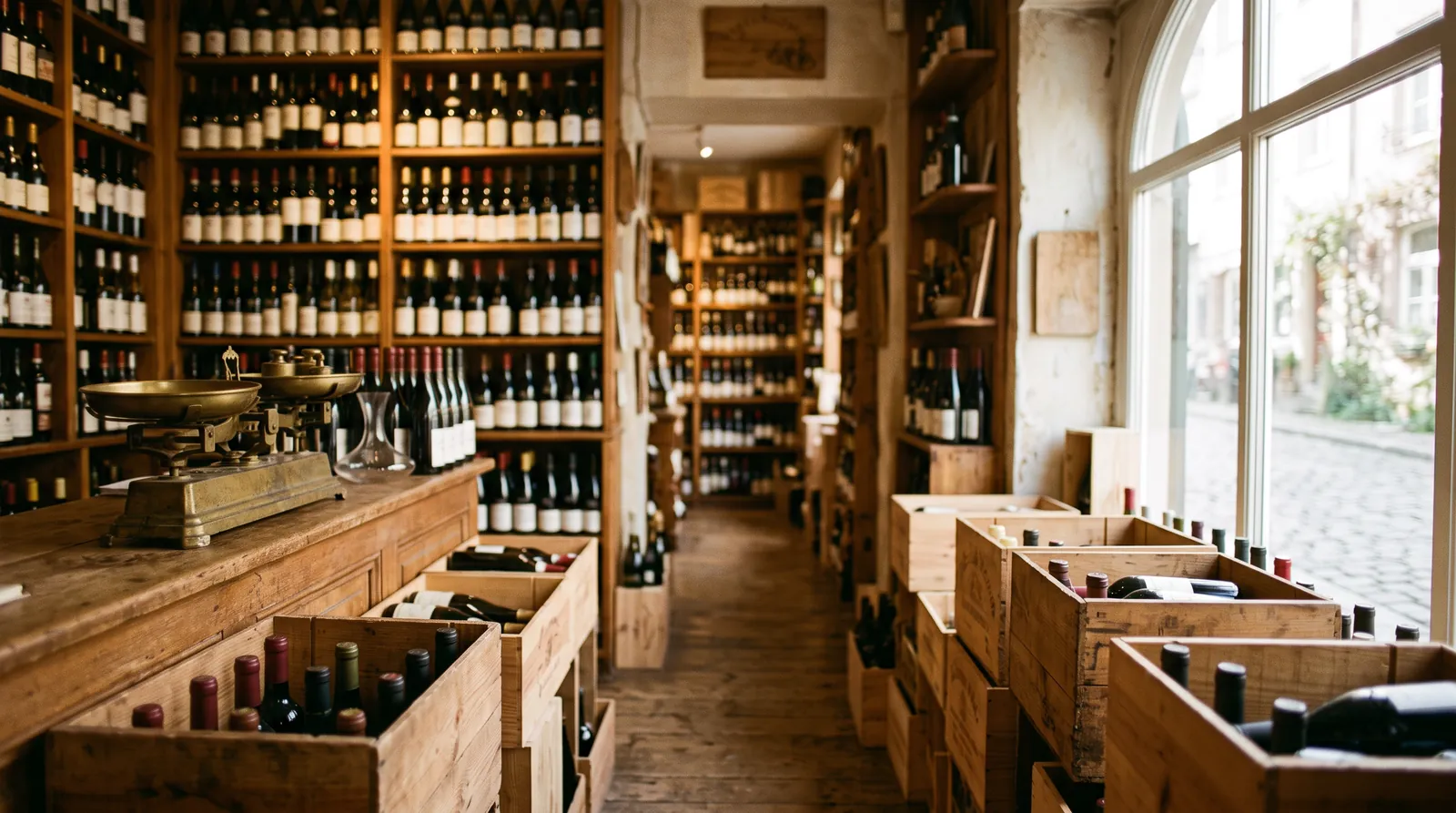
Restaurants are the last link for many bottles, and they usually charge much more than shops, often two to three times what a shop would ask. Part of that is service: glassware, a cellar, a sommelier, a table and the person who washes up. Part is simply that diners pay for the whole evening, not just the drink.
Through this track we will walk down the chain one link at a time: land, farming, grape prices, winemaking, ageing, packaging and distribution, and finally pricing and the global market. By the end you should be able to look at any bottle and make a sensible guess at where its money went.
Classroom aside: pick any product you buy often, like trainers or a phone case. Can you name each link in its value chain?

Worked example: who gets what from a $16 bottle
Here is a made-up everyday Californian red with round numbers. It sells in a shop for $16. This is how that $16 might be shared out.
| Grower (paid for the grapes) | $2.00 |
|---|---|
| Winery (making, bottling, overheads and profit) | $6.00 |
| Taxes collected along the way | $0.50 |
| Distributor (storage, delivery, sales team and profit) | $2.50 |
| Retailer (rent, staff, unsold stock and profit) | $5.00 |
| Shop price | $16.00 |
The winery receives $8 when it sells to the distributor ($2 of which it passes to the grower), so the grower ends up with 12.5% of the shop price and the winery keeps 37.5%. The distributor and retailer take $7.50 between them, almost half.
Key words
- Value chain
- The series of businesses that each add something to a product on its way to the buyer, from vineyard to glass.
- Revenue
- All the money a business takes in from sales: the number sold times the price of each.
- Cost
- All the money a business spends to make and sell its products.
- Profit
- Revenue minus cost. When cost is bigger than revenue, the result is a loss.
- Margin
- Profit as a share of revenue, usually written as a percentage. $10 profit on $50 of sales is a 20% margin.
- Distributor
- A wholesaler that buys wine from wineries or importers and sells it on to shops and restaurants.
Check your understanding
A winery sells $500,000 of wine and its costs are $450,000. What are its profit and its margin?
Show the answer
Profit is $500,000 minus $450,000, which is $50,000. Margin is $50,000 divided by $500,000, which is 10%.
Why might a winery that sells through its own website keep a bigger share of the price?
Show the answer
It skips the distributor and the shop, so it keeps the slices they would have taken. In return it must pay for shipping, marketing and customer service itself.
Why is revenue not the same as profit?
Show the answer
Revenue is all the money coming in; profit is what is left after all the costs have been paid. A business can have large revenue and still make a loss.
Go deeper on Corkonomics
Sources and further reading
- State of the US Wine Industry report Silicon Valley Bank
- US wine industry statistics Wine Institute
- Average price of a bottle of wine in US shops US Bureau of Labor Statistics via FRED
All chaptersThe economics of wine production
- The wine business at a glance: from vineyard to glass
- Land: why some vineyard ground costs millions
- Growing grapes: farming costs and yields
- Grape prices: buying, selling and contracts
- Making the wine: winery costs and economies of scale
- Time is money: ageing, inventory and the cost of waiting
- From cellar door to shop shelf: packaging, distribution, taxes and tariffs
- Pricing, brands and the global picture