 Bordeaux
 Burgundy
 Champagne
 Rhône
Rhône Napa Valley
 Tuscany
 Piedmont
 Mosel
Mosel Oregon
 Rioja
Rioja California sparkling
 Valais and Lavaux
 England
 Douro
Douro Etna
Etna Mendoza
 Marlborough
 Stellenbosch
 Barossa Valley
 Tasmania
 Beaujolais
 Jura
Jura Alsace
 Loire
Loire Provence
 Ribera del Duero
 Sonoma
 土地の価格
土地の価格 良い年と悪い年
 アペラシオン一覧
 有名なワイナリー
 有名なワイン
 誰が造るのか
 ヴィンテージを探す
 ワインを比較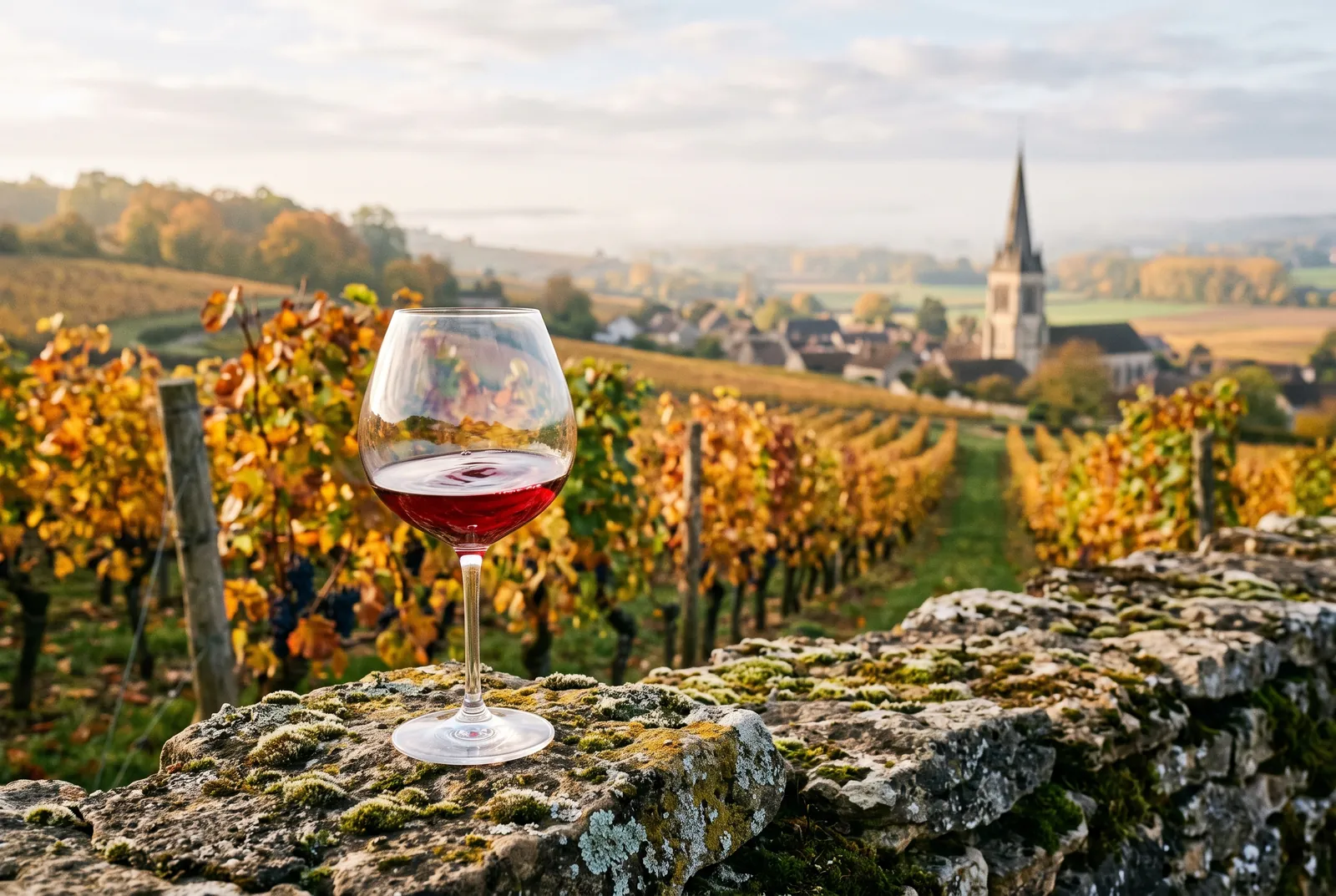
The most expensive farmland on Earth
In Burgundy, in eastern France, a handful of small vineyards are classed as grand cru, the top rank. When a plot there changes hands, which is rare, it trades at many millions of euros per hectare. A hectare is a square 100 metres by 100 metres, about the size of a large football pitch, or roughly 2.47 acres.
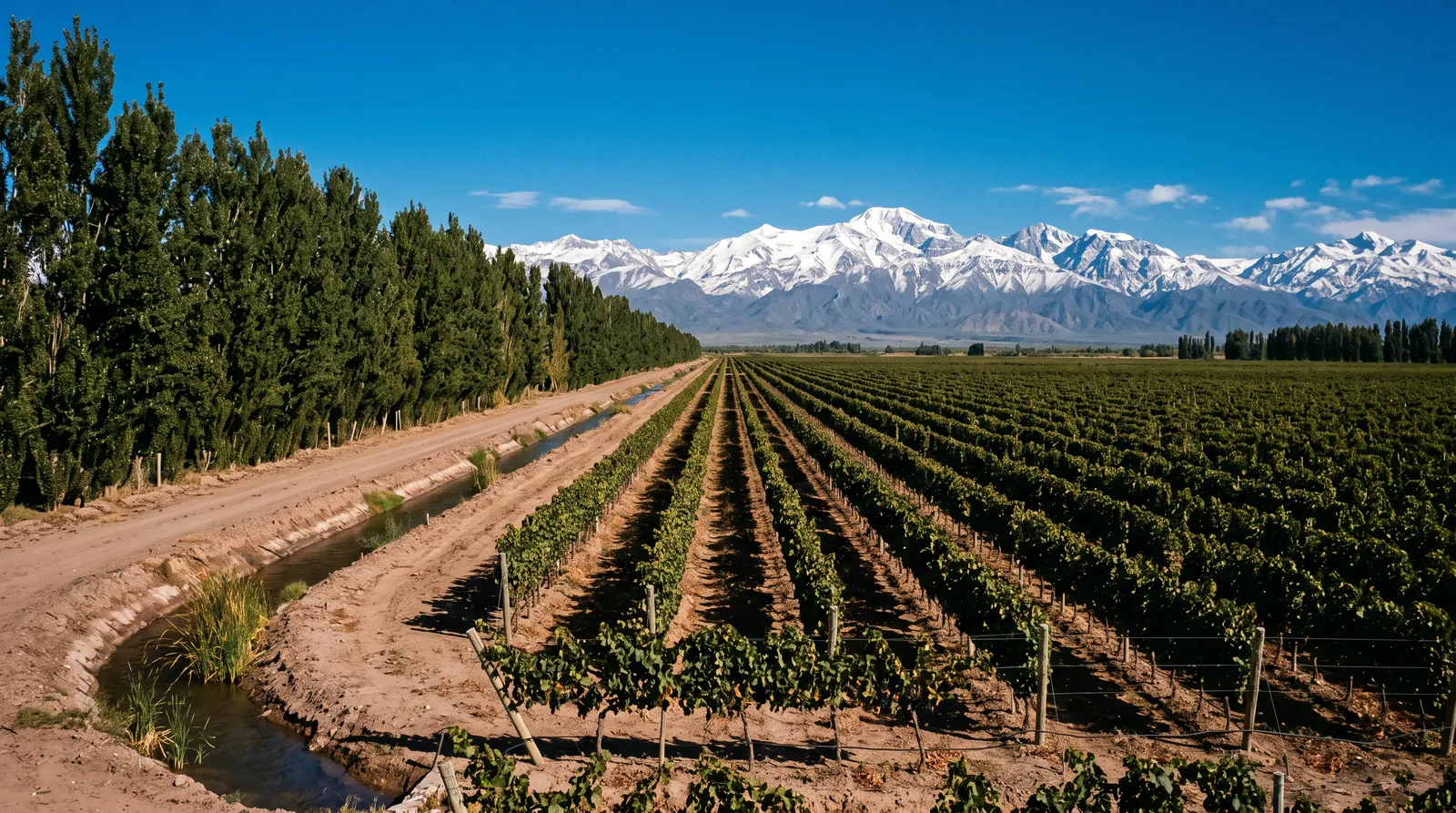
Now travel to a hot, flat region where grapes are grown in bulk for cheap wine, such as parts of California's Central Valley or the plains of La Mancha in Spain. There a hectare of vines can cost a tiny fraction of the Burgundy price. Same plant, same sunshine, wildly different value. To understand why, we need a few economic ideas.
Location, soil and rules
First, location really does change the wine. Slope, soil, drainage and how much sun a site gets affect how the grapes ripen, and centuries of experience have shown which patches give the best results. Buyers pay more for wine from those patches, so the land underneath them is worth more.
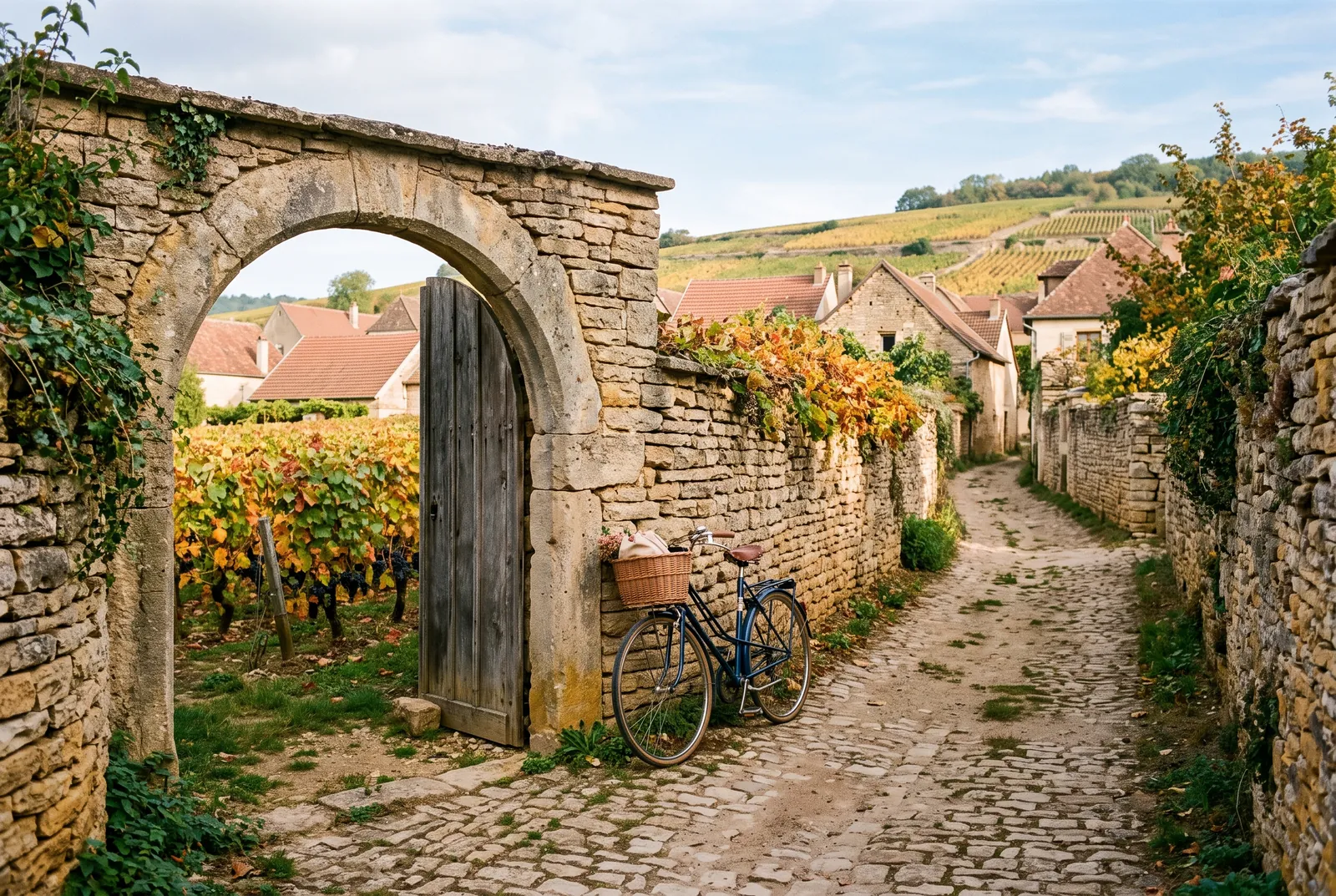
Second, there are rules. An appellation is a legally protected place name, like Champagne, Barolo or Napa Valley. Only wine from inside the boundary may use the name, and in Europe the rules often also limit which grapes can be planted and how much each hectare may produce. A field just outside the line cannot use the famous name, so it is worth far less, even if it sits a few metres away.
Think about it: why might owners inside an appellation be happy that the boundary is strict and hard to change?
Scarcity and reputation
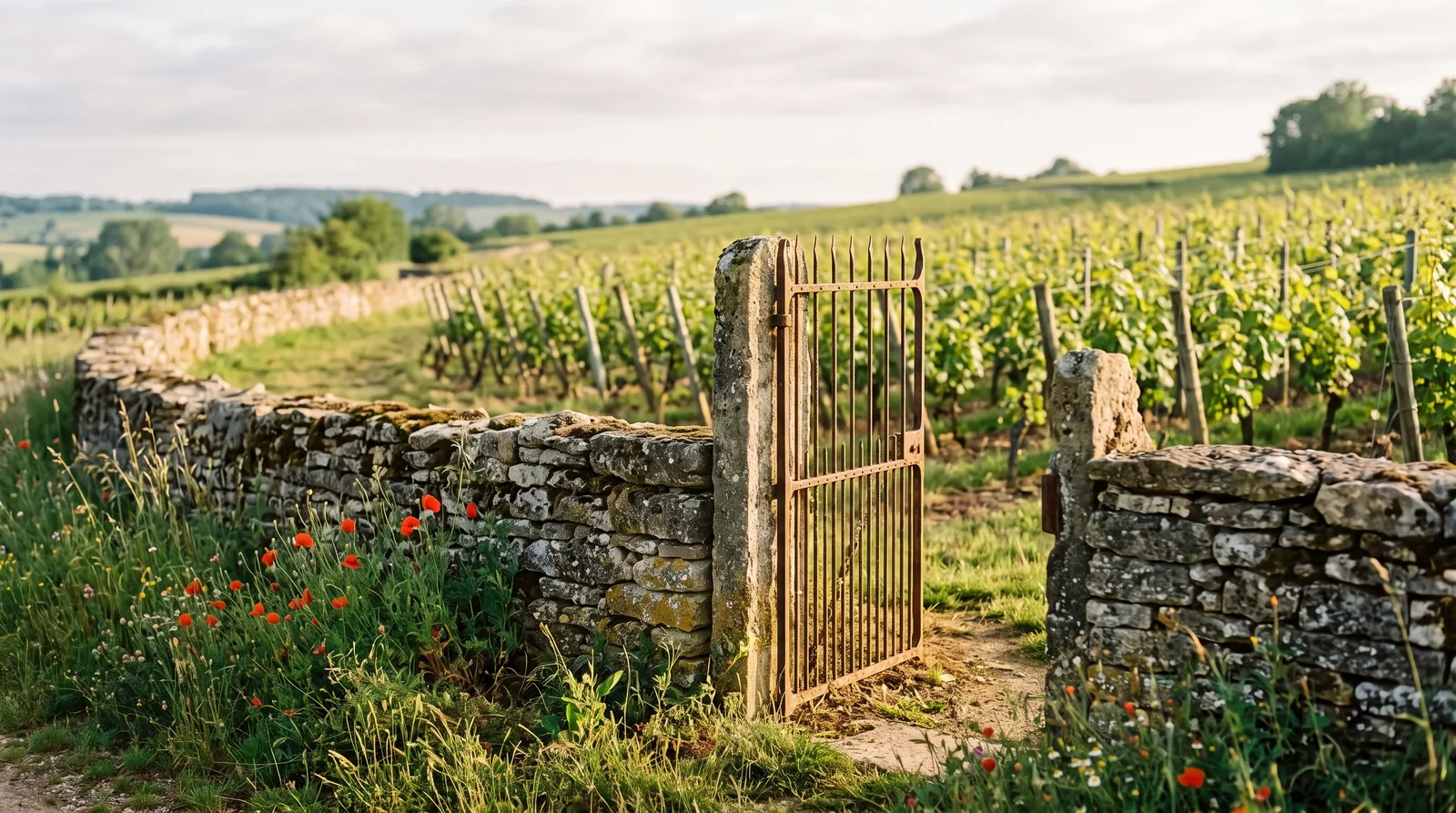
Scarcity means there is not enough of something to satisfy everyone who wants it. You cannot make more grand cru land: the boundaries are fixed and nobody is building new hillsides. When demand from wealthy buyers around the world rises and the supply of land stays the same, the price has only one way to go. Economists call this the basic law of supply and demand: when more people want something that is in fixed supply, its price rises.
Reputation adds to scarcity. A name that has been famous for 200 years, like the classified estates of Bordeaux ranked in 1855, carries trust that a newcomer cannot buy overnight. Think of trading cards: two cards printed on identical cardboard can differ in price by thousands because one shows a legendary player and was printed in tiny numbers.
Land prices follow wine prices
Here is a key idea: vineyard land is valuable because of the wine it can make, not the other way round. A buyer works out what the grapes or wine from a plot could earn year after year, and that sets the most they will pay for the ground. When the price of a region's wine rises for many years, its land prices tend to follow. When wine prices fall, land prices usually fall too, though often more slowly, because owners do not like to sell at a loss.
This also explains why buying top vineyard land rarely pays for itself from wine sales alone. The land price already reflects the high wine price. People who buy at the top are often betting that prices will keep rising, or they want the prestige of owning a famous name. That is a different decision from simply running a profitable farm.
It also means land is a kind of asset: something you own that has value and might be sold later. Like any asset, its price can go down as well as up, and selling it can take a long time.
Think about it: if a region's wine suddenly became unfashionable, what would you expect to happen to the price of its vineyards over the next ten years?
Opportunity cost: owned land is not free
Here is one of the most useful ideas in economics. The opportunity cost of something is the value of the best alternative you give up to have it. If you spend Saturday working at a café for $80, the opportunity cost of spending Saturday at the beach instead is the $80 you did not earn.
Land works the same way. A family that has owned a vineyard for generations pays no rent and no mortgage, so the land can feel free. But they could sell it and put the money somewhere safe that pays interest, or rent it to a neighbour. By keeping it, they give that income up. Economists call this the imputed land cost, and it is why the true cost of a famous bottle includes a large slice for land even when nobody writes a cheque for it.
Buying versus renting
Not every winemaker owns their vines. Many rent land under long leases, and in some regions it is common for an owner to be paid partly in grapes or wine rather than cash. Renting needs much less money up front, which is why young winemakers often start that way. Buying ties up a huge sum of money but means the owner benefits if land prices rise, and cannot be told to leave when a lease ends.
In France, a body called SAFER oversees many farmland sales and publishes average vineyard prices by region, which is one of the best public sources for anyone studying land values. In the United States, land prices in places such as Napa Valley are often several hundred thousand dollars an acre for good vineyard ground, far above most farmland.
Worked example: how much land adds to each bottle
Here are two made-up vineyards with round numbers. Each family owns its land outright, and each could earn 4% a year if it sold the land and put the money somewhere safe instead.
| Famous hillside: land value per hectare | $1,000,000 |
|---|---|
| Famous hillside: yearly opportunity cost at 4% | $40,000 |
| Famous hillside: bottles per hectare (low yields) | 4,000 |
| Famous hillside: land cost per bottle | $10.00 |
| Bulk plain: land value per hectare | $20,000 |
| Bulk plain: yearly opportunity cost at 4% | $800 |
| Bulk plain: bottles per hectare (high yields) | 16,000 |
| Bulk plain: land cost per bottle | $0.05 |
$40,000 divided by 4,000 bottles is $10 a bottle; $800 divided by 16,000 bottles is 5 cents. Land alone makes the famous wine 200 times more expensive per bottle, before a single grape is picked.
Key words
- Hectare
- A unit of land area: 100 metres by 100 metres, or about 2.47 acres.
- アペラシオン
- A legally protected place name for wine, with a fixed boundary and often rules on grapes and yields.
- Grand cru
- The top rank of vineyard in Burgundy and some other French regions.
- 希少性
- When there is not enough of something to satisfy everyone who wants it, so people compete for it on price.
- Supply and demand
- The idea that prices rise when more people want something than is available, and fall when there is more than people want.
- Opportunity cost
- The value of the best alternative you give up when you choose something.
- Imputed land cost
- The income an owner gives up by using land for their own vines instead of selling or renting it out.
Check your understanding
Why is a field just outside an appellation boundary often worth much less than one just inside?
Show the answer
Only wine from inside the boundary can use the famous name, and buyers pay more for that name, so land inside earns more.
A family owns land worth $500,000 and could earn 4% a year elsewhere. What is the yearly opportunity cost?
Show the answer
4% of $500,000 is $20,000 a year. That is income the family gives up by keeping the land for its own vines.
Give one advantage of renting vineyard land and one advantage of buying it.
Show the answer
Renting needs far less money up front. Buying gives security and means the owner gains if land prices rise.
Why can supply of grand cru land not rise when demand rises?
Show the answer
The boundaries are fixed by law and the special sites cannot be copied, so the amount of land stays the same.
Go deeper on Corkonomics
Sources and further reading
- French farmland and vineyard prices SAFER
- Cost and return studies for wine grapes UC Davis Agricultural and Resource Economics
- The Oxford Companion to Wine Jancis Robinson and Julia Harding, eds., Oxford University Press
← Previous chapterAll chapters
All chaptersThe economics of wine production
- The wine business at a glance: from vineyard to glass
- Land: why some vineyard ground costs millions
- Growing grapes: farming costs and yields
- Grape prices: buying, selling and contracts
- Making the wine: winery costs and economies of scale
- Time is money: ageing, inventory and the cost of waiting
- From cellar door to shop shelf: packaging, distribution, taxes and tariffs
- Pricing, brands and the global picture