 Bordeaux
 Burgundy
 Champagne
 Rhône
Rhône Napa Valley
 Tuscany
 Piedmont
 Mosel
Mosel Oregon
 Rioja
Rioja California sparkling
 Valais and Lavaux
 England
 Douro
Douro Etna
Etna Mendoza
 Marlborough
 Stellenbosch
 Barossa Valley
 Tasmania
 Beaujolais
 Jura
Jura Alsace
 Loire
Loire Provence
 Ribera del Duero
 Sonoma
 Was Land kostet
 Gute und schlechte Jahrgänge
 Appellationen
 Berühmte Weinlagen
 Berühmte Weine
 Wer sie herstellt
 Einen Jahrgang finden
 Weine vergleichen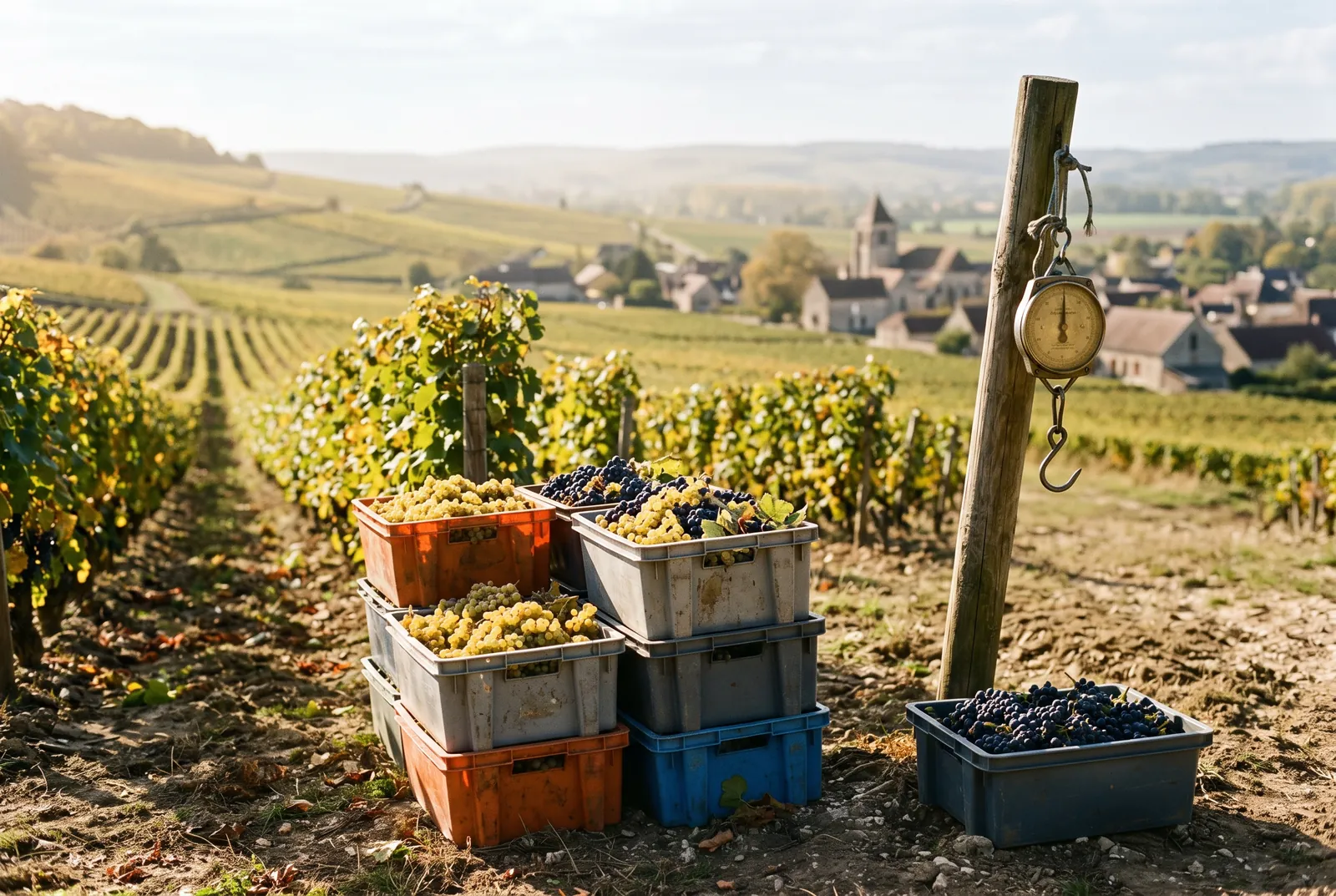
Champagne is a managed market. Each summer the Comité Champagne sets the kilograms per hectare that may be pressed — 10,000 in 2024, 11,400 in 2023 — to match expected shipments and reserves. Grape prices are negotiated and reported per kilo. Together they make Champagne the one region where a house's raw-material cost can be computed from public numbers.
Yield as a policy tool
Unlike Bordeaux, where the appellation maximum is a ceiling estates rarely approach, Champagne's yield is a lever pulled each year. Cutting it to 10,000 kg/ha in 2024 — the fourth consecutive reduction — restrained supply of a region that ships around 270–320 million bottles a year. Growers keep a reserve of wine from big years to draw on in small ones.
The price of a kilo
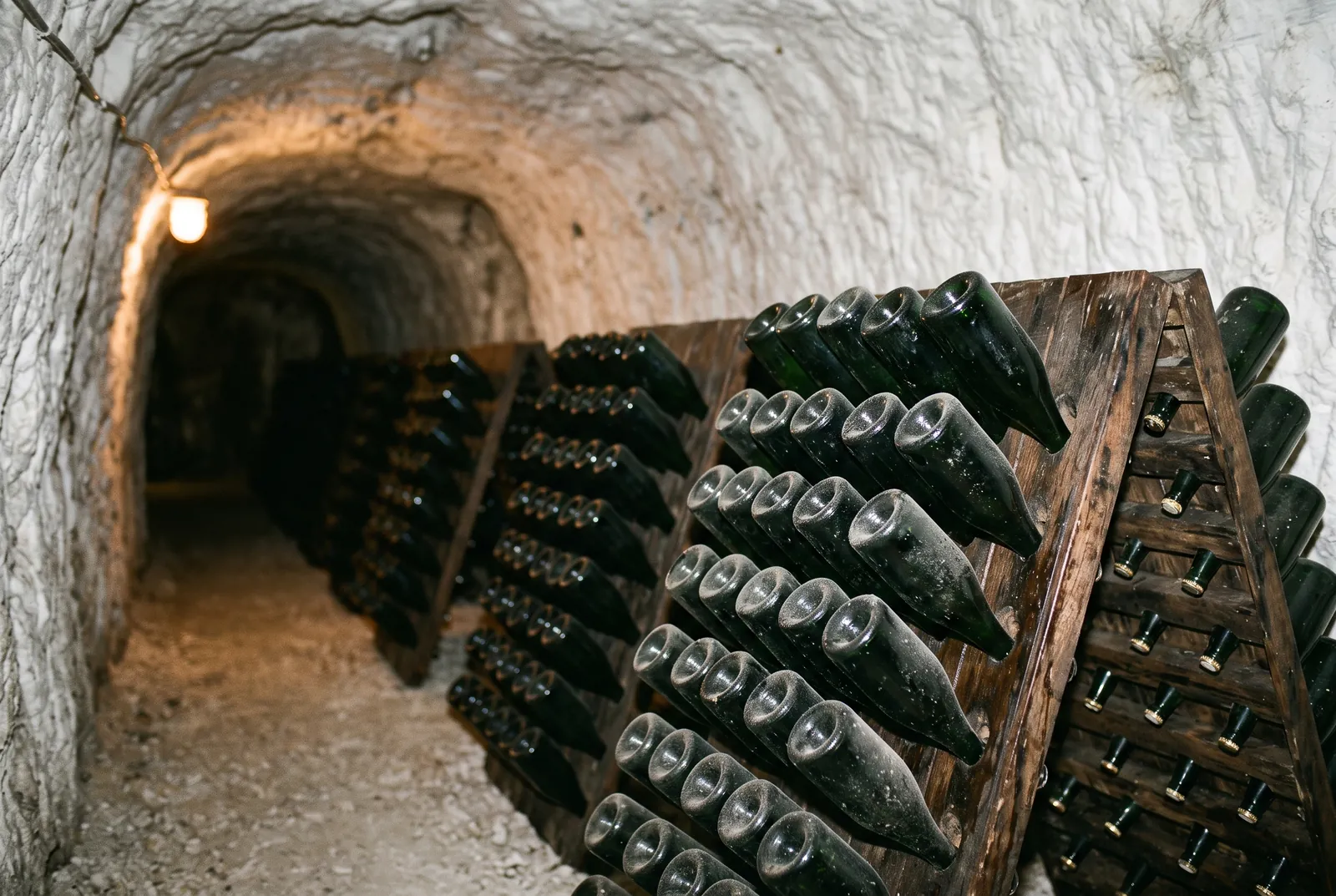
Reference prices reported by the trade for recent harvests: grand cru grapes at about €7–8.50 a kilo, premier cru €6–7.50, other villages €5.50–6.50. At 1.2 kilos a bottle, grand cru fruit is roughly €9–10 a bottle before pressing — the single largest input for a house that buys its grapes, and the reason houses with their own vineyards (Roederer, Bollinger) have a different cost structure.
Land as an income asset
SAFER reported Champagne AOC vineyard at €1,121,800 a hectare in 2024, with the Côte des Blancs at €1,631,700. At 10,000 kg/ha and €7 a kilo, a hectare grosses about €70,000 a year — a yield on land of a few percent before costs. That arithmetic, more than any other region's, explains why Champagne land trades at all: it is priced as a bond.
The prestige cuvée
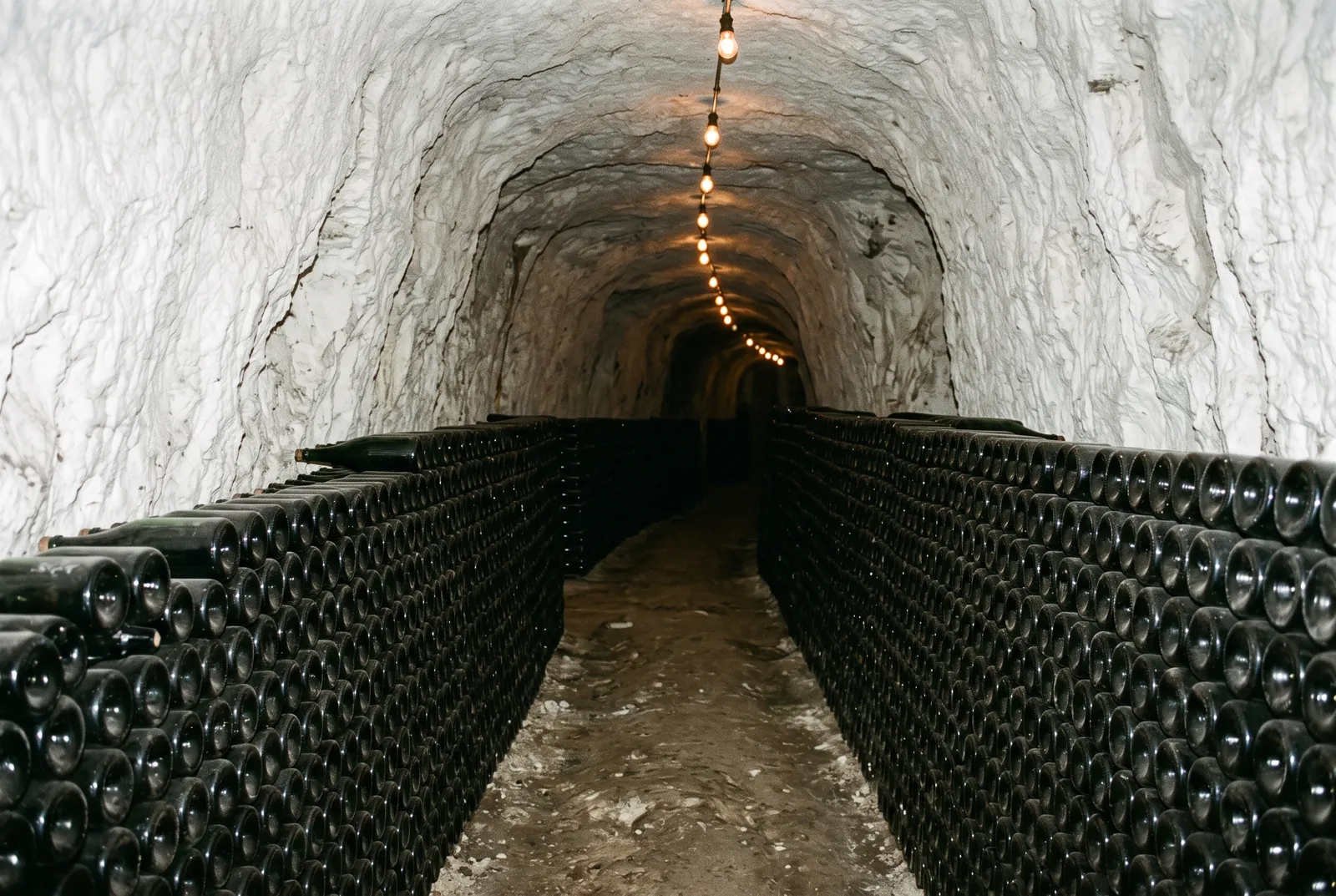
A prestige cuvée adds time: Dom Pérignon eight years, Salon ten, Krug six for Grande Cuvée. Corkonomics' Champagne prestige model, with grapes at grand cru prices and a decade of cellar and financing cost, arrives at a winery cost that is a small fraction of the release price — but a larger fraction than for a first growth, because Champagne's inputs are bought rather than inherited.
Quellen
- Key market statistics, Comité Champagne, 2025. Abgerufen 3 September 2026.
- Le prix des terres — vignes 2024, SAFER / FNSAFER (as reported by Réussir Vigne), 2025. Abgerufen 3 September 2026.
- Champagne limits yields to below 290m bottles for 2024, The Drinks Business, 2024. Abgerufen 3 September 2026.