 Bordeaux
 Burgundy
 Champagne
 Rhône
Rhône Napa Valley
 Tuscany
 Piedmont
 Mosel
Mosel Oregon
 Rioja
Rioja California sparkling
 Valais and Lavaux
 England
 Douro
Douro Etna
Etna Mendoza
 Marlborough
 Stellenbosch
 Barossa Valley
 Tasmania
 Beaujolais
 Jura
Jura Alsace
 Loire
Loire Provence
 Ribera del Duero
 Sonoma
 Стоимость земли
 Урожайные и неурожайные годы
 Апелласьоны
 Знаменитые виноградники
 Знаменитые вина
 Кто их делает
 Найти винтаж
 Сравнить вина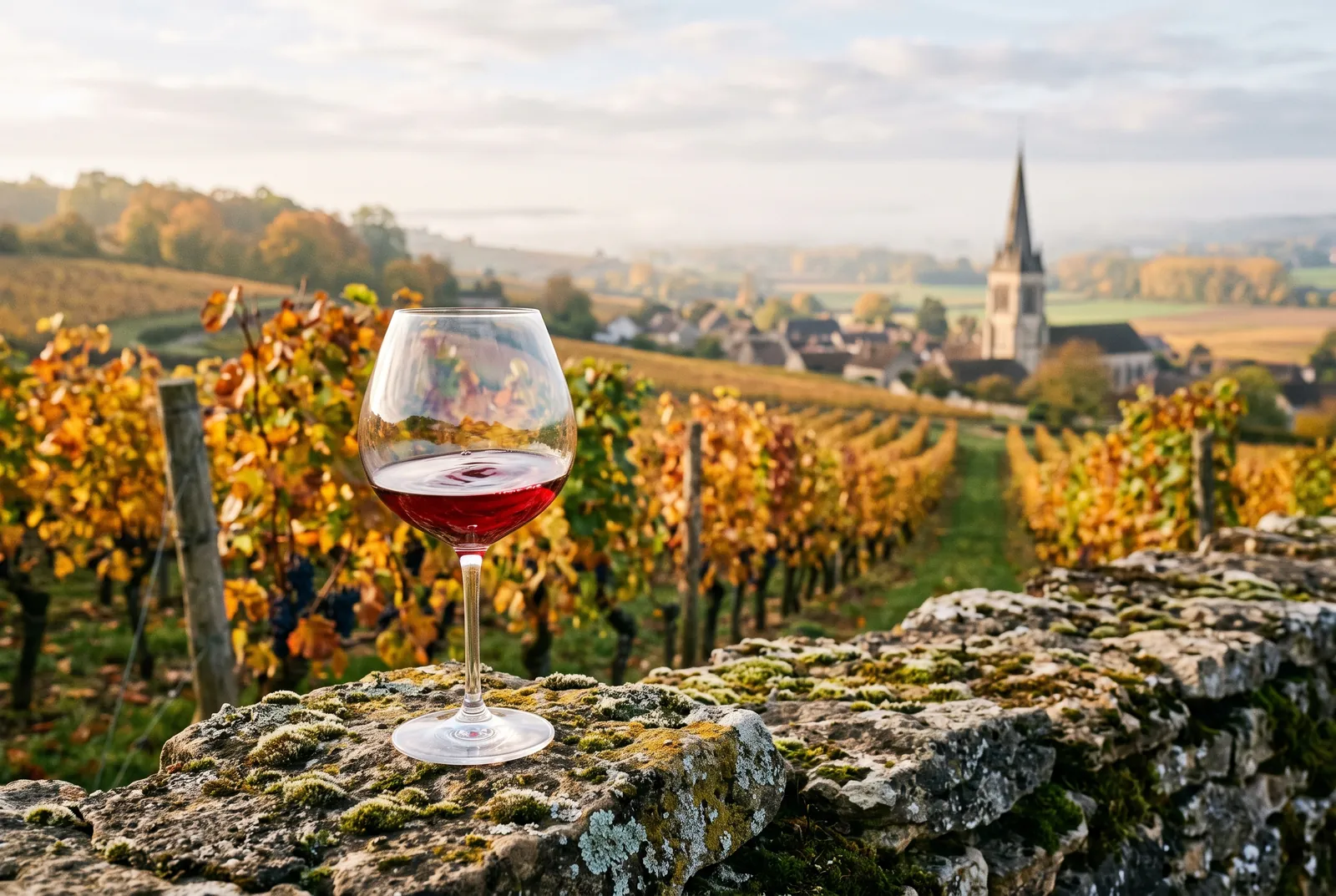
Burgundy's prices are a supply story first. Thirty-three grands crus total about 550 hectares, divided by two centuries of Napoleonic inheritance into holdings of a fraction of a hectare, producing a few hundred to a few thousand bottles each. When demand arrived from new markets after 2010, there was nothing to expand.
The supply is the site
Bordeaux can make more of a good thing — a first growth's grand vin is 150,000–300,000 bottles from a hundred hectares, and a château can buy the neighbour's vines. Burgundy cannot. A grand cru is a mapped parcel; Romanée-Conti is 1.81 hectares and will be 1.81 hectares in a hundred years. The Napoleonic code split estates equally among heirs for two centuries, so the parcel is further divided among owners: Clos de Vougeot's 50 hectares have around eighty. The result is production measured in barrels, not tanks.
Allocation, not auction
Burgundy's top domaines sell by allocation at prices they set, historically far below what the wine fetches on the secondary market. DRC, Rousseau, Roumier and Leroy release at a fraction of auction prices; the difference is captured by whoever holds the allocation, which makes allocations themselves assets and creates a secondary market with almost no primary supply. In Bordeaux the château captures most of the value at release; in Burgundy the market does.
The demand shock
From about 2010 collectors who had bought Bordeaux — in Hong Kong, then mainland China, then the United States — discovered that Burgundy's top wines were made in a hundredth of the quantity. Prices for DRC and the leading domaines rose several-fold in a decade; the peak came in 2021–2022. The 2016 and 2021 frosts, which destroyed much of the crop, added scarcity to an already thin market.
What the land is worth
SAFER reported Côte de Nuits grand cru land above €6.5 million a hectare by 2019 and premier cru in the low millions; the most famous sites do not trade at all. At those values the imputed land cost per bottle exceeds every other line in the cost model combined — and still comes to a small fraction of the market price.
And then it fell
Thin markets fall as fast as they rise. From late 2022 Burgundy prices declined broadly as Asian demand cooled, interest rates rose and the abundant 2022 and 2023 vintages arrived; trade indices recorded the sharpest drawdown in Burgundy's modern history through 2024 and 2025. The wines that rose most fell most. That, too, is the arithmetic of a market with a few thousand bottles.
Источники
- Le prix des terres — vignes 2024, SAFER / FNSAFER (as reported by Réussir Vigne), 2025. Получено 3 September 2026.
- Chiffres clés, BIVB, 2025. Получено 3 September 2026.