 Bordeaux
 Burgundy
 Champagne
 Rhône
Rhône Napa Valley
 Tuscany
 Piedmont
 Mosel
Mosel Oregon
 Rioja
Rioja California sparkling
 Valais and Lavaux
 England
 Douro
Douro Etna
Etna Mendoza
 Marlborough
 Stellenbosch
 Barossa Valley
 Tasmania
 Beaujolais
 Jura
Jura Alsace
 Loire
Loire Provence
 Ribera del Duero
 Sonoma
 Ce que coûte le terrain
 Les bonnes et mauvaises années
 Appellations
 Vignobles célèbres
 Vins célèbres
 Qui les produit
 Trouver un millésime
 Comparer les vins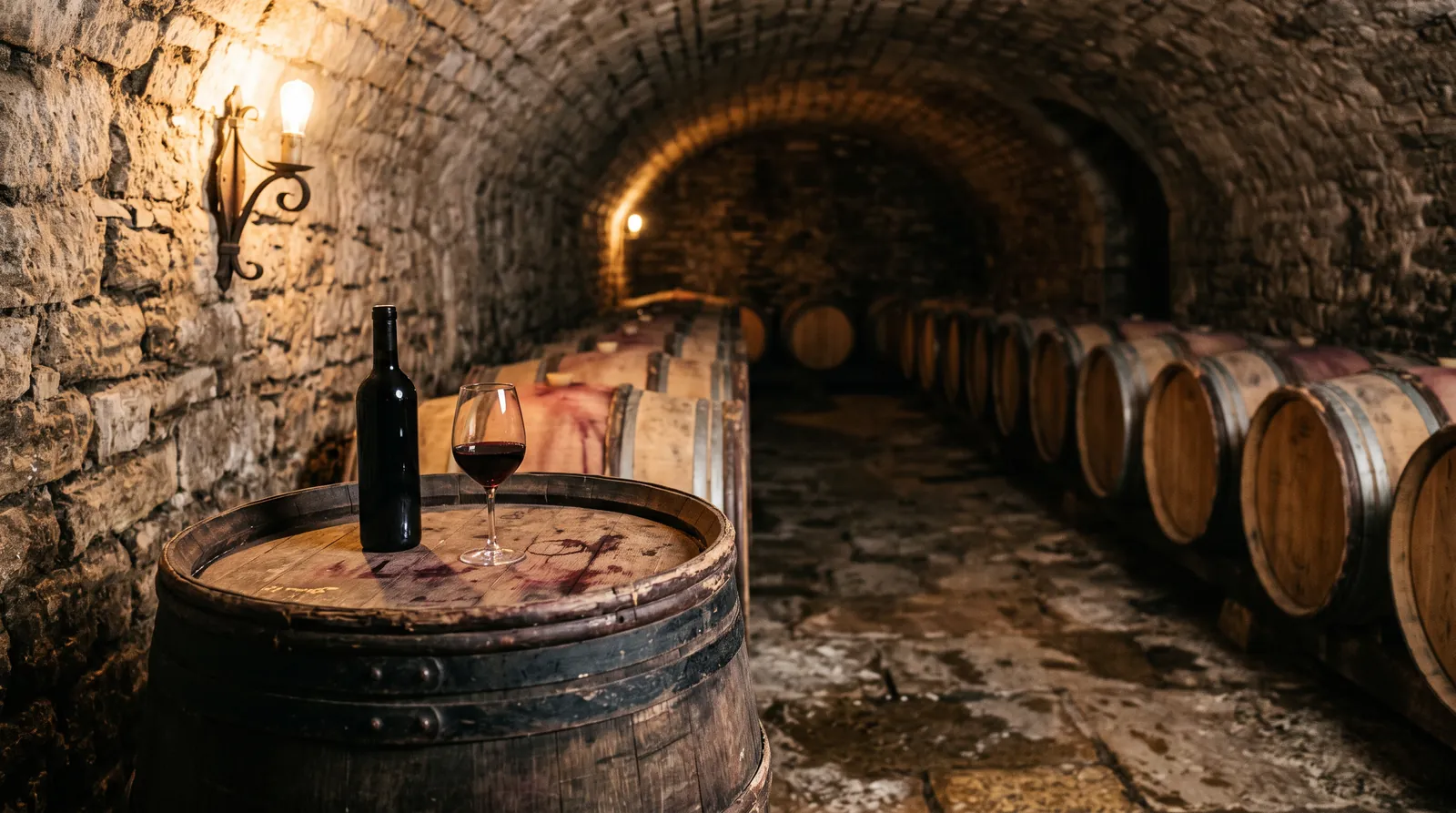
What a winery spends money on
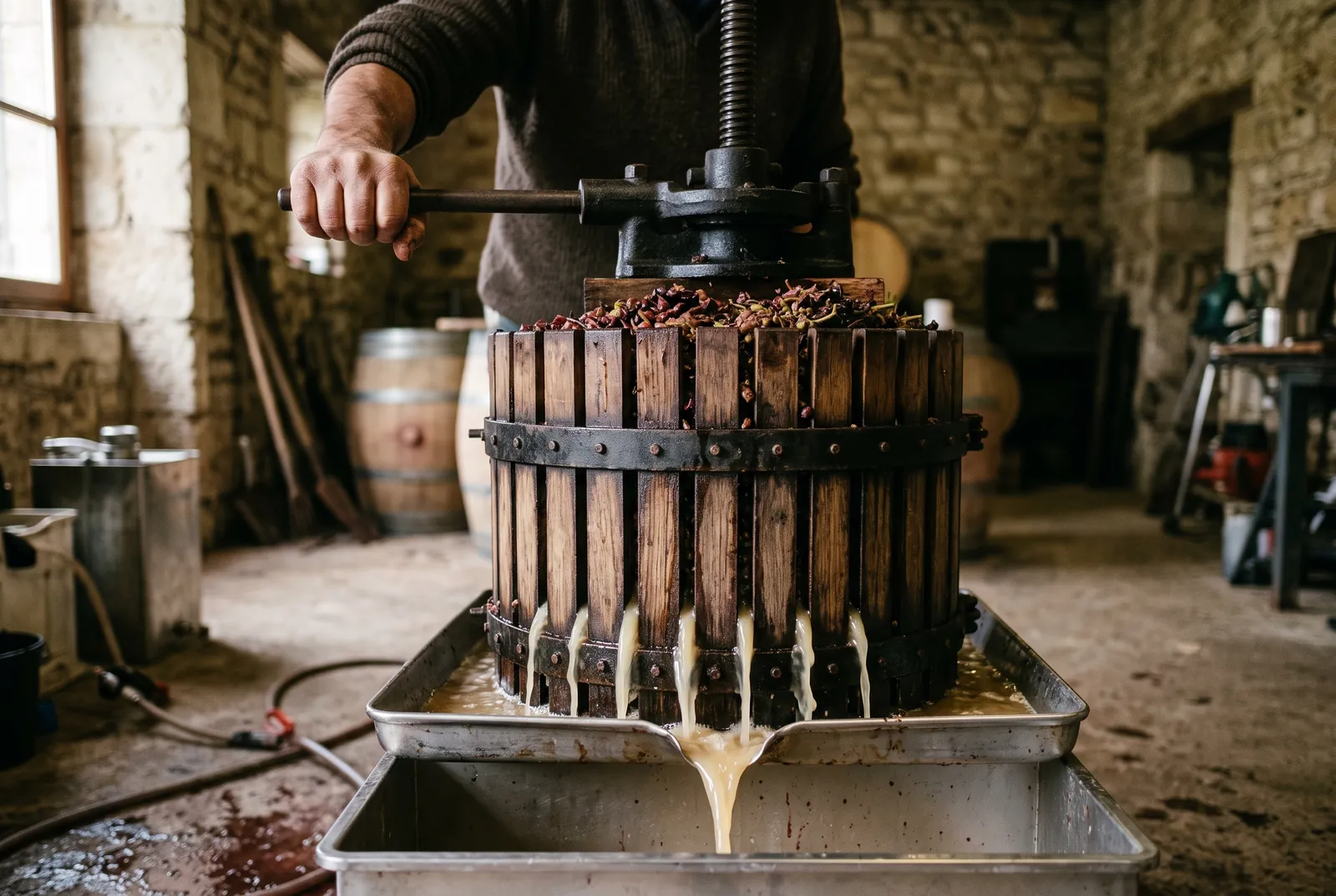
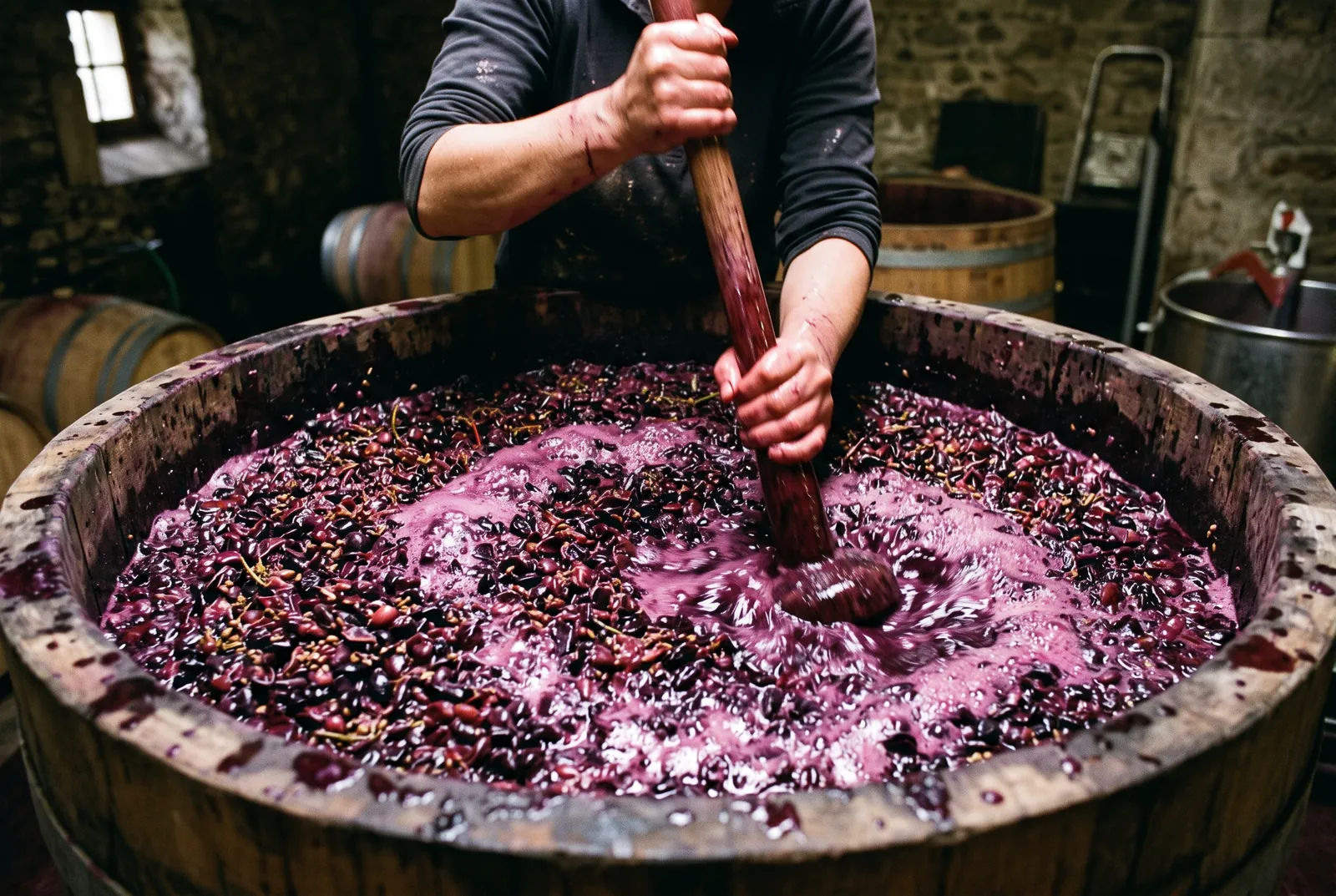
Once grapes arrive at the winery, a new set of costs begins. The fruit is crushed or pressed, fermented in tanks or vats, often aged, then bottled. Each step needs equipment, people and energy.
- Buildings and equipment: a crush pad, presses, stainless steel tanks, pumps, cooling systems, a bottling line.
- Barrels, if the wine is aged in oak.
- Labour: a winemaker, cellar staff, and extra hands at harvest.
- Energy and water, especially for cooling fermenting wine and cleaning.
- Testing, permits, insurance and office costs.
Fixed and variable costs
Economists sort costs into two groups. A fixed cost stays the same however much you make: the building, loan payments on the press, the winemaker's salary, insurance. A variable cost rises with every extra bottle: grapes, glass, corks, labels.
Think of a pizza shop. Rent and the oven are fixed; flour, cheese and boxes are variable. Selling one more pizza adds a few dollars of ingredients, but the rent does not change. Wineries are the same, and the split matters enormously for profit.
Wineries have an extra problem: their busiest weeks are squeezed into harvest. Equipment big enough to handle every grape that arrives in a few hectic weeks sits mostly idle for the rest of the year, and extra cellar hands are hired for those weeks only. A cost that is spent on capacity used only a few weeks a year is still a cost, and it has to be recovered from the bottles sold over the whole year.
Some costs are a mix of the two. Electricity for cooling rises with the amount of wine being fermented, but part of the bill, like lighting and office power, is there whatever happens. Real businesses rarely fit neatly into two boxes, but the fixed and variable split is still the most useful first step in understanding them.
Economies of scale
The average cost per bottle is total cost divided by the number of bottles. Because fixed costs are shared out, average cost falls as volume rises. A winery with $300,000 of fixed costs adds $30 to each bottle if it makes 10,000 bottles, but only $3 if it makes 100,000. This falling average cost as a business grows is called economies of scale.
Scale is why very large wineries can sell drinkable wine at low prices: they spread huge, efficient equipment over millions of bottles and buy glass and grapes in bulk at better prices. Small wineries cannot match that, so most compete on something else: a special site, a hand-made style, a story, or direct contact with customers.
Think about it: a school bake sale buys a $60 mixer. How many cakes must it sell for the mixer to add less than 50 cents to each cake?
Barrels: an expensive ingredient
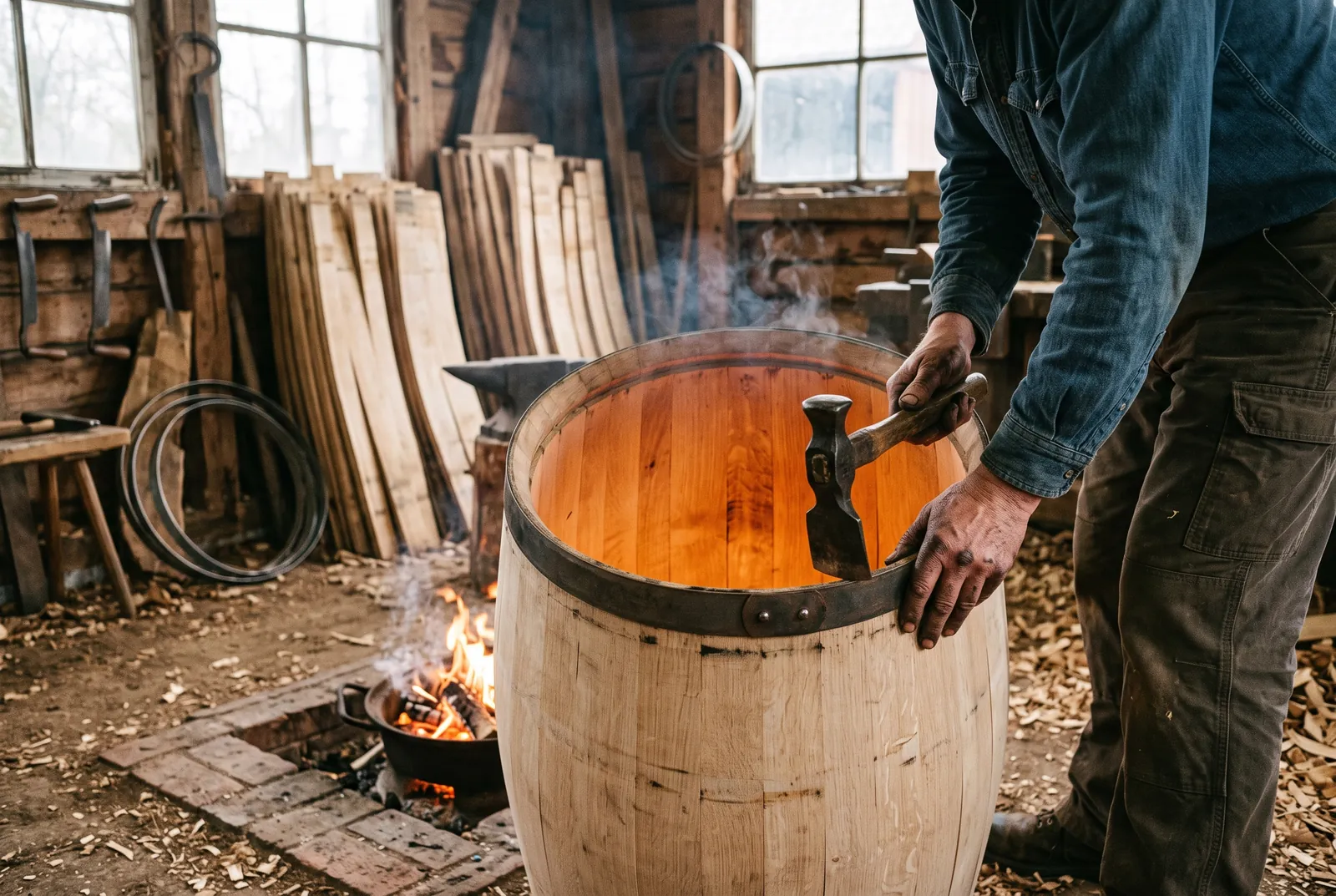
Oak barrels are one of the clearest examples of a cost that changes a wine's price. A new French oak barrel costs roughly $1,000 to $2,000 or more and holds about 225 litres, which is around 300 bottles. If a $1,200 barrel is used once and then sold off, it adds $4 to every bottle aged in it.
Winemakers often reuse barrels for several years. Each refill gives less oak flavour, but also spreads the purchase price over more wine, so a mix of new and older barrels is a common way to manage both taste and cost. Wines aged in steel tanks, or with oak chips or staves instead of barrels, avoid most of this cost, which is one reason many everyday wines are made that way.
Renting a winery: custom crush
Building a winery costs millions. So in California and elsewhere, many small brands do not own one at all. They pay a custom crush facility, a shared winery that makes wine for many clients, to process their grapes for a fee per ton or per case. The brand turns a huge fixed cost into a variable one: it pays only for what it makes.
That lowers the risk of starting out, because a bad year does not leave a costly empty building. The trade-off is less control over timing and equipment, and a higher cost per bottle once the brand grows large enough that owning its own winery would be cheaper.
The cost of one more bottle
Economists also talk about marginal cost: the extra cost of making one more unit. For a winery with spare tank space, the marginal cost of one more bottle is just its variable cost: the grapes, the glass, the cork. The building and the winemaker's salary are already paid for.
This idea explains some surprising choices. A winery with wine left over at the end of the year may sell it cheaply to a supermarket or as bulk wine, at a price below its average cost. That sounds like a loss, but as long as the price is above the marginal cost, the sale still brings in money towards the fixed costs that must be paid anyway. Selling below average cost forever would sink the business; doing it now and then to clear stock can be sensible.
Marginal cost can also jump. Once the tanks are full, making one more bottle might mean buying a new tank or renting space, so the extra cost of growth comes in steps rather than smoothly.
Think about it: a cinema has empty seats ten minutes before a film starts. Why might it sell them at half price?
Break-even: the first target
The break-even point is the number of bottles a winery must sell for revenue to exactly cover all its costs, with zero profit. Below it, the winery loses money; above it, each extra bottle adds profit. To find it, work out the contribution per bottle: the price minus the variable cost. Each bottle's contribution helps pay off the fixed costs. Divide fixed costs by contribution per bottle and you have the break-even volume.
Worked example: a small winery's break-even
Here is a made-up small winery with round numbers. It sells its wine to a distributor for $15 a bottle.
| Fixed costs per year (building, equipment loans, salaries, insurance) | $300,000 |
|---|---|
| Variable cost per bottle (grapes $4, used-barrel ageing $1, bottle, cork and label $2) | $7 |
| Price per bottle to the distributor | $15 |
| Contribution per bottle ($15 minus $7) | $8 |
| Break-even volume ($300,000 divided by $8) | 37,500 bottles |
| Average cost per bottle at 20,000 bottles ($7 plus $15 of fixed cost) | $22 |
| Average cost per bottle at 60,000 bottles ($7 plus $5 of fixed cost) | $12 |
At 20,000 bottles each one costs $22 to make but sells for $15, a loss of $140,000. At 60,000 bottles each costs $12, a profit of $3 a bottle or $180,000 in total. Same winery, same price: volume decides whether it sinks or swims.
Key words
- Fixed cost
- A cost that stays the same however much you make, like rent or a winemaker's salary.
- Variable cost
- A cost that rises with each extra unit made, like grapes, glass and corks.
- Average cost
- Total cost divided by the number of units made.
- Economies of scale
- The fall in average cost as a business grows, because fixed costs are shared over more units.
- Contribution
- The price of one unit minus its variable cost: the amount each sale adds towards fixed costs and profit.
- Break-even point
- The sales volume at which revenue exactly covers all costs, so profit is zero.
- Custom crush
- A shared winery that makes wine for other brands for a fee, so they need not build their own.
Check your understanding
A winery has fixed costs of $200,000, a variable cost of $6 a bottle and sells at $16. What is its break-even volume?
Show the answer
Contribution is $16 minus $6, which is $10 a bottle. $200,000 divided by $10 is 20,000 bottles.
A $1,500 barrel holds about 300 bottles. How much does it add per bottle if used once?
Show the answer
$1,500 divided by 300 is $5 a bottle.
Why can a giant winery sell wine more cheaply than a tiny one?
Show the answer
Its fixed costs are spread over far more bottles and it buys supplies in bulk, so its average cost per bottle is much lower.
How does using a custom crush facility change a new brand's costs?
Show the answer
It swaps the large fixed cost of building a winery for a variable fee per ton or case, which lowers risk at the start.
Go deeper on Corkonomics
Sources and further reading
- State of the US Wine Industry report Silicon Valley Bank
- Wine Economics (textbook) Davide Gaeta and Paola Corsinovi, Palgrave Macmillan
- Journal of Wine Economics Cambridge University Press / American Association of Wine Economists
← Previous chapterAll chapters
All chaptersThe economics of wine production
- The wine business at a glance: from vineyard to glass
- Land: why some vineyard ground costs millions
- Growing grapes: farming costs and yields
- Grape prices: buying, selling and contracts
- Making the wine: winery costs and economies of scale
- Time is money: ageing, inventory and the cost of waiting
- From cellar door to shop shelf: packaging, distribution, taxes and tariffs
- Pricing, brands and the global picture