 Bordeaux
 Burgundy
 Champagne
 Rhône
Rhône Napa Valley
 Tuscany
 Piedmont
 Mosel
Mosel Oregon
 Rioja
Rioja California sparkling
 Valais and Lavaux
 England
 Douro
Douro Etna
Etna Mendoza
 Marlborough
 Stellenbosch
 Barossa Valley
 Tasmania
 Beaujolais
 Jura
Jura Alsace
 Loire
Loire Provence
 Ribera del Duero
 Sonoma
 What land costs
 Good years and bad
 Appellations
 Famous vineyards
 Famous wines
 Who makes them
 Find a vintage
 Compare wines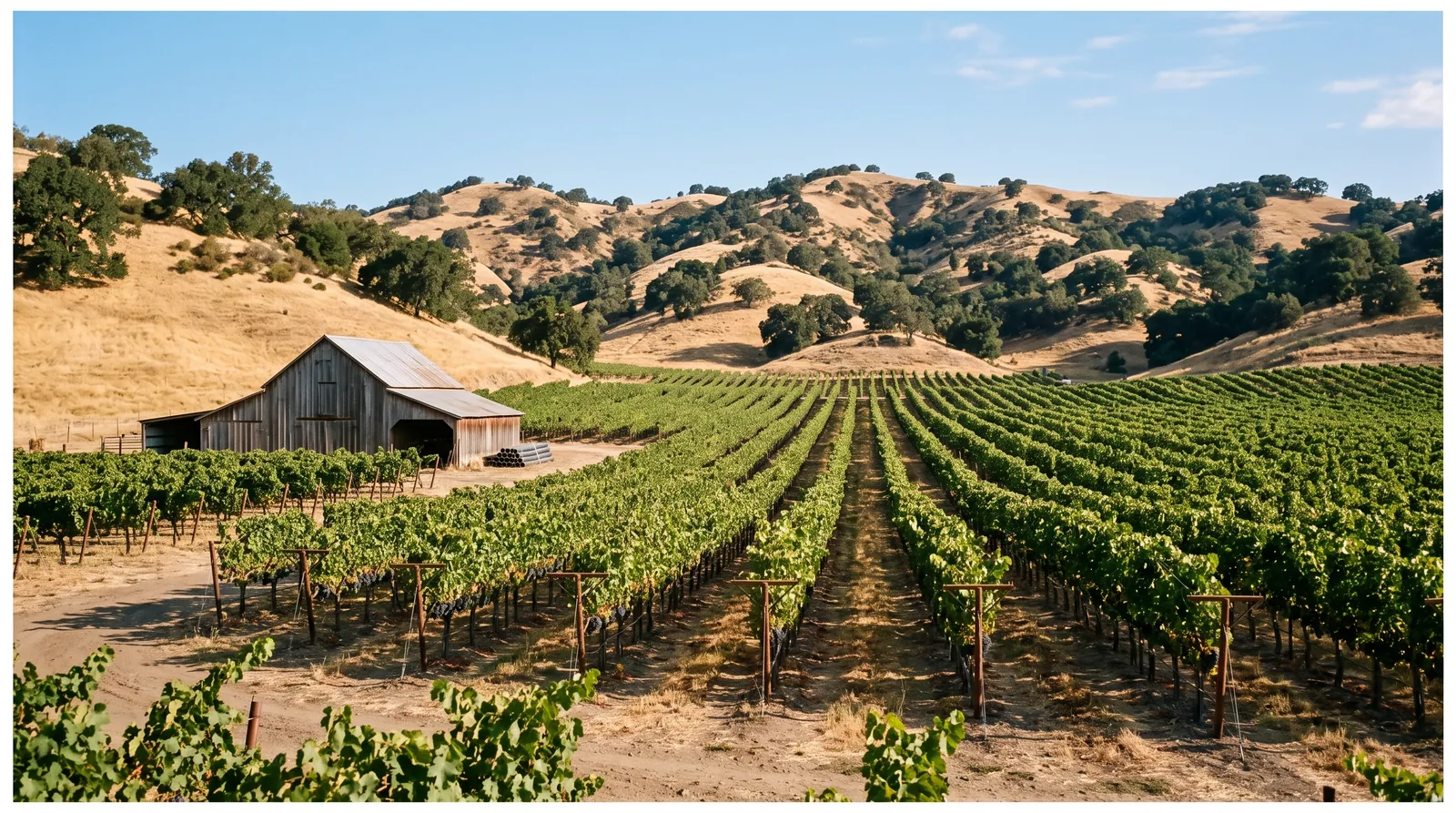
Napa Valley in a minute
- The grapes
- Cabernet Sauvignon above all, plus Chardonnay and Merlot
- What it tastes like
- Ripe blackcurrant, dark cherry, vanilla and chocolate. Full and smooth.
 Cabernet Sauvignon
 Merlot
Good to know
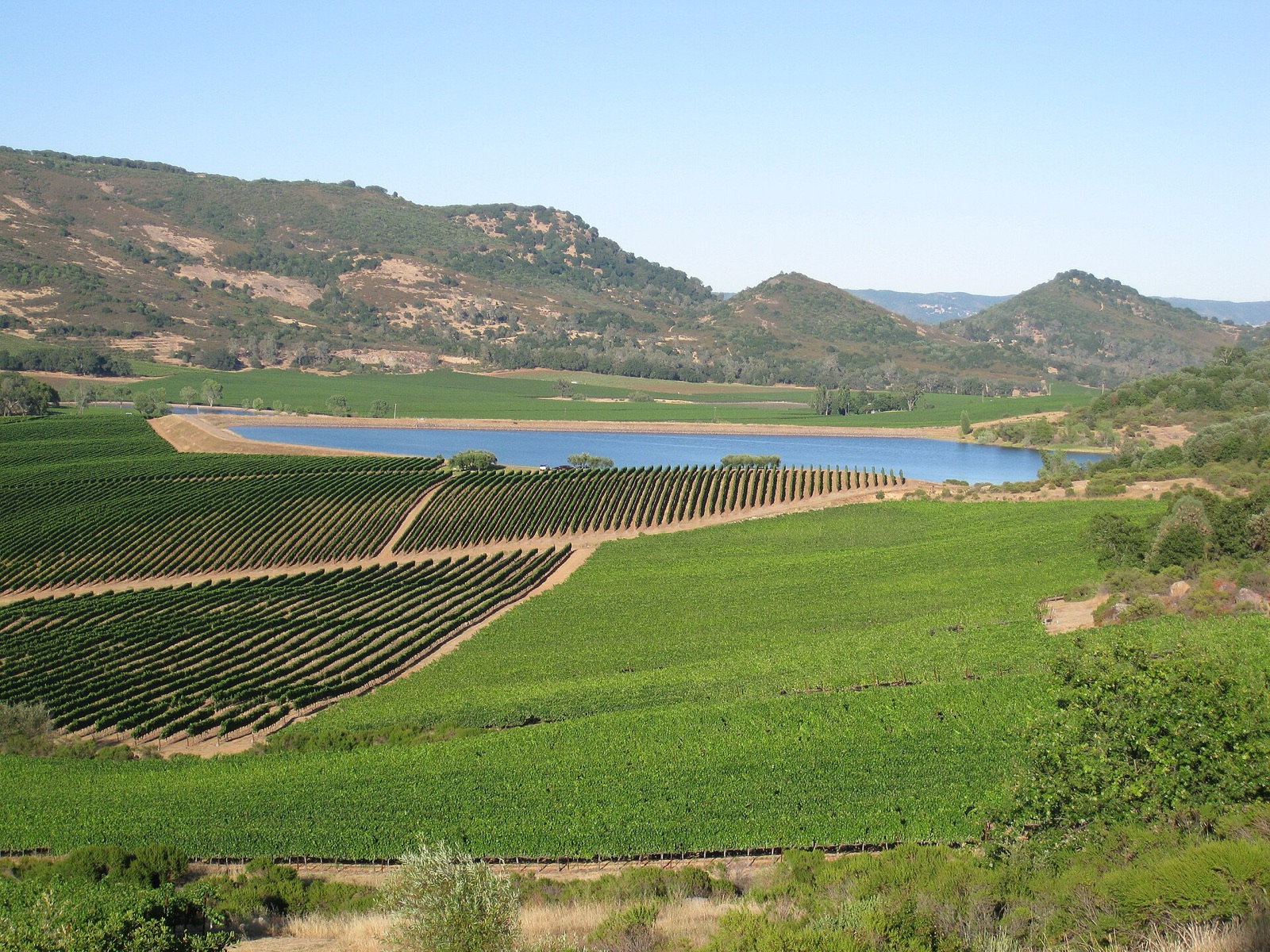
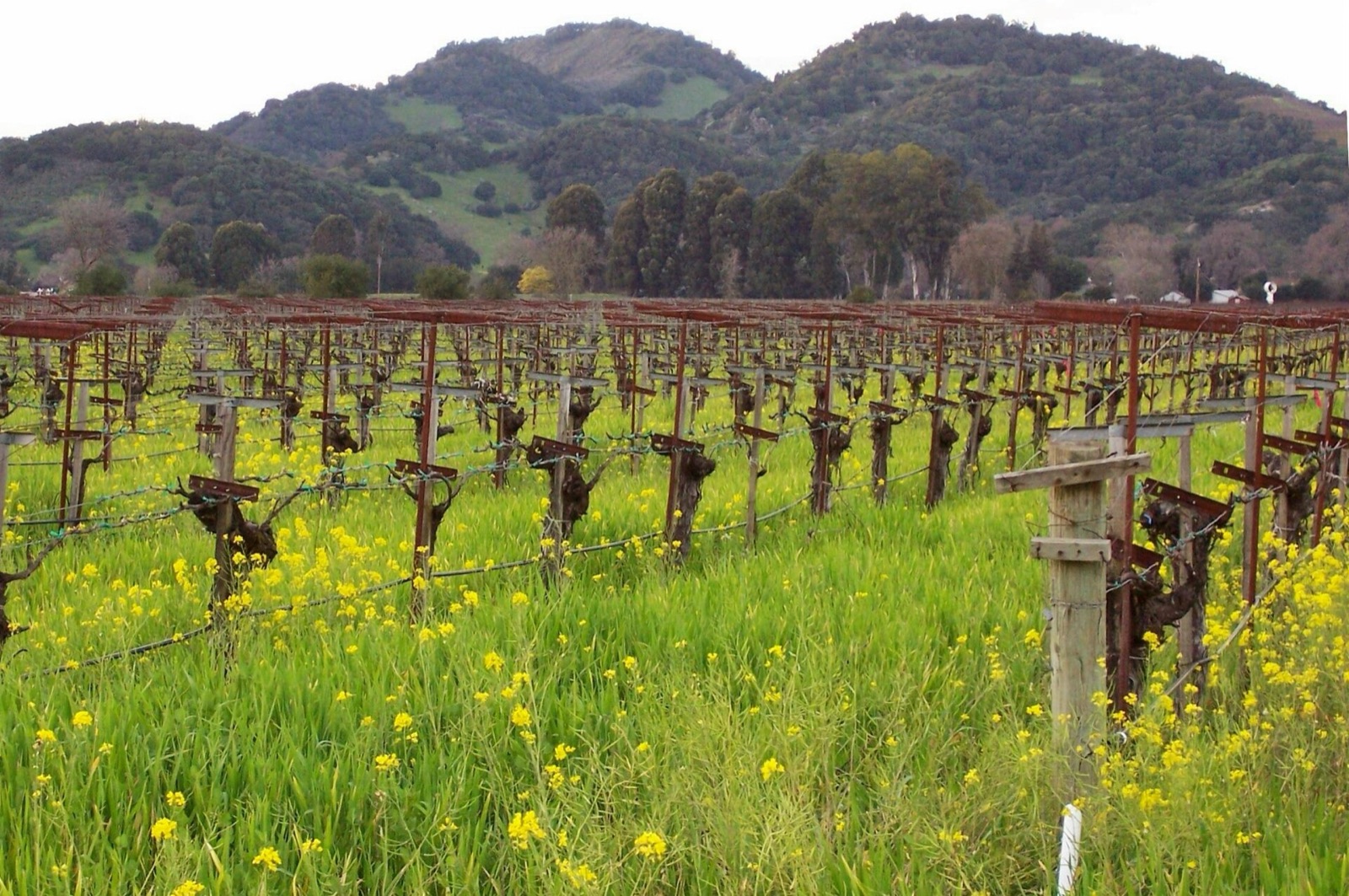
The valley is small, about thirty miles long, and makes only a few percent of California's wine. Reliable sunshine gives ripe, generous wines in most years.
On the label
The grape is on the label, along with the winery and often a smaller district such as Oakville or Rutherford.
What the land costs
The dearest vineyards here are in Prime Napa benchland: $300,000–$500,000 an acre (2025). Zone by zone
The business side
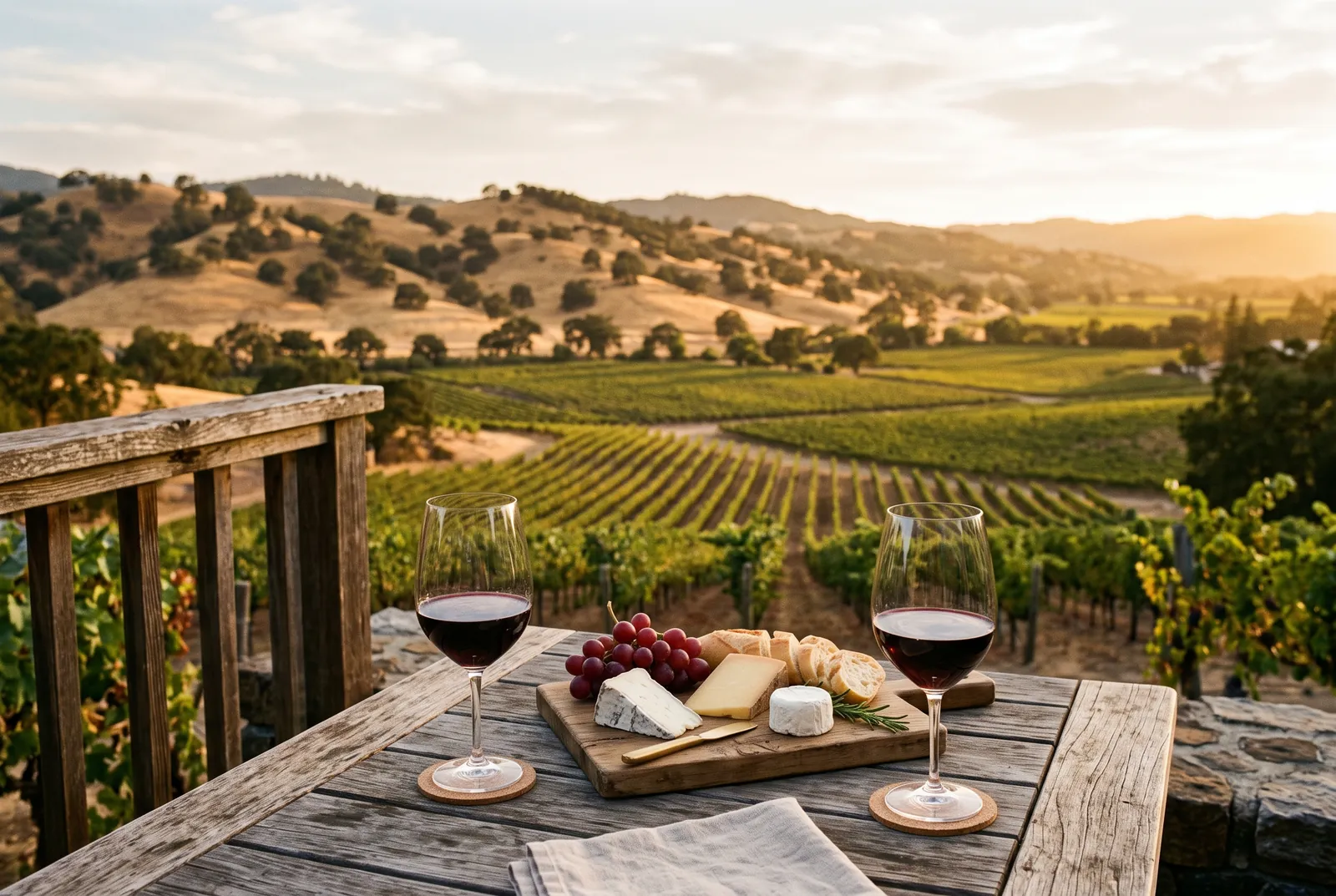
Napa Valley has about 45,000 acres of vineyard — under 4% of California's — and produces about 4% of its wine by volume but a far larger share by value. Cabernet Sauvignon dominates. Grape prices, land prices and production costs are unusually public: the Crush Report gives weighted average prices per ton by district and variety, the county assessor and brokers report land sales, and university cost studies itemise farming costs per acre. The collectible tier is a few dozen estates — Screaming Eagle, Harlan, Opus One, Dominus, Scarecrow among them.
How the economics work
Two Napa economies coexist. Most Napa wine is made by wineries that buy grapes at the district price — reported in the Crush Report — and sell through the three-tier distribution system, where distributor and retailer margins together roughly double the winery price. The collectible estates grow their own fruit on land that cost, in the reported ranges, hundreds of thousands to over a million dollars an acre, make a few hundred to a few thousand cases, and sell most of it directly to a mailing list at a release price they set — capturing the whole margin and building a waiting list that is itself an asset.
Land and grapes
Reported Napa vineyard land values run from a few hundred thousand dollars an acre for lesser sites to well above a million for prime Oakville and Rutherford benchland; the values are quoted per acre, not per hectare, and a hectare is 2.47 acres. Napa Cabernet grapes (District 4) have averaged in the high thousands of dollars per ton in recent Crush Reports — several times the California average and an order of magnitude above Central Valley fruit — and the top contracts are reported well above the district average. At roughly 60–65 cases of wine per ton, a $9,000 ton of grapes is about $12 of grapes per bottle before anything else happens.
Deep dive
Costs
UC Davis cost-and-return studies for Napa Cabernet put annual cultural costs per acre in the tens of thousands of dollars at premium farming levels, and vineyard establishment (land aside) in the hundreds of thousands per acre over the years before full production. Labour is the largest line. New French oak at $1,000–1,500 a barrel, used once at the cult estates, adds several dollars a bottle. Corkonomics' Napa cult Cabernet model lands in the range that estate winemakers themselves quote in interviews — a winery cost in the tens of dollars against release prices in the hundreds and secondary prices in the thousands.
The collectible market
Napa's investment-grade wines are younger than Europe's — Opus One's first vintage was 1979, Harlan's 1990, Screaming Eagle's 1992 — and are sold largely to American collectors through mailing lists, so the secondary market is dominated by US auction houses and US retailers rather than the London trade. Prices for the top estates have been steadier than Burgundy's, with smaller drawdowns, at the cost of lower liquidity outside the United States. Smoke taint from the 2017 and 2020 fire seasons led several estates to release little or no wine from those years, a reminder that supply risk in Napa is climatic as much as economic.
Facts and figures
Good years and bad
All regions →The years to look for: 2013. The difficult ones: 2020, 2011.
| Year | How the year was rated | The growing season |
|---|---|---|
| 2023 | Very Good | |
| 2022 | Mixed | |
| 2021 | Excellent | |
| 2020 | Difficult | The Glass and LNU fires; smoke taint led several cult estates to release no wine from the vintage. |
| 2019 | Excellent | |
| 2018 | Excellent | |
| 2017 | Mixed | Heat spike at harvest and the October fires; several estates released reduced quantities. |
| 2016 | Excellent | |
| 2015 | Very Good | |
| 2014 | Excellent | |
| 2013 | Exceptional | Long, even season; widely rated among Napa's best. |
| 2012 | Excellent | |
| 2011 | Difficult | Cool, wet, late; rot at harvest; many estates made little or declassified. |
| 2010 | Good | |
| 2009 | Very Good | |
| 2008 | Good | |
| 2007 | Excellent | |
| 2006 | Very Good | |
| 2005 | Very Good | |
| 2004 | Very Good | |
| 2003 | Good | |
| 2002 | Excellent | |
| 2001 | Excellent | |
| 2000 | Good | |
| 1999 | Very Good | |
| 1998 | Mixed | |
| 1997 | Excellent | |
| 1996 | Very Good | |
| 1995 | Very Good | |
| 1994 | Excellent | |
| 1993 | Good | |
| 1992 | Very Good | |
| 1991 | Excellent | |
| 1990 | Very Good |
Who makes the famous wines here
All producers → ProducerDominus EstateChristian Moueix of Pétrus in Napa: the 124-acre Napanook vineyard in Yountville, dry-farmed, first vintage…
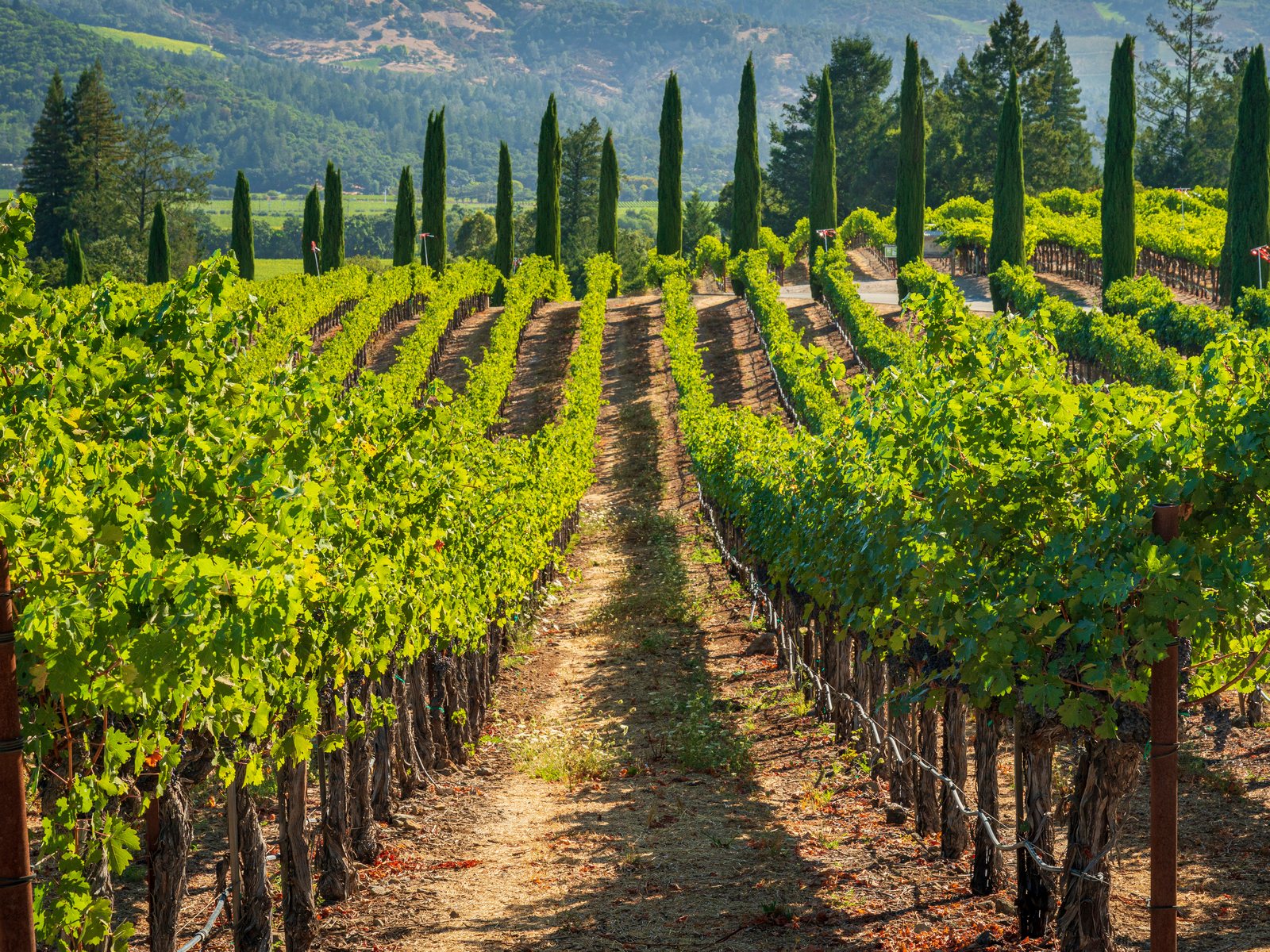 ProducerHarlan EstateBill Harlan's 240-acre hillside above Oakville, founded in 1984 with a first vintage in 1990, producing about…
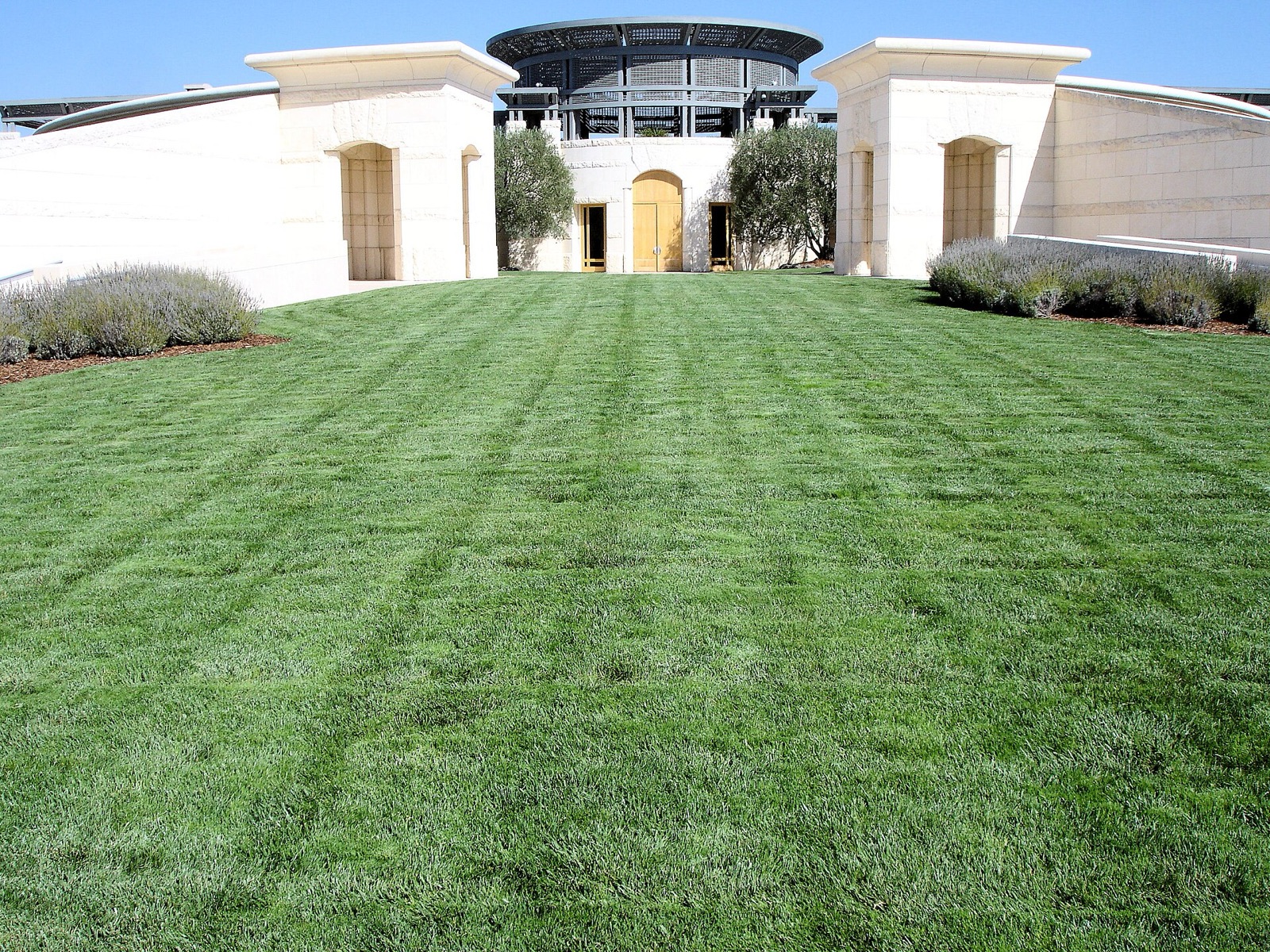 ProducerOpus OneThe 1979 Mondavi–Rothschild joint venture: about 170 acres in Oakville including To Kalon parcels, roughly…
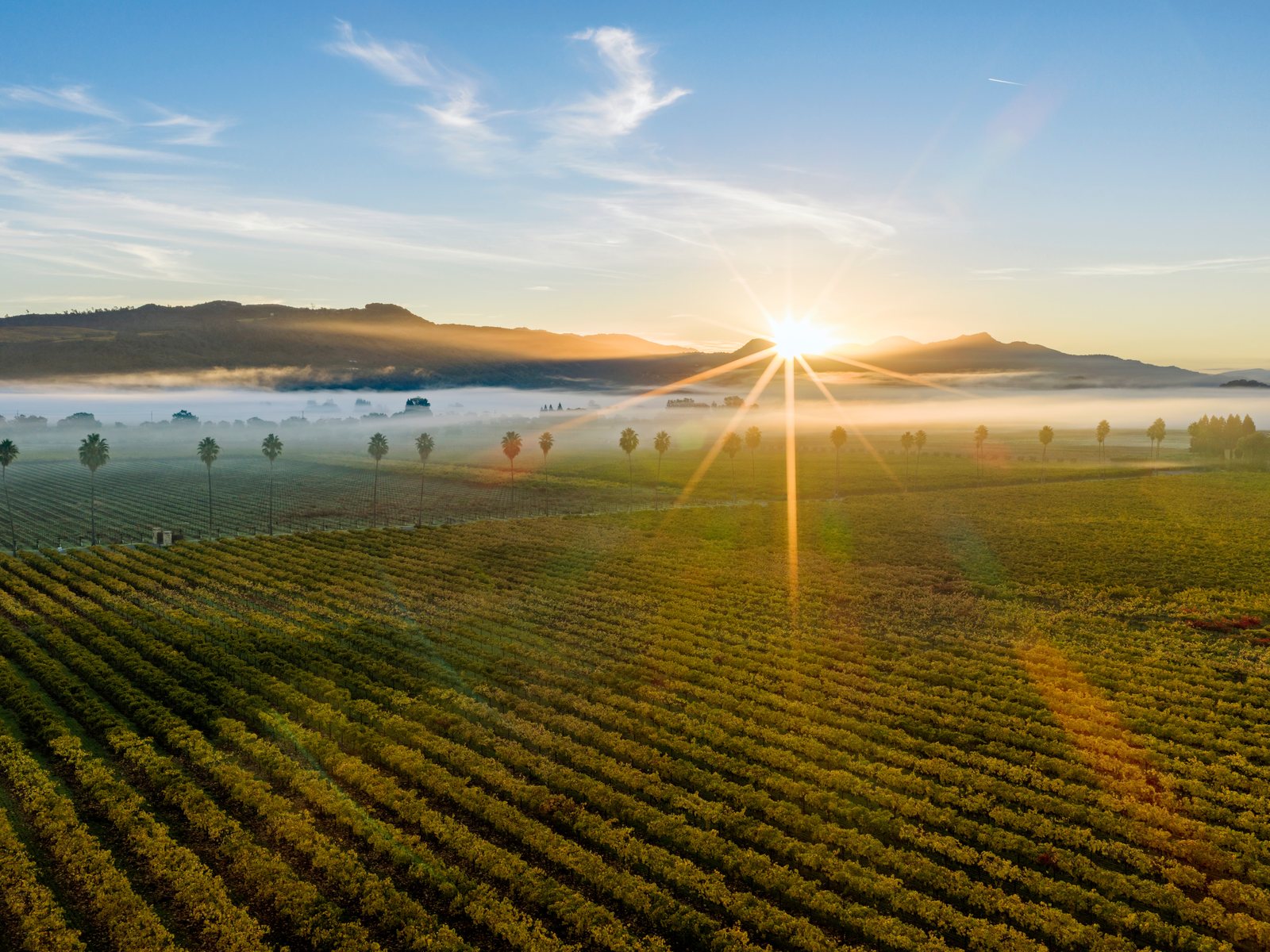 ProducerScarecrowOld-vine Cabernet from the J.J. Cohn estate in Rutherford — vines planted in 1945 — first made in 2003 and…
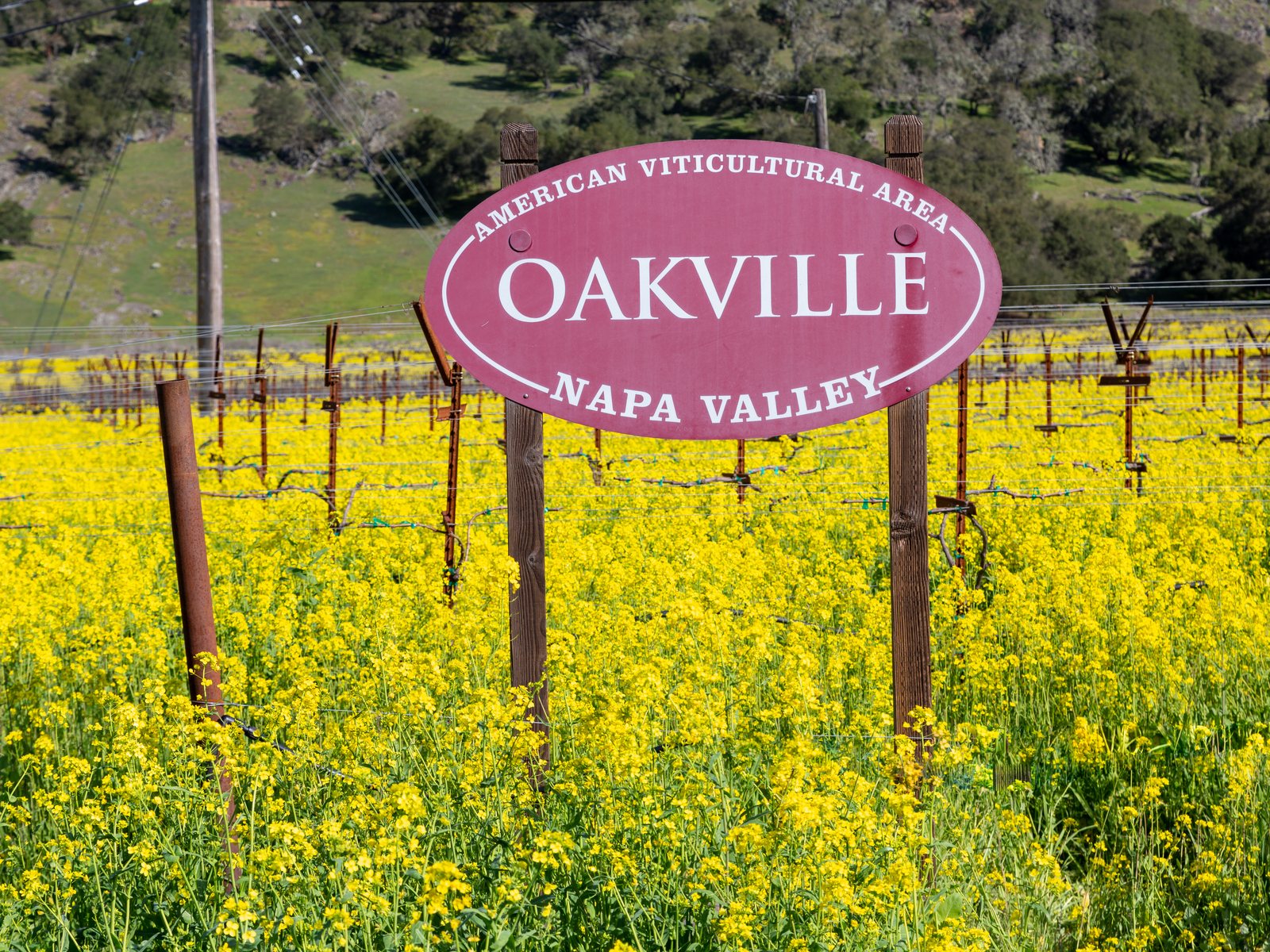 ProducerScreaming EagleNapa's scarcity benchmark: an Oakville estate founded in 1992, about 500–600 cases of Cabernet a year sold by…
Famous wines from here
All →Dominus Estate, DominusHarlan Estate, Napa Valley proprietary redOpus One, Napa ValleyScarecrow Cabernet Sauvignon, RutherfordScreaming Eagle Cabernet Sauvignon, OakvilleAppellations
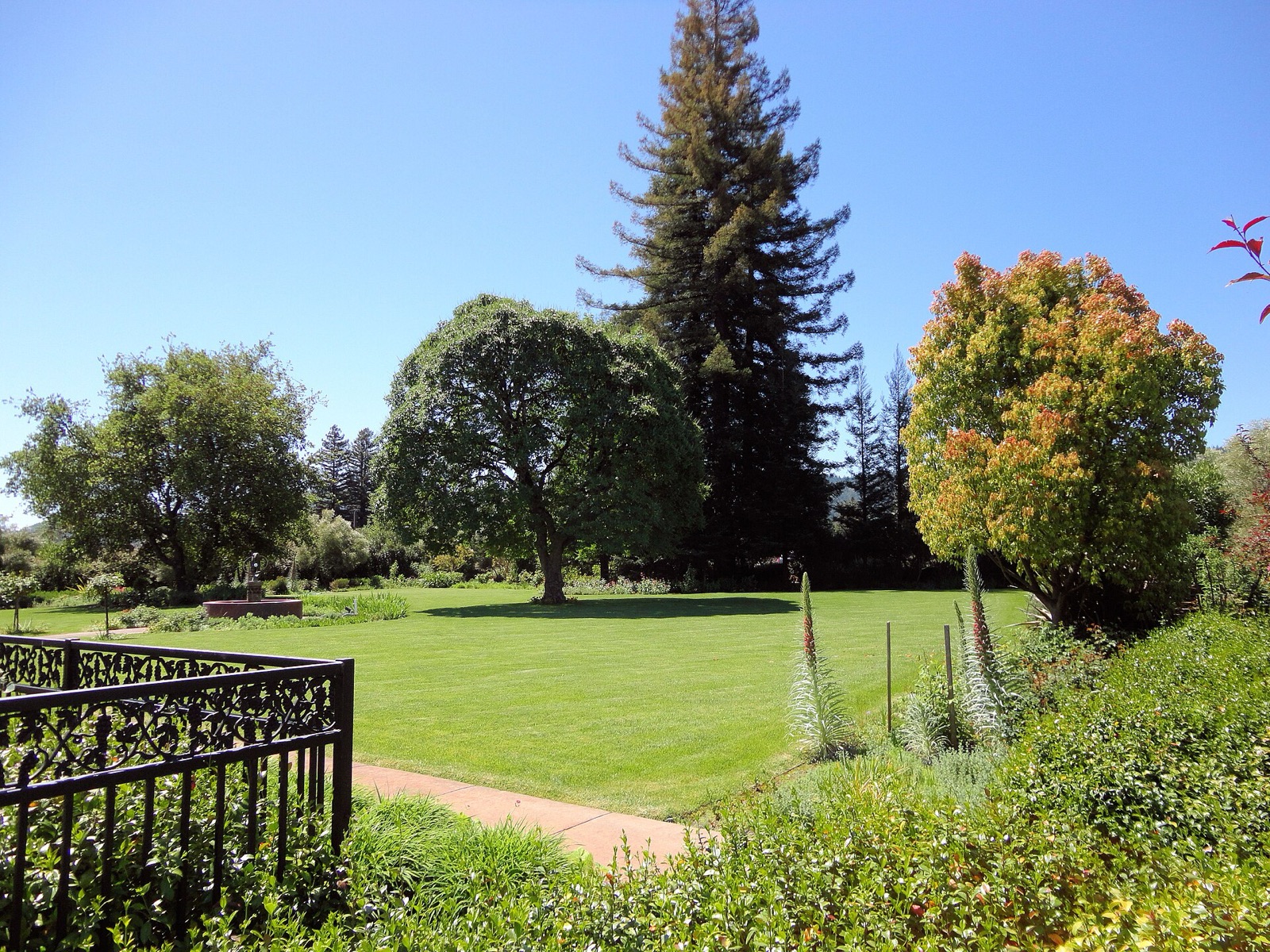 AppellationOakvilleThe benchland that makes Screaming Eagle, Harlan, Opus One and To Kalon — Napa's most valuable acres.
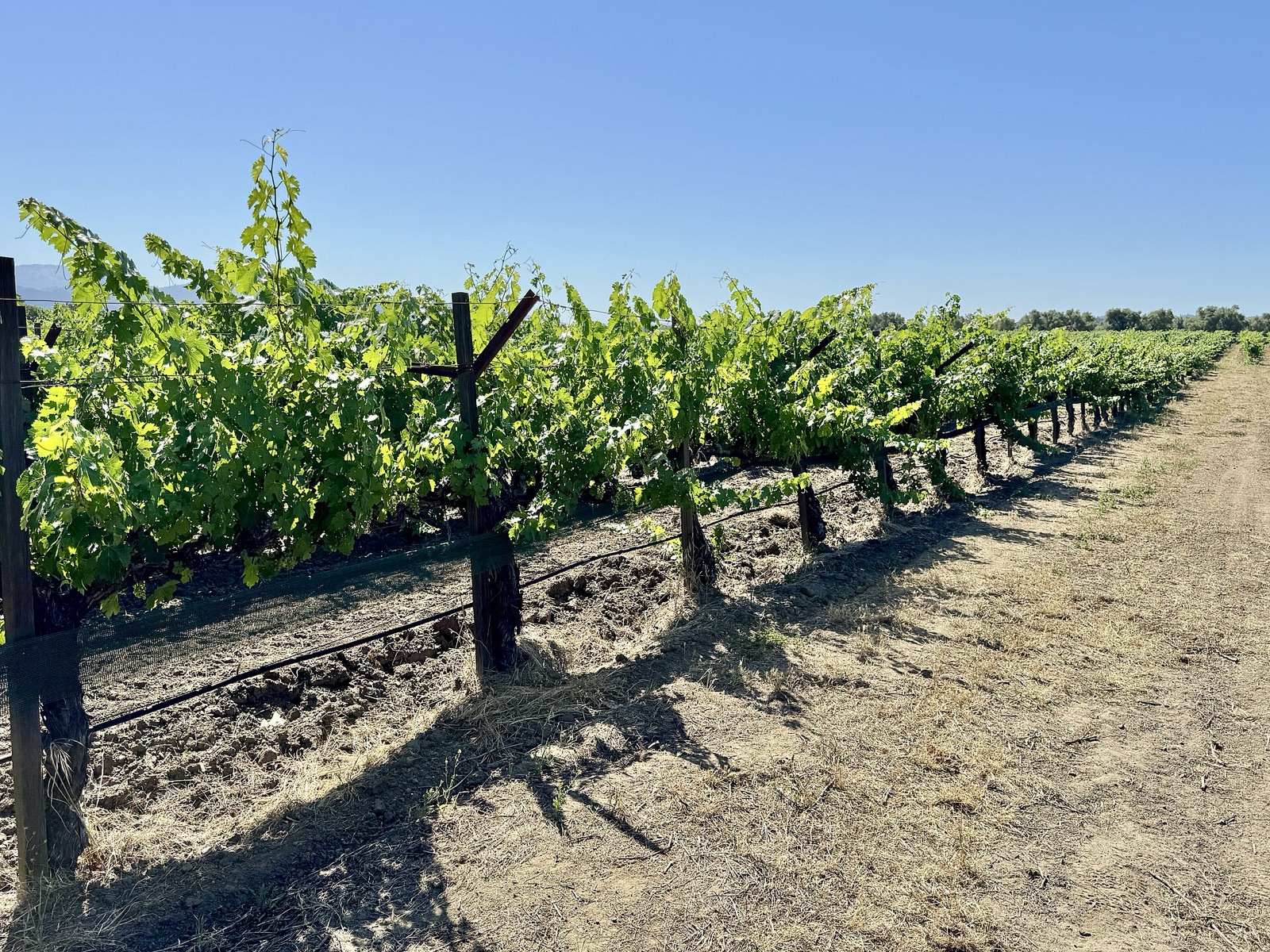 AppellationRutherfordRutherford dust: Inglenook, Beaulieu, Scarecrow and the historic heart of Napa Cabernet.AppellationYountvilleDominus Estate's Napanook vineyard and the southern gateway to Napa's Cabernet belt.
What a bottle costs to make here
All models →
Napa cult Cabernet
$26–$80 to make one bottle
A small-production Cabernet Sauvignon from the best land in Napa Valley, sold mostly to a private mailing list.
Napa premium Cabernet (purchased fruit)
$14–$43 to make one bottle
A good Napa Cabernet Sauvignon from a winery that buys its grapes instead of owning the vineyard.
The numbers behind the region: land, grapes, yields and costs
| Input | Range | Unit | Year | Source |
|---|---|---|---|---|
| Land — what a hectare of vineyard sells for | ||||
| Vineyard land, prime Napa Valley (Oakville, Rutherford, St Helena benchland)Reported range for established prime vineyard; record transactions above the range | 300,000–500,000 | USD/acre | 2025 | Trade press and broker reports |
| Vineyard land, prime Napa Valley, per hectareUSD/acre × 2.47 | 741,000–1,236,000 | USD/ha | 2025 | Corkonomics estimate from the inputs o… |
| Vineyard land, secondary Napa Valley sites | 120,000–340,000 | USD/acre | 2025 | Trade press and broker reports |
| Grapes — what growers are paid | ||||
| All varieties, District 4 (Napa) weighted averageDown 1.3% from 2023 | 6,939 | USD/ton | 2024 | California Grape Crush Report 2024 |
| Cabernet Sauvignon grapes, Napa County averageNapa County Crop Report 2024: $9,146/ton average; District 4 all-variety average… | 8,700–9,146 | USD/ton | 2024 | Napa County Agricultural Crop Report 2… |
| Cabernet Sauvignon grapes, Napa County, 2025 crushWeighted average $8,864–9,002 a ton in the preliminary 2025 report, down 1.6% on 2024 and… | 8,864–9,002 | USD/ton | 2025 | California Grape Crush Report 2025 |
| Cabernet Sauvignon grapes, per kilogramUSD/ton ÷ 907 | 10–10 | USD/kg | 2024 | Corkonomics estimate from the inputs o… |
| Yield — how much a hectare produces | ||||
| Gross grape value per bearing acre | 22,400 | USD/acre | 2024 | Napa County Agricultural Crop Report 2… |
| Yield, Napa CabernetCounty bearing-acre average ≈ 3.2 tons/acre in 2024; cult estates crop lower | 2–4 | tons/acre | 2024 | Napa County Agricultural Crop Report 2… |
| Yield, Napa Cabernet, in hl/hatons/acre × 2.47 × ≈ 6 hl per ton | 30–52 | hl/ha | 2024 | Corkonomics estimate from the inputs o… |
| Labour — farming and harvest | ||||
| Farming cost, premium/cult estate | 12,000–25,000 | USD/acre/year | 2024 | Estate interviews reported in the trad… |
| Hand harvest | 1,500–3,000 | USD/acre | 2024 | UC Davis / UC Cooperative Extension |
| Operating cost, established Cabernet vineyard (hand-harvested)UC Davis sample costs; premium estate farming reported well above this | 5,500–8,500 | USD/acre/year | 2020 | UC Davis / UC Cooperative Extension |
| Barrels | ||||
| New French oak barrel (225 l)Reported $1,000–2,500 depending on cooperage and toast; premium Napa estates buy at the… | 1,000–1,500 | USD/barrel | 2025 | Cooperage price lists and trade report… |
| Aging — time in barrel or on lees | ||||
| Barrel aging, cult Cabernet | 18–24 | months | 2024 | Estate technical notes |
| Bottle, closure, label, case | ||||
| Bottle, cork, capsule, label, case | 4–10 | USD/bottle | 2025 | Supplier price lists |
| Bottling | ||||
| Mobile or in-house bottling | 0–1 | USD/bottle | 2025 | Mobile bottling line quotes |
| Winery construction | ||||
| Vineyard establishment (years 1–3, excluding land)UC Davis 2020 study: ≈ $45,800/acre accumulated to first crop | 45,000–60,000 | USD/acre | 2020 | UC Davis / UC Cooperative Extension |
| Winery construction | 5,000,000–30,000,000 | USD | 2024 | Trade reporting on Napa winery project… |
| Distribution margins — between winery and shelf | ||||
| Distributor + retailer margin (three-tier)Direct-to-consumer estates avoid this entirely | 60–100 | % on winery price | 2024 | Distributor ≈ 25–30% |
Where the inputs come from
- Trade press and broker reports (Vintroux, Wine Business, Braun & Co.), 2024–2025
- Corkonomics estimate from the inputs on this page
- California Grape Crush Report 2024 (CDFA / USDA NASS)
- Napa County Agricultural Crop Report 2024
- California Grape Crush Report 2025, preliminary (CDFA / USDA NASS, March 2026)
- Estate interviews reported in the trade press; organic, high-density, multiple passes
- UC Davis / UC Cooperative Extension, Sample Costs to Establish a Vineyard and Produce Winegrapes, Cabernet Sauvignon, Napa County (2020)
- Cooperage price lists and trade reporting (Wine Industry Network, Wines & Vines), 2024–2025
- Estate technical notes (Harlan, Screaming Eagle, Dominus)
- Supplier price lists; heavy glass and wooden cases at cult estates
- Mobile bottling line quotes
- Trade reporting on Napa winery projects; permitting is the constraint
- Distributor ≈ 25–30%, retailer ≈ 30–50% on their cost
Sources
- California Grape Crush Report — Final, CDFA / USDA NASS, 2025. Retrieved 3 September 2026.
- Napa County Agricultural Crop Report, Napa County Agricultural Commissioner, 2025. Retrieved 3 September 2026.
- Sample Costs to Establish a Vineyard and Produce Winegrapes — Cabernet Sauvignon, Napa County, UC Davis Department of Agricultural and Resource Economics / UC Cooperative Extension, 2023. Retrieved 3 September 2026.
- Napa Valley fast facts, Napa Valley Vintners, 2025. Retrieved 3 September 2026.